


budgetvalueaffordable skiingEuropeski deals
Best Budget Ski Resorts: Where to Ski on a Budget in 2026
The Mountain Marker Team12 min read
The best budget ski resorts in Europe for 2026 are Flaine (France), Val Gardena (Italy), Mayrhofen (Austria), Les Arcs (France), Cervinia (Italy), and Alpbach (Austria). These six resorts score 7 or 8 out of 10 on Mountain Marker's value rating, meaning they deliver strong terrain, reliable snow, and good infrastructure at prices well below what you'd pay at destinations like Verbier, Courchevel, or Lech. For a US family of four, the difference between a budget-friendly and premium European resort can easily amount to $3,000 to $5,000 over a week.
European skiing offers inherently better value than most US resorts once you account for the terrain you're getting. A six-day lift pass in the Alps typically runs $250 to $400 per adult, which buys access to interconnected ski areas that dwarf anything in North America. The variable costs (accommodation, dining, and equipment rental) are where your choice of resort makes or breaks the budget. This guide focuses on resorts where those variable costs stay reasonable without sacrificing the skiing experience.
Understanding European Ski Costs
Before comparing specific resorts, it's worth understanding the cost structure of a European ski trip. The numbers look different from a US ski trip because Europeans typically book week-long holidays rather than long weekends.
The Big Four Expenses
Lift passes: European lift passes are sold as multi-day passes (typically six days) and cover enormous interconnected areas. A six-day adult pass ranges from about $220 at budget resorts to $380 at premium destinations. Children under 8 often ski free, and teens get significant discounts.
Accommodation: This is where budget resorts save you the most. A self-catered apartment for four in a budget-friendly resort runs $800 to $1,500 per week. The same setup in Courchevel or Verbier costs $2,500 to $6,000. Hotels show even wider price gaps.
Food and drink: Mountain restaurants across Europe serve real food, not the $22 burgers you find at US resorts. A sit-down lunch on the mountain costs 12 to 20 euros per person at budget resorts, 25 to 45 euros at premium ones. Grocery shopping at the village supermarket and self-catering breakfast and dinner is the classic budget move that most European families use.
Equipment rental: Rental shops are everywhere in European resorts, and prices are competitive. Pre-booking online typically saves 20 to 30 percent. Budget around $150 to $200 per adult for a six-day rental package (skis, boots, poles).
What We Mean by "Budget"
Our budget picks aren't the cheapest places to ski in Europe. Tiny Bulgarian or Serbian resorts would win that contest. We're selecting resorts that score 7 or higher on Mountain Marker's value rating while also delivering terrain quality, lift infrastructure, and snow reliability that justify the flight across the Atlantic. No point saving $1,000 on a trip if you spend half the week on icy, crowded pistes.
1. Flaine, France (Value Rating: 8/10)
Flaine is the rare French resort that delivers both quality and value. Sitting at 5,250 feet (1,600m) in the Grand Massif area with 165 miles (265km) of pistes, it offers a snow reliability score of 8 out of 10 and a family rating of 10 out of 10. But it's the value rating of 8 that earns it the top spot on this list.
Why It's Affordable
Flaine was built in the 1960s as a purpose-built ski station, and the architecture is functional rather than charming. That keeps real estate prices (and therefore accommodation costs) below what you'd find in prettier villages. Most lodging is apartment-based, which means you can self-cater. A two-bedroom apartment sleeping four to six people runs roughly $700 to $1,200 per week in peak season, depending on the booking platform.
The Grand Massif six-day lift pass is notably cheaper than passes for the Trois Vallees or Paradiski areas. You get fewer total kilometers, but 265km is more than enough for a week, and the terrain quality is excellent: wide, well-groomed runs through forests and above the treeline.
Cost Estimate: Family of Four, One Week
| Expense | Estimated Cost |
|---|---|
| Flights (US East Coast to Geneva, round-trip x4) | $3,200 - $4,400 |
| Airport transfer (Geneva, ~1h20 each way) | $250 - $350 |
| Accommodation (2BR apartment, 7 nights) | $800 - $1,200 |
| Lift passes (2 adults x 6 days) | $480 - $560 |
| Lift passes (2 kids, under 12) | $360 - $420 |
| Equipment rental (4 people x 6 days) | $500 - $700 |
| Food (mix of self-catering and eating out) | $700 - $1,000 |
| Total | $6,290 - $8,630 |
That total is roughly $2,000 to $4,000 less than the same trip to a premium resort, with most savings coming from accommodation and dining.
Pro tip: Book your transfer from Geneva through a shared minibus service rather than a private transfer. Companies like BensBus and EasyBus run scheduled services to Flaine for as little as $35 per person each way.
2. Val Gardena, Italy (Value Rating: 8/10)
Val Gardena is one of the best-kept secrets for budget-conscious American skiers. Located in the Italian Dolomites, it offers access to the staggering Dolomiti Superski network: 745 miles (1,200km) of pistes across a dozen interconnected valleys. That's the largest ski carousel in the world, and the lift pass costs less than most French mega-resort passes.
The Italian Price Advantage
Italy is simply cheaper than France, Austria, or Switzerland for skiing. Mountain restaurant lunches in Val Gardena run 10 to 18 euros for a primo (first course pasta dish) with a glass of wine. That's not a budget compromise: Italian mountain food is arguably the best in the Alps. You're eating handmade pasta, local cheeses, and proper espresso, just at prices that reflect the Italian economy rather than the Swiss one.
Accommodation follows the same pattern. Half-board hotels (breakfast and dinner included) are a Val Gardena specialty, and they run $100 to $200 per person per night at mid-range properties. For a family, that can actually be cheaper than self-catering once you factor in grocery costs.
The Scenery Factor
The Dolomites are a UNESCO World Heritage Site, and skiing here feels completely different from the rounded peaks of France and Austria. The rock towers and spires surrounding the pistes are genuinely dramatic, and a scenery rating of "UNESCO" speaks for itself. The famous Sella Ronda circuit, a 26-mile (42km) loop around the Sella massif that you can ski in a single day, is a bucket-list experience that costs nothing beyond your lift pass.
Val Gardena scores 8 out of 10 on Mountain Marker's value rating because you're getting world-class scenery, excellent food, and an enormous ski area for prices that undercut the French and Swiss competition by 20 to 40 percent.
Pro tip: Fly into Innsbruck, Austria (about 1 hour 45 minutes by car) rather than the closer but more expensive Venice or Milan airports. The drive through the Brenner Pass is spectacular.
3. Mayrhofen, Austria (Value Rating: 7/10)
Mayrhofen sits at the end of Austria's Zillertal valley, about an hour's drive from Innsbruck airport. It's a real Austrian town, not a purpose-built resort, and that authenticity keeps prices honest. The value rating of 7 out of 10, combined with an apres-ski score of 9, makes it the budget pick for skiers who want to enjoy the social side of skiing without paying Ischgl or St. Anton prices.
What You Get
The Zillertal ski area offers a mix of terrain across several linked sectors. The Penken gondola takes you from the town center directly into the ski area, and the steep Harakiri run (with a 78-percent gradient) is Austria's steepest groomed piste, a conversation piece even if you never attempt it. The terrain is well-varied for intermediate skiers, with enough challenging terrain to keep advanced skiers interested.
Austrian Value Explained
Austria sits in a pricing sweet spot for European skiing. It's significantly cheaper than Switzerland and France's premium resorts, but the infrastructure, lift systems, and grooming standards are just as high. Austrian hotels typically include breakfast in the room rate (and Austrian hotel breakfasts are enormous: cold cuts, cheese, breads, eggs, pastries). Many offer half-board packages that add a multi-course dinner for $20 to $35 per person.
Mayrhofen's apres-ski scene, centered around venues like the Ice Bar and Bruck'n Stadl, is lively without the aggressive pricing you'll find at more famous party resorts. A beer on the mountain costs around 5 euros, and a cocktail at apres is 8 to 12 euros, roughly half what you'd pay in Verbier.
Pro tip: The Zillertal Superskipass covers 340 miles (544km) across the entire valley, including Mayrhofen, and costs only marginally more than the Mayrhofen-only pass. It's worth the upgrade.
4. Les Arcs, France (Value Rating: 7/10)
Les Arcs makes the budget list despite being part of the massive Paradiski area (264 miles / 425km of pistes) because its purpose-built villages keep accommodation costs well below comparable French resorts. The family rating of 8 and value rating of 7 make it a strong all-around choice.
The Village Strategy
Les Arcs has four villages at different altitudes. The budget strategy is to stay in Arc 1600 or Arc 1800, which offer the most affordable apartments. Arc 1950, the newest and most charming village, commands a premium. A two-bedroom apartment in Arc 1800 runs $900 to $1,600 per week in peak season, good value for a resort connected to over 400km of terrain.
Les Arcs is also uniquely accessible. You can take a direct TGV train from Paris to Bourg-Saint-Maurice and ride a funicular into the resort, avoiding the cost of airport transfers entirely. For US travelers connecting through Paris rather than Geneva, this can save $200 to $400 on transfer costs.
The Paradiski Calculation
The Paradiski lift pass (covering Les Arcs and La Plagne) costs about 15 percent more than a Les Arcs-only pass. Whether to pay the premium depends on trip length. For a week, the Paradiski pass is worth it: it nearly doubles your available terrain and includes the spectacular Vanoise Express cable car crossing between the two areas.
Pro tip: Arc 1600 is the quietest and cheapest village, but it's only a few minutes by free shuttle from Arc 1800's restaurants and nightlife.
5. Cervinia, Italy: Strong Value, High Altitude
Cervinia sits on the Italian side of the Matterhorn at high altitude, offering some of the most snow-reliable terrain in the Alps. Linked to Zermatt on the Swiss side, it provides access to 224 miles (360km) of pistes; the Cervinia-only lift pass costs a fraction of the Zermatt equivalent, and Italian-side accommodation and dining are dramatically cheaper.
The Zermatt Hack
Zermatt is one of the most expensive resorts in Europe. Cervinia shares much of the same terrain, including the glacier skiing above 10,000 feet (3,000m), but at Italian prices. A hotel in Cervinia costs 40 to 60 percent less than the equivalent in Zermatt. Mountain restaurants on the Italian side serve pasta and wine for half the Swiss price. You can still ski into Zermatt for the day on the international lift pass if you want the experience; just eat lunch on the Italian side.
The transfer from Turin airport is approximately 2 hours, making it accessible from a city with direct flights from several US hubs.
The Terrain
Cervinia's terrain skews toward intermediate skiers: wide, long, well-groomed pistes that are ideal for cruising. It's not the best choice for expert skiers seeking challenging terrain (for that, ski over to the Zermatt side), but for families or intermediate groups looking to clock miles, the value is outstanding.
Pro tip: Buy the Cervinia-Valtournenche pass rather than the international Cervinia-Zermatt pass unless you specifically plan to ski the Swiss side multiple days. The savings are substantial.
6. Alpbach, Austria (Value Rating: 7/10)
Alpbach is the smallest resort on this list, and that's part of its charm. With 68 miles (109km) of pistes, it won't appeal to skiers who need to cover new ground every day. But for a relaxed week in a genuinely beautiful Austrian village at prices that make Colorado look absurd, it's a standout.
Village Character
Alpbach has won awards as Austria's most beautiful village, and the traditional wooden chalets justify the title. This is the Austria you see in brochures, but the prices reflect a village that hasn't been discovered by the luxury crowd. Hotel rooms with half-board run $80 to $150 per person per night, and the village has several excellent traditional restaurants where a schnitzel with sides and a beer costs 15 to 20 euros.
Who It's For
Alpbach is best for beginners, low-intermediate skiers, and families who prioritize atmosphere over terrain size. The ski area was recently connected to neighboring Inneralpbach, adding variety, and the lift system has been modernized with a new gondola. But let's be clear: if you're an advanced skier who wants 300km of terrain, this isn't your resort. Use Mountain Marker's comparison tool to weigh Alpbach's charm against the terrain size of larger budget options like Les Arcs or Val Gardena.
Pro tip: Alpbach is just 50 minutes from Innsbruck airport, one of the shortest transfers from a major airport to any Austrian resort.
The Expensive Resorts: And Why People Pay
For context, here's what the premium end looks like:
- Courchevel (France): The most expensive resort in Europe. A week in Courchevel 1850 can run $8,000+ just for accommodation. The skiing is exceptional (600km across the Trois Vallees), but you're paying a luxury tax on everything.
- Verbier (Switzerland): Expert terrain and a wealthy international scene. Budget $500+ per night for a modest hotel. Mountain beers cost $10.
- Lech (Austria): Beautiful, family-friendly, and expensive. Value rating of just 2 out of 10.
- Zermatt (Switzerland): Car-free, the Matterhorn view is priceless, and so are the restaurant bills. Consider the Cervinia hack above.
These are excellent resorts. If budget isn't a concern, several of them would top our overall recommendations. But for most American families making a first European ski trip, the budget-friendly options on this list deliver 80 percent of the experience at 50 percent of the cost.
Seven Ways to Save on Any European Ski Trip
Even at a budget resort, there are ways to trim costs further:
-
Book early. Accommodation in European resorts fills up 6 to 9 months in advance for peak weeks. Early booking secures better rates and availability.
-
Avoid peak weeks. The last week of January and the first two weeks of March are often the sweet spot: good snow, fewer crowds, lower prices. Avoid French and UK school holidays (mid-February) at all costs.
-
Self-cater breakfast and dinner. Every resort has a supermarket. Cooking your own meals and saving restaurant visits for mountain lunches cuts food costs by 40 percent.
-
Pre-book equipment online. Online rental reservations come with 20 to 30 percent discounts at most rental chains (Intersport, Sport 2000, Skiset).
-
Use shared transfers. Shared minibus services from airports to resorts cost $30 to $60 per person versus $250 or more for a private transfer.
-
Buy lift passes online in advance. Many resorts offer 5 to 10 percent early-bird discounts on passes purchased weeks before arrival.
-
Consider shoulder season. Early January (just after New Year) and late March offer lower prices and often excellent snow. Val Gardena and Cervinia are particularly good late-season picks thanks to their altitude and aspect.
Find Your Budget-Friendly Resort
Ready to plan a European ski trip that doesn't require a second mortgage? Browse all resorts on Mountain Marker and sort by value rating to find the best deals. Use our comparison tool to stack resorts against each other on value, terrain, snow reliability, and family friendliness.
The gap between Europe's budget and premium resorts isn't about the quality of the skiing: it's about the village, the restaurants, and the scene. At every resort on this list, you're skiing the same Alps, on the same snow, with the same views. You're just paying less for the bed and the beer.
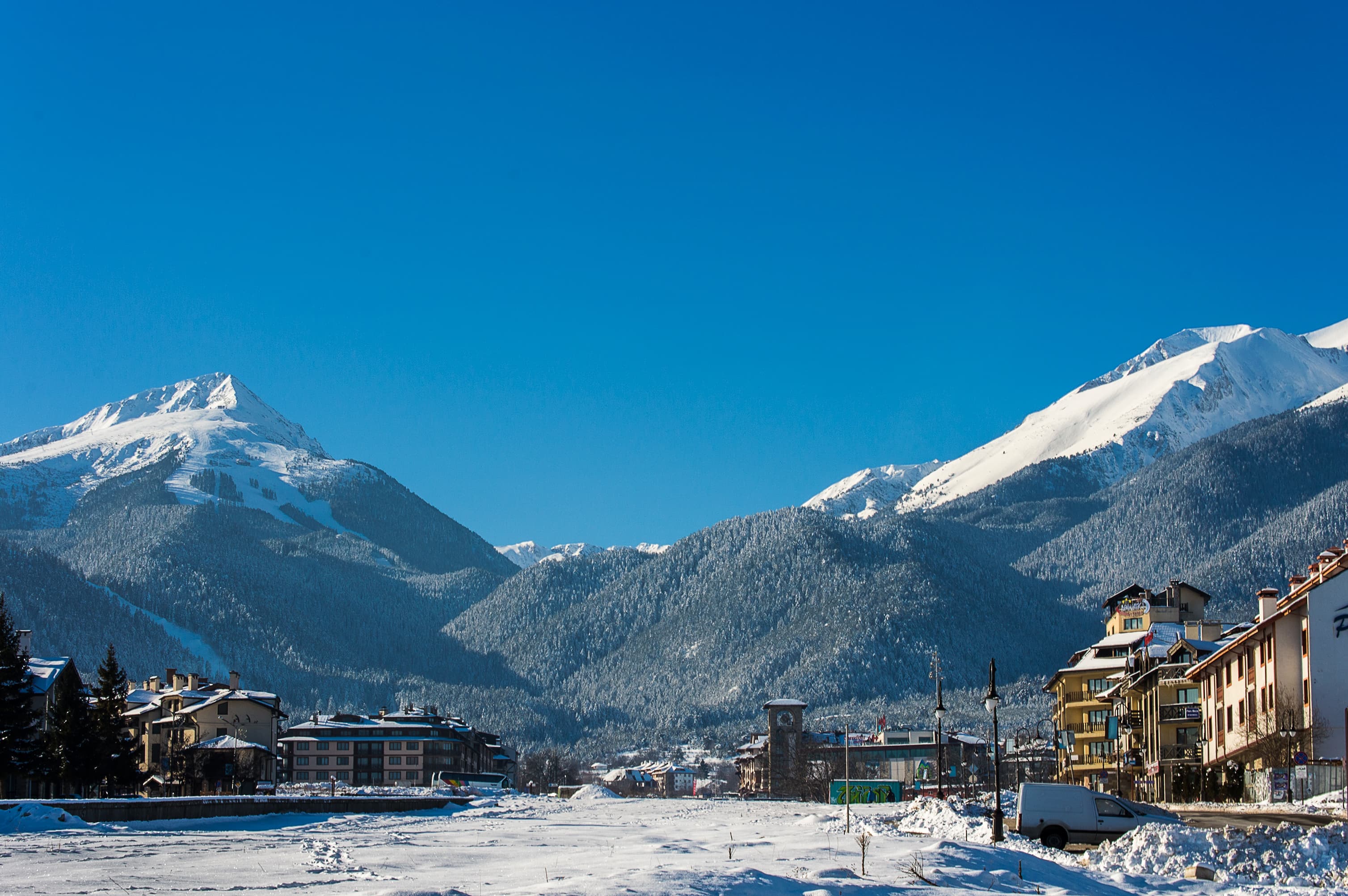
Where to stay in Bansko
Search ski apartments and rentals near Bansko.
Find chalets on Vrbo →Sponsored — we earn a small commission when you book through Vrbo. It doesn't cost you more.
 Resort
Bansko
Bulgaria
 Resort
Livigno
Italy
ArticleBest Value Ski Resorts in Europe: Budget-Friendly Alps for US Travelers
European skiing doesn't have to cost a fortune. These resorts deliver serious terrain, reliable snow, and a genuine Alpine experience at prices that won't make you wince every time you open your wallet.