
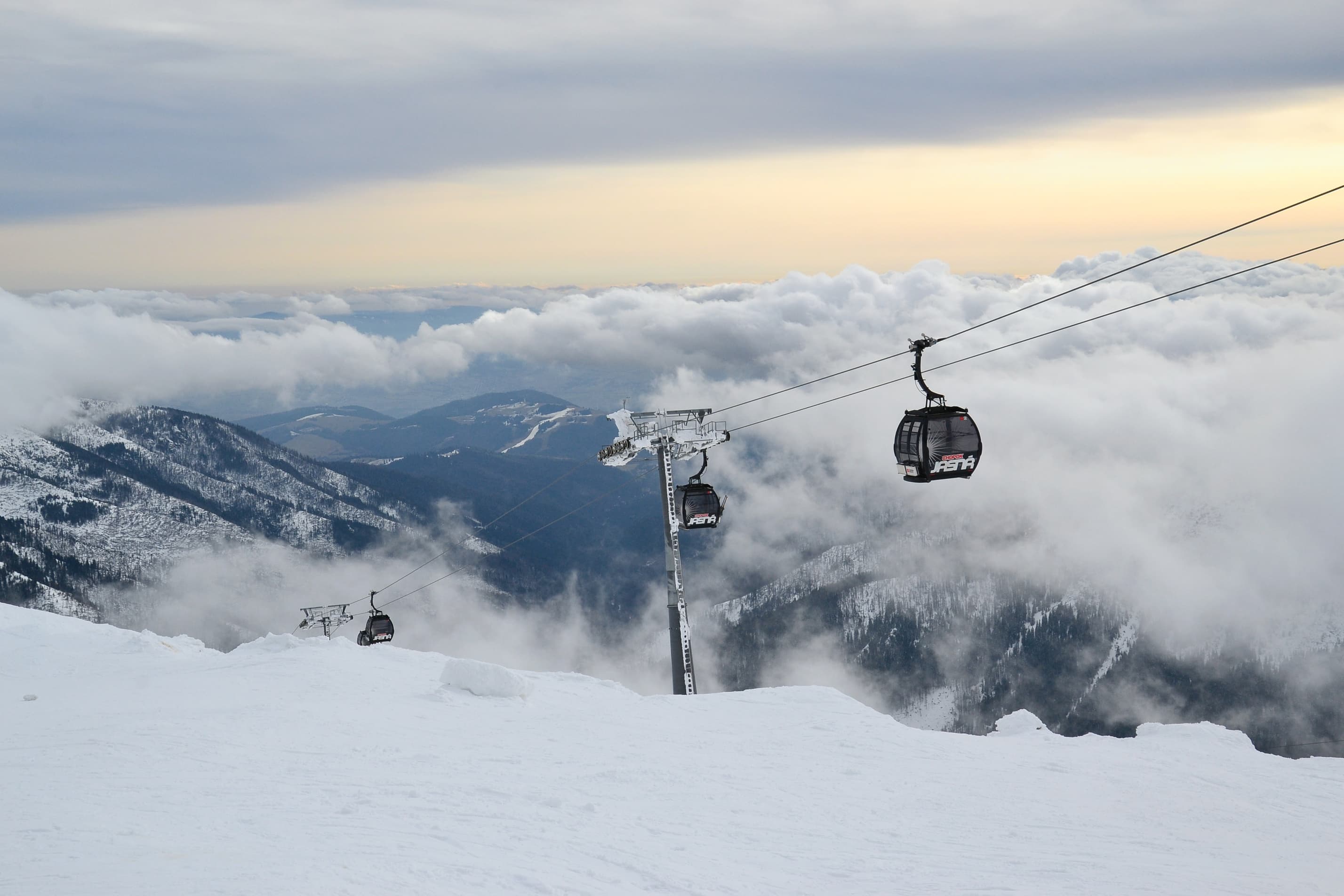
Jasná
Low Tatras, Slovakia
Snow reliability
Quick Facts
- Country
- Slovakia
- Region
- Low Tatras
- Base altitude
- 935m
- Peak altitude
- 2,024m
- Total pistes
- 50 km
- Total lifts
- 30
- Ski pass
- local
- Nearest airport
- Bratislava (BTS), 3h transfer
- Snow reliability
- 7/10
Looking for something in Jasná?
Tell us what you need in Jasná. Requests like yours shape which partners we bring on board.
Tell us what you need in Jasná
We have found these ski hire businesses near Jasná, each named on its own website, so you have somewhere to start. Tell us what you need: we use requests like yours to bring the right partners on board.
Plan Your Trip
The closest major airport is Bratislava (BTS), with a ~3h transfer to the resort.
Prices are indicative. Book early for the best fares.
See all resorts near Bratislava (BTS) →
Search Flights on Skyscanner
Compare prices across hundreds of airlines
Powered by Skyscanner. We may earn a commission from bookings.
Where to stay in Jasná
- DAMIAN JASNA - Hotel Resort & ResidencesWebsite
Found near Jasná and named on its own website. Is this your business? Claim it
- Dom Horskej Služby - JasnáWebsite
Found near Jasná and named on its own website. Is this your business? Claim it
- Hotel Björnson Jasná & Björnson Tree HousesWebsite
Found near Jasná and named on its own website. Is this your business? Claim it
- Hotel FIS Jasná****Website
Found near Jasná and named on its own website. Is this your business? Claim it
- Hotel Grand JasnáWebsite
Found near Jasná and named on its own website. Is this your business? Claim it
- Hotel JasnáWebsite
Found near Jasná and named on its own website. Is this your business? Claim it
- hotel Mikulášska chata JasnáWebsite
Found near Jasná and named on its own website. Is this your business? Claim it
- Sorea SNPWebsite
Found near Jasná and named on its own website. Is this your business? Claim it
- Vera JasnáWebsite
Found near Jasná and named on its own website. Is this your business? Claim it
Ski hire in Jasná
- FISSKI School JasnáWebsite
Found near Jasná and named on its own website. Is this your business? Claim it
- SKI JASNA meeting pointWebsite
Found near Jasná and named on its own website. Is this your business? Claim it
Budget Planner for Jasná
Accommodation tier
Include in estimate
Estimated costs for 2 travelers, 7 nights, Mid-range · via Bratislava (BTS)
Estimates based on typical Slovakia market rates (pricing multiplier: 1.0x). Prices vary by travel dates, availability, and booking lead time. Always check current prices before booking.
Plan a trip to Jasná
Organise flights, accommodation, lift passes, and more in one shareable dashboard.
About Jasná
Jasná is Slovakia's largest ski area and one of its most developed, spread across the north and south faces of Chopok peak in the Low Tatras mountain range. With 50 km (31 miles) of groomed piste, a vertical drop of over 1,100 m (3,609 ft), and lift ticket prices that run roughly a third of what you would pay in the western Alps, Jasná delivers genuine skiing value without sacrificing terrain quality. The resort suits intermediate and advancing skiers who want uncrowded slopes, authentic Central European culture, and a week of skiing that will not decimate a travel budget. Families and groups with mixed abilities also do well here thanks to a broad spread of difficulty levels and a compact base area at Biela Put.
Terrain & Skiing
Jasná offers 50 km of marked piste across the north (Jasná) and south (Chopok Juh) sides of 2,024 m Chopok peak, connected by a modern gondola that crosses the summit ridge. The vertical drop from Chopok summit to the lowest base station at Biela Put is 1,110 m (3,642 ft). Terrain splits roughly 20% beginner, 50% intermediate, and 30% advanced, with a good variety of wide cruising reds and steeper blacks dropping through the treeline on both flanks. The lift system includes 30 installations: two gondolas (including the relatively new Funitel from Biela Put), several high-speed detachable chairlifts, and a mix of older fixed-grip chairs and drag lifts on the south side.
The south side tends to be quieter and holds snow well on its north-facing aspects despite the naming convention. Notable runs include the Luková black run on the north side, which is one of the steepest groomed descents in Central Europe, and the long cruising red from Chopok summit down to Srdiečko. The Otupné sector on the north side has gentle green and blue runs ideal for beginners, served by a moving carpet and a short chairlift. Off-piste opportunities are significant for a resort of this size: the open bowls above the treeline on both sides of Chopok hold powder for days after a storm, and there are accessible couloirs off the summit ridge that experienced skiers can reach without a long hike. Jasná has hosted FIS World Cup alpine events, which speaks to the quality of its steeper terrain and piste preparation.
Snowmaking covers approximately 70% of the piste network, and the resort has invested heavily in recent years to improve coverage at lower elevations. The north side benefits from good natural snowfall due to its exposure to weather systems crossing the Carpathians, while the south side is more sheltered and relies more on manufactured snow. Tree-lined runs on both flanks provide excellent visibility during flat-light days, which is an underrated advantage over higher, more exposed Alpine resorts.
Getting There
The most practical airports for reaching Jasná are Krakow John Paul II International (KRK) in Poland at roughly 250 km (155 miles) and a 3-hour drive, or Bratislava Airport (BTS) at 300 km (186 miles) and about 3.5 hours by car. Vienna International (VIE) is also viable at 340 km (211 miles) and around 4 hours. From any of these airports, renting a car is the most flexible option, and Slovak motorways are well-maintained though you will need to buy a vignette (electronic toll sticker) at the border or online before entry.
For those preferring public transport, there is a direct bus service from Krakow and Bratislava to Liptovsky Mikulas, the nearest town to Jasná at 15 minutes by local bus. The Zilina railway station connects to Liptovsky Mikulas by regional train in about 90 minutes. Many US travelers combine Jasná with a short city trip in Krakow or Vienna, which makes for a compelling two-stop itinerary. Transfer services can be booked through local operators like GoSlovakia for around 150-200 EUR per vehicle from Krakow.
Where to Stay
The main base area is Biela Put (sometimes written Biela Puth), where you will find the primary gondola station, ski rental shops, and a cluster of mid-range hotels. Hotel Grand Jasná and Tri Studnicky are the flagship properties, both offering ski-in/ski-out access and spa facilities at prices that would barely cover a basic apartment in Verbier. Expect to pay 100-180 EUR per night for a four-star hotel room in high season, which is roughly a quarter of equivalent western Alpine pricing.
The town of Demanovska Dolina, a short drive or ski bus ride from the lifts, has a wider range of guesthouses and apartment rentals at even lower prices. Liptovsky Mikulas, the regional hub 15 minutes down the valley, offers the most budget-friendly options along with supermarkets, pharmacies, and non-skiing activities. For the best ski-in/ski-out convenience, stay at or near Biela Put. For the best value and a taste of authentic Slovak town life, base yourself in Liptovsky Mikulas and use the reliable shuttle buses.
Apres-Ski & Dining
Jasná has a modest but genuine apres-ski scene centered around the base area at Biela Put. The Happy End bar at the bottom of the main gondola is the primary gathering spot after the lifts close, with live music on weekends and a terrace that catches afternoon sun. Apres here is more relaxed than the Austrian model: expect beer, warm drinks, and conversation rather than table-dancing and DJ sets.
Dining in the resort area leans heavily on Slovak and Central European cuisine. Koliba restaurants (traditional wooden mountain huts) serve hearty dishes like bryndzove halusky (potato dumplings with sheep cheese and bacon), grilled meats, and robust soups. A full meal with beer at a good Koliba runs 15-25 EUR per person, which is a revelation for anyone used to resort dining prices in France or Switzerland. The mountain restaurants on both sides of Chopok are decent and affordable. For a wider restaurant selection, head down to Liptovsky Mikulas, where you will find Italian, Asian, and modern Slovak options alongside the traditional fare.
Practical Tips
The season typically runs from early December through mid-April, with the best snow conditions from mid-January through early March. A six-day adult lift pass costs approximately 230-260 EUR depending on the period, which is genuinely cheap by any Alpine standard. The resort uses an electronic card system, and passes can be purchased online in advance at a small discount.
Ski rental at Jasná is affordable and the equipment quality has improved substantially. Intersport and local rental shops at Biela Put stock current-season gear at roughly 25-35 EUR per day for a full adult package. Ski school instruction is available in English through the Jasná Ski School and several independent operators, with group lessons running about 30 EUR for a two-hour session. One key tip: the Slovak koruna was replaced by the euro in 2009, so there is no currency exchange hassle for travelers coming from other eurozone countries. Card payments are widely accepted at the resort, though smaller guesthouses and restaurants in Liptovsky Mikulas may prefer cash. Tipping is customary at about 10% in restaurants.
Frequently Asked Questions
Is Jasná worth visiting compared to bigger resorts in Austria or France?
Yes, if your priorities are value, uncrowded slopes, and authentic Central European culture. Jasná will not match the sheer piste kilometers of the Trois Vallees or the Arlberg, but its 50 km of terrain offers genuine variety, the vertical drop is substantial at over 1,100 m, and you will spend a fraction of what the western Alps would cost. A week in Jasná including flights, accommodation, lift pass, and meals can come in under what just the lift pass and hotel would cost in many Swiss resorts.
How does the snow reliability compare to the Alps?
The Low Tatras receive regular snowfall through the winter, and Chopok peak at 2,024 m catches storms coming from both north and south. Natural snow depths are generally solid from January through March. The resort has invested in extensive snowmaking covering roughly 70% of runs, which keeps the lower slopes in shape during lean periods. You will not get the guaranteed glacier snow of Val Thorens, but for its price bracket, snow reliability is very good.
Do people speak English in Jasná?
English is widely spoken by younger Slovaks and in all tourism-facing businesses at the resort. Hotel staff, ski school instructors, and rental shop employees will all communicate comfortably in English. In Liptovsky Mikulas you may encounter less English, but a translation app handles any gaps easily. Learning a few Slovak phrases (dakujem for thank you, prosim for please) goes a long way with locals.
Can I combine Jasná with other destinations in one trip?
Absolutely. Many travelers fly into Krakow and spend two or three days exploring the city before driving to Jasná. Vienna and Bratislava are also logical bookends. The Tatras region itself offers non-skiing attractions like the Demanovska Ice Cave and Demanovska Cave of Liberty, both within 15 minutes of the resort. If you want a second ski area, Vratna in the Mala Fatra mountains is about 90 minutes north and offers a quiet day trip.
Compare with...
Resort Ratings
Jasná
From $89/night
Common Questions
Jasná: Frequently Asked Questions
- Is Jasná good for beginners?
- Jasná scores 6/10 for beginner suitability. Some beginner terrain is available, but the resort's primary focus is intermediate and advanced skiing. First-time skiers will find the options more limited than at resorts built around learning. Ski school instruction is available and recommended for anyone starting out here.
- When does Jasná open and close for the 2026/27 ski season?
- We have not yet confirmed Jasná's 2026/27 opening and closing dates against the resort. We publish season dates only once we have sourced them, so nothing is shown here rather than an estimate. Check https://www.jasna.sk for confirmed dates.
- Which ski pass covers Jasná?
- Jasná is covered by the local. This pass may also include access to other linked resorts depending on which tier you purchase. Pricing and blackout dates vary by season; check the pass provider's official site for 2026/27 rates and the full list of included resorts.
- How do I get to Jasná?
- The nearest major airport to Jasná is Bratislava (BTS). The transfer to the resort takes approximately 3 hours by road. Private transfers, shared shuttles, and rental cars are all available from the airport. Mountain roads can be affected by heavy snowfall in winter, so checking conditions before traveling is advisable.