La Molina
Catalan Pyrenees, Spain
Snow reliability
Quick Facts
- Country
- Spain
- Region
- Catalan Pyrenees
- Base altitude
- 1,702m
- Peak altitude
- 2,537m
- Total pistes
- 60 km
- Total lifts
- 18
- Ski pass
- local
- Nearest airport
- Barcelona (BCN), 2h 30min transfer
- Snow reliability
- 5/10
Looking for something in La Molina?
Tell us what you need in La Molina. Requests like yours shape which partners we bring on board.
Tell us what you need in La Molina
We have found these ski hire businesses near La Molina, so you have somewhere to start. Tell us what you need: we use requests like yours to bring the right partners on board.
Plan Your Trip
The closest major airport is Barcelona (BCN), with a ~2h 30m transfer to the resort.
Prices are indicative. Book early for the best fares.
See all resorts near Barcelona (BCN) →
Search Flights on Skyscanner
Compare prices across hundreds of airlines
Powered by Skyscanner. We may earn a commission from bookings.
Budget Planner for La Molina
Accommodation tier
Include in estimate
Estimated costs for 2 travelers, 7 nights, Mid-range · via Barcelona (BCN)
Estimates based on typical Spain market rates (pricing multiplier: 0.7x). Prices vary by travel dates, availability, and booking lead time. Always check current prices before booking.
Plan a trip to La Molina
Organise flights, accommodation, lift passes, and more in one shareable dashboard.
About La Molina
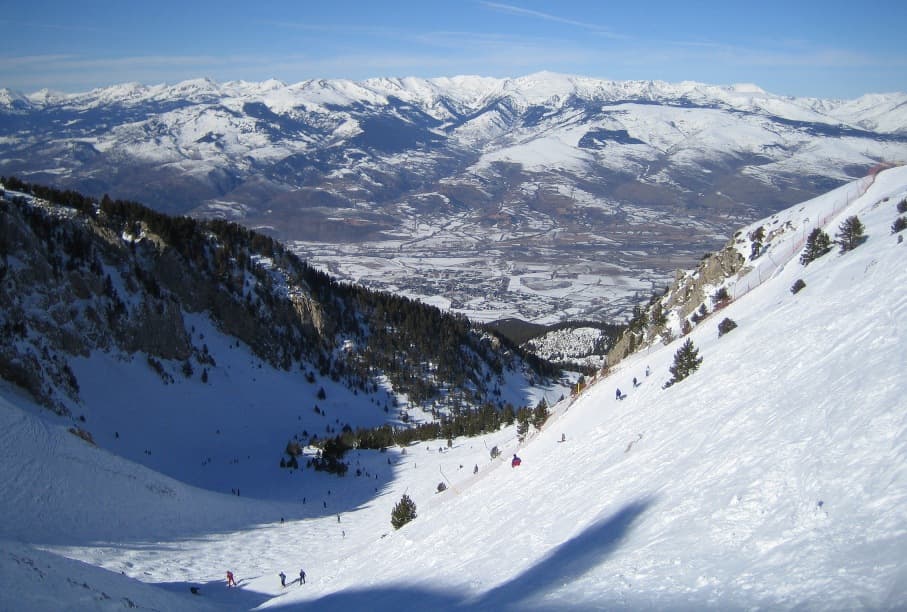
La Molina is the oldest ski resort in Spain, with lift-served skiing dating back to 1943, and remains one of the most accessible winter sports destinations in the Catalan Pyrenees. Located roughly 150 km (93 miles) north of Barcelona, it offers 68 km (42 miles) of groomed piste across 18 lifts with a vertical drop of 835 m (2,740 ft) from a summit of 2,537 m (8,323 ft) down to the base at 1,702 m (5,584 ft). La Molina links with neighboring Masella via the Alp 2500 joint pass to create a combined ski area of over 140 km. This is the resort where Barcelona's skiing population learned to ski, and it remains an excellent value proposition for travelers who want to combine a Pyrenean ski trip with a few days in one of Europe's great cities.
Terrain & Skiing
La Molina's 68 km of piste spread across four main sectors: the beginner-friendly Pla d'Anyella at the base, the broad intermediate bowl of Cap de Comella, the higher slopes around Niu de l'Aliga near the summit, and the Alabaus sector connecting toward Masella. The 18 lifts include one gondola (from the base to Cap de Comella), several chairlifts, and a mix of drag lifts on the upper slopes. The terrain split is approximately 30% beginner, 45% intermediate, and 25% advanced.
The signature skiing at La Molina is the long descents from the Tosa d'Alp summit area back to the base, covering over 800 m of vertical through varied terrain. The Niu de l'Aliga zone at the top provides exposed, above-treeline skiing with panoramic views across the Cerdanya valley into France. Cap de Comella is the heart of the resort for intermediates: a natural bowl with well-groomed reds and blues that get excellent sun exposure. The Alp 2500 connection to Masella extends the skiing significantly — Masella adds 74 km of piste including some of the steepest terrain in the Catalan Pyrenees, and holds snow better on its north-facing aspects. A combined day pass covers both resorts.
Snowmaking covers approximately 60% of La Molina's trails, which is important because the southern Pyrenees receive less consistent natural snowfall than the northern French side. The base elevation of 1,702 m helps, and the resort's investment in snowmaking infrastructure has improved reliability substantially. That said, late March and April can see rapid melt at lower elevations, so mid-season visits offer the most reliable conditions.
Getting There
Barcelona-El Prat Airport (BCN) is the primary gateway at roughly 150 km (93 miles) and about 2 hours by car via the C-16 and E-9 toll roads through the Cadi tunnel. This makes La Molina one of the most airport-accessible ski resorts in southern Europe. Girona-Costa Brava Airport (GRO), used by several budget airlines, is about 130 km (81 miles) and roughly 1 hour 45 minutes. Toulouse-Blagnac (TLS) on the French side is approximately 250 km (155 miles) and 3 hours.
Public transport is viable: RENFE operates a train service from Barcelona Sants station to La Molina/Alp station (the nearest stop) in approximately 3 hours, with one change in Ribes de Freser or Puigcerda. The train ride through the Pyrenean foothills is scenic. From La Molina-Alp station, a local bus runs to the resort base. Driving is more practical for flexibility, and the roads are well-maintained. The Cadi tunnel (toll approximately 12 EUR) avoids the mountain passes and is open year-round. Car rental is inexpensive from Barcelona airport.
Where to Stay
La Molina itself has a small cluster of hotels and apartment buildings at the base area, including the Hotel Guitart La Molina Resort & Spa and several apartment-style residences. Base area accommodation is functional rather than charming, typical of Spanish ski resorts that grew up around the lifts rather than around a historic village.
The more appealing option for many visitors is the town of Alp, 4 km (2.5 miles) down the road, which has a genuine Catalan village character with stone buildings, small restaurants, and a local atmosphere. Accommodation in Alp and the nearby town of La Cerdanya is substantially cheaper than equivalent Alpine lodging: a comfortable hotel room runs 70-120 EUR per night, and apartment rentals for a family can be found for 80-150 EUR per night. Puigcerda, the main town of the Cerdanya valley at about 15 minutes from La Molina, has the widest selection of restaurants, shops, and services plus a charming medieval old town. For context, you can stay in a quality four-star hotel in the Cerdanya for what a budget hostel costs in Chamonix.
Apres-Ski & Dining
Apres-ski at La Molina is low-key compared to Alpine mega-resorts, and that is part of its appeal. The base area has a couple of bars and terraces where skiers gather for post-slopes beers and pintxos in the late afternoon sun. The atmosphere is laid-back and local — more Catalan families socializing than British stag parties.
Dining in the Cerdanya valley is a genuine highlight. Catalan mountain cuisine is hearty and distinctive: trinxat (a cabbage and potato cake, crispy on the outside), botifarra sausage with white beans, cargols (snails, a Catalan specialty), and escudella stew are winter staples. The region produces excellent embutidos (cured meats) and local cheeses. A full meal with wine at a good restaurant in Alp or Puigcerda runs 20-35 EUR per person, which is remarkable value. Puigcerda's old town has a concentration of restaurants worth exploring on rest days. For fine dining, the Cerdanya has several Catalan-influenced restaurants that would not be out of place in Barcelona. Spanish dining hours apply: lunch from 1:30pm and dinner from 8:30pm or later.
Practical Tips
The season typically runs from mid-December through early April, with the most reliable conditions from January through mid-March. A single-day adult lift pass at La Molina costs approximately 40-48 EUR, making it one of the cheapest lift tickets in western Europe. The Alp 2500 combined pass covering both La Molina and Masella runs about 48-55 EUR per day. Multi-day passes offer further discounts. These prices are roughly a third of what major French or Swiss resorts charge.
Ski rental is available at the base and in Alp, with a full adult package running about 25-35 EUR per day. Equipment quality is generally good. Ski school is available in Spanish, Catalan, and often English through the resort ski school, with group lessons at approximately 35-45 EUR for a two-hour session. La Molina has hosted FIS World Cup events and has a strong freestyle infrastructure including a terrain park and a half-pipe.
Practical notes for US travelers: Spain uses the euro. Card payments are accepted at the resort and most restaurants, though smaller establishments in the villages may prefer cash. The Cerdanya valley is actually a Spanish exclave that extends into France — the border town of Bourg-Madame is a five-minute drive from Puigcerda, and you can quite literally ski in Spain and have lunch in France. Catalan is the primary local language, though Spanish (Castilian) and increasingly English are widely understood in tourism contexts.
Frequently Asked Questions
Can I combine La Molina with a Barcelona city trip?
Absolutely — this is one of La Molina's biggest selling points. At roughly 2 hours by car from Barcelona, you can fly into BCN, spend a few days exploring the city, then drive up to the Pyrenees for skiing. Many visitors split a week between three days in Barcelona and four on the slopes. The contrast between Gaudi's architecture, the Gothic Quarter, and Las Ramblas one day and Pyrenean powder the next is hard to beat for a European trip that combines culture and skiing.
How does La Molina compare to French Pyrenean resorts?
La Molina is smaller than the largest French Pyrenean resorts like Grand Tourmalet or Saint-Lary, but the Alp 2500 combined area with Masella brings the total to over 140 km of piste, which is competitive. The main advantages of La Molina are proximity to Barcelona, lower prices (lift passes and accommodation run roughly 30-40% less than French equivalents), and the excellent Catalan cuisine. The French side generally receives more natural snowfall due to Atlantic weather patterns, but La Molina's snowmaking investment has narrowed that gap.
Is the Alp 2500 connection to Masella worth the upgrade?
Yes, particularly for intermediate and advanced skiers. Masella adds 74 km of terrain including longer descents and steeper runs than La Molina offers on its own. The north-facing slopes at Masella hold snow better and tend to have fewer crowds. The combined pass costs only about 8-10 EUR more per day than La Molina alone, making it excellent value. The connection runs via a high ridge and requires reasonable visibility — in poor weather, the link can close.
What is the snow reliability like at La Molina?
The southern Pyrenees receive less natural snowfall than the Alps or northern French Pyrenees, so La Molina depends more on snowmaking, which covers approximately 60% of the piste network. The base at 1,702 m and summit at 2,537 m provide reasonable altitude, and conditions from January through mid-March are generally reliable. Late season can be variable. For the best snow guarantee in the Catalan Pyrenees, ski the higher Masella slopes or the Niu de l'Aliga sector at La Molina's summit.
Is La Molina good for beginners?
Very good. The Pla d'Anyella area at the base has gentle green runs and a progression zone that is well-separated from faster intermediate traffic. About 30% of the terrain is rated for beginners, and the ski school offers instruction in multiple languages. The low lift pass prices (40-48 EUR versus 60-80 EUR at major Alpine resorts) make it an affordable place to learn. Beginners who progress quickly during the week can explore the intermediate terrain at Cap de Comella without leaving the resort.
Compare with...
Resort Ratings
La Molina
From $89/night
Common Questions
La Molina: Frequently Asked Questions
- Is La Molina good for beginners?
- La Molina scores 7/10 for beginner suitability, with dedicated nursery slopes and a range of gentle runs suited to those learning. Progressive terrain is available for building confidence through the week. Ski school lessons are available through the resort and well-suited to first-time skiers. Groups with mixed abilities generally find La Molina accessible.
- When does La Molina open and close for the 2026/27 ski season?
- We have not yet confirmed La Molina's 2026/27 opening and closing dates against the resort. We publish season dates only once we have sourced them, so nothing is shown here rather than an estimate. Check https://www.lamolina.cat for confirmed dates.
- Which ski pass covers La Molina?
- La Molina is covered by the local. This pass may also include access to other linked resorts depending on which tier you purchase. Pricing and blackout dates vary by season; check the pass provider's official site for 2026/27 rates and the full list of included resorts.
- How do I get to La Molina?
- The nearest major airport to La Molina is Barcelona (BCN). The transfer to the resort takes approximately 2 hours and 30 minutes by road. Private transfers, shared shuttles, and rental cars are all available from the airport. Mountain roads can be affected by heavy snowfall in winter, so checking conditions before traveling is advisable.

 Spain
Spain