


planningtravelUS travelersski triplogisticsfirst time
Complete Guide to Planning a Ski Trip to Europe from the US
The Mountain Marker Team11 min read
Planning a ski trip to Europe from the US takes more coordination than booking a week at Vail or Park City, but the payoff is worth the effort. A well-planned European ski holiday gives you access to interconnected terrain measured in hundreds of miles, mountain restaurants where lunch is a cultural experience, and resort villages that have been welcoming skiers for over a century. The key is starting early, understanding the differences between European and North American ski culture, and budgeting realistically. This guide walks through every step, from initial research to landing back home.
When to Start Planning: A Timeline
9-12 Months Out (April-July Before Your Trip)
This is when the best deals surface. European tour operators and accommodation providers release their winter inventory in spring and summer, and early-bird pricing can save you 15-25% on lodging.
- Choose your resort. Use Mountain Marker's comparison tool to narrow your options based on ability level, group composition, and budget. If you're unsure where to start, our guide on how to choose the right resort breaks down every factor.
- Set flight alerts. Use Google Flights or Skyscanner to track prices on routes to Geneva, Zurich, Munich, Innsbruck, Lyon, and Turin — the main gateway airports for Alpine resorts.
- Book accommodation. Self-catered apartments book up fast at popular resorts like Val Thorens and Zermatt. Hotels have more last-minute availability, but the best properties go early.
6-9 Months Out (July-October)
- Book flights. Transatlantic fares to Europe are generally cheapest 3-6 months before departure. Direct flights from major US hubs (JFK, Newark, Boston, Chicago O'Hare, Miami, LAX, SFO, Atlanta, Dallas) to European gateways run $400-$900 round trip in economy, depending on timing and carrier.
- Arrange airport transfers. Pre-booked shared transfers are significantly cheaper than taxis. Companies like Bens Bus, Alps2Alps, and Mountain Drop-offs cover most major resort routes.
- Purchase travel insurance. This is non-negotiable for a European ski trip. US health insurance typically does not cover you abroad, and a helicopter evacuation from the Alps can cost $15,000-$50,000 without coverage. Look for policies that specifically cover winter sports, including off-piste skiing if you plan to venture beyond marked runs.
3-6 Months Out (October-December)
- Book ski school. Group lessons at popular resorts sell out, especially during peak weeks (Christmas, February school holidays, Easter). Book early for the best instructor assignments.
- Reserve equipment rental. Online pre-booking usually gives you a 20-40% discount over walk-in rates and guarantees availability.
- Buy lift passes online. Many resorts offer slight online discounts and let you skip ticket office lines.
1 Month Out
- Check passport validity. Your passport must be valid for at least three months beyond your planned departure from Europe. Many US travelers get caught by this requirement.
- Confirm all bookings. Print or download confirmations for accommodation, transfers, ski school, and equipment rental.
- Check resort snow reports. Not to panic — to set expectations. Early season (December) and late season (April) trips carry more snow risk at lower-altitude resorts.
Choosing a Resort
This is the decision that shapes everything else. The right resort depends on who is traveling, what they want from the trip, and what they are willing to spend.
For families with young children: Flaine (family rating 10/10, 265km of terrain, excellent value), Les Gets (Portes du Soleil, easy Geneva access), or Les Arcs (425km of Paradiski terrain, strong beginner infrastructure).
For advanced skiers seeking challenge: St. Anton (off-piste 10/10, expert 10/10, legendary Arlberg terrain), Chamonix (off-piste 10/10, scenery 10/10, the mountaineering capital of Europe), or Verbier (expert terrain across the Four Valleys).
For snow reliability above all else: Val Thorens (snow 10/10, highest resort in Europe at 7,545 feet / 2,300m base), Tignes and Val d'Isere (snow 10/10, Espace Killy), or Obertauern (snow 10/10, Austrian value pricing).
For budget-conscious travelers: Mayrhofen (Austrian value, strong apres), Cervinia (Italian pricing, linked to Zermatt), or Livigno (duty-free shopping, Italian affordability).
Mountain Marker rates every resort across 15 categories, from terrain variety to dining options. The comparison tool lets you stack resorts side-by-side on the factors that matter most to your group.
Flights: Getting Across the Atlantic
Which European Airports to Target
The airport you fly into determines your transfer options and total travel time to the resort.
- Geneva (GVA): The gateway to the French Alps. Within 1.5-3 hours of Chamonix, Flaine, Les Gets, Verbier, and the Portes du Soleil. Also reachable: Val Thorens and Meribel (2.5-3 hrs), Les Arcs (2.5 hrs).
- Zurich (ZRH): Best for Zermatt, Saas-Fee, Andermatt, and Verbier. Swiss rail connections are excellent — you can reach Zermatt by train without a car.
- Munich (MUC): Gateway to Austrian resorts. Within 1.5-3 hours of St. Anton, Kitzbuhel, Mayrhofen, Ischgl, and Solden.
- Innsbruck (INN): Smaller airport but closer to many Austrian resorts. St. Anton is 75 minutes. Mayrhofen is 60 minutes. Fewer direct US flights — you will usually connect through a European hub.
- Lyon (LYS): Alternative to Geneva for French resorts, often with cheaper flights. Les Arcs is 2 hours, Val Thorens is 2.5 hours.
- Turin (TRN): Best for Italian resorts like Cervinia (2 hrs), Sauze d'Oulx, and Monterosa.
Flight Tips for US Travelers
- Book overnight eastbound flights. You leave the US in the evening, arrive in Europe in the morning, and have the full first day for transfers. Trying to ski on arrival day after an overnight flight is miserable — plan a rest day or a short afternoon session at most.
- Saturday-to-Saturday is the standard European ski week. Flights and transfers are priced and scheduled around this pattern. Flying mid-week can save money but may limit transfer options.
- Budget airlines (easyJet, Wizz Air) fly between European hubs and smaller Alpine airports. If you find a good transatlantic fare to London, Paris, or Amsterdam, a budget connection to Geneva or Innsbruck can work out cheaper than a direct flight to those cities.
Transfers: Airport to Resort
The distance between the airport and the resort is often the most underestimated part of a European ski trip. Val Thorens is 3 hours from Geneva in good conditions — and those conditions are not always good. Mountain passes close, traffic backs up on Saturday changeover days, and winter weather adds time.
Shared transfers ($30-$80 per person each way) are the standard budget option. Companies run scheduled departures timed to flight arrivals. Book in advance — walk-up availability is limited.
Private transfers ($200-$500+ per vehicle each way) make sense for families or groups of 4+. You go when you are ready, no waiting.
Rental cars work well for Austrian resorts with valley access roads, less well for high-altitude French resorts where chains are required and parking is expensive. If you rent, confirm you are allowed to cross borders — a car rented in Switzerland may not be insured for Italy.
Trains are underrated. Swiss rail reaches Zermatt directly, and the scenic ride through the Rhone Valley is a trip highlight. French TGV trains from Paris or Lyon connect to Bourg-Saint-Maurice (for Les Arcs) and Moutiers (for the Trois Vallees).
Accommodation: Hotels, Apartments, and Chalets
European ski accommodation differs from the US model in important ways.
Self-Catered Apartments
The most common accommodation type in French resorts. You get a kitchen, which saves significant money on meals. Expect compact spaces by American standards — a 4-person apartment in Val Thorens might be 350-450 square feet. Linen and towels may cost extra. Cleaning fees are standard.
Best for: Families, groups on a budget, stays of a week or more. Typical cost: $100-$250/night depending on resort and season.
Hotels
More common in Austrian and Swiss resorts. Austrian hotels often include half-board (breakfast and dinner), which simplifies logistics and can be excellent value. Swiss hotels are typically the most expensive option in any Alpine country.
Best for: Couples, travelers who want full service. Typical cost: $150-$500+/night.
Catered Chalets
A uniquely European concept. You rent the whole chalet (or a room in a shared chalet), and a host cooks breakfast and dinner, plus afternoon tea with cake. Wine is usually included with dinner. This is the sweet spot for groups of 8-14 and widely available in French resorts like Meribel, Val d'Isere, and Les Gets.
Best for: Groups of friends, multi-family trips. Typical cost: $150-$400/person/night including meals and wine.
Lift Passes: How European Passes Work
European lift pass systems are different from what you may be used to in the US.
- Single-resort passes cover one ski area. Straightforward.
- Multi-area passes are the European specialty. The Trois Vallees pass gives you access to Val Thorens, Meribel, and Courchevel — 370 miles (600km) of linked terrain on one pass. Paradiski links Les Arcs and La Plagne for 265 miles (425km). The Dolomiti Superski pass covers 745 miles (1,200km) across 12 areas including Val Gardena.
- Hands-free passes are standard. You keep the card in your jacket pocket and the lift gates open automatically. No fumbling with tickets at the lift.
- Pricing: Six-day passes range from about $230 (Austrian resorts like Mayrhofen or Obertauern) to $400+ (Swiss resorts like Zermatt). French mega-area passes fall in between at $280-$350.
- Child discounts are generous — typically 30-50% off for kids under 12, and many resorts offer free passes for children under 5 or 6.
Ski School and Equipment Rental
Ski School
European ski instruction is world-class. The French ESF (Ecole du Ski Francais) and Austrian ski school systems have been teaching for generations, and instructors go through rigorous multi-year certification programs.
- Group lessons run about $200-$350 for a 6-day block (typically 2-3 hours per morning). This is dramatically cheaper than US group lessons.
- Private lessons run $60-$120/hour depending on the resort and country. Austria is generally cheapest, Switzerland most expensive.
- Language: Most instructors in major resorts speak English. At smaller resorts, request an English-speaking instructor when booking.
Equipment Rental
Renting in Europe is easy and usually cheaper than the US equivalent. Every resort village has multiple rental shops, and pre-booking online saves 20-40%.
Should you bring your own skis? Generally no, unless you have highly specific equipment needs. Airlines charge $50-$200 each way for ski bags, the logistics are cumbersome, and rental quality in Europe is high. Modern rental fleets include current-year demos at premium tiers.
Boot exception: If you have custom-fitted boots that work well for you, bring them. Rental boots are the weakest link in any rental package, and foot comfort determines ski comfort.
Budgeting: What a Week Actually Costs
Here is a realistic per-person budget for a one-week European ski holiday from the US, based on 2025-2026 season pricing.
Budget Trip (Austrian Resort like Mayrhofen or Obertauern)
| Category | Cost |
|---|---|
| Round-trip flights (East Coast to Munich) | $500-$800 |
| Airport transfers (shared) | $80-$120 |
| Accommodation (self-catered apartment, shared) | $400-$700 |
| 6-day lift pass | $230-$280 |
| Equipment rental (6 days) | $120-$180 |
| Food and drink | $300-$500 |
| Travel insurance | $80-$120 |
| Total per person | $1,710-$2,700 |
Mid-Range Trip (French Resort like Les Arcs or Flaine)
| Category | Cost |
|---|---|
| Round-trip flights (East Coast to Geneva) | $500-$900 |
| Airport transfers (shared) | $60-$100 |
| Accommodation (apartment or hotel) | $600-$1,000 |
| 6-day lift pass | $280-$340 |
| Equipment rental (6 days) | $140-$200 |
| Food and drink | $400-$650 |
| Travel insurance | $80-$120 |
| Total per person | $2,060-$3,310 |
Premium Trip (Swiss Resort like Zermatt or Verbier)
| Category | Cost |
|---|---|
| Round-trip flights (East Coast to Zurich/Geneva) | $500-$900 |
| Airport transfers (train or private) | $100-$250 |
| Accommodation (hotel) | $1,200-$2,500 |
| 6-day lift pass | $350-$420 |
| Equipment rental (6 days) | $180-$250 |
| Food and drink | $600-$1,000 |
| Travel insurance | $80-$120 |
| Total per person | $3,010-$5,440 |
The single biggest variable is accommodation. Traveling with a group and splitting an apartment or chalet cuts lodging costs by 30-50%.
Packing Essentials: What to Bring from the US
Bring:
- Your ski boots (if custom-fitted)
- Base layers and mid-layers (these are lighter to pack than outerwear)
- Goggles and sunglasses (the Alpine sun at altitude is no joke — SPF 50 for your face, every day)
- Sunscreen (much more expensive to buy in resort)
- A universal power adapter (Type C/F for Austria/Germany/Italy, Type E/F for France, Type J for Switzerland)
- Your insurance documentation and European Health Insurance Card application (or equivalent travel insurance card)
- Euros or Swiss Francs in cash for small purchases — card acceptance is high but not universal at mountain huts
Leave behind:
- Skis and poles (rent them)
- Bulky ski jackets (rent high-end outerwear at the resort if your jacket is old or inadequate)
- Expectations about portion sizes at mountain restaurants (European mountain lunches are substantial)
Jet Lag Management
You are traveling 6-9 time zones east. Jet lag is real and affects your first two ski days more than most people expect.
- Fly overnight. Arrive in Europe in the morning, stay awake until early evening local time, then sleep. Do not nap on arrival day.
- Schedule a rest day. Make your first day in resort a half-day at most. Use the morning to pick up equipment, get oriented, and have a proper lunch. Ski a few gentle runs in the afternoon to find your legs.
- Hydrate aggressively. Cabin air, altitude, and physical exertion compound dehydration. Drink more water than you think you need.
- Avoid alcohol on the first night. Yes, the Austrian apres scene at St. Anton or Ischgl is tempting. Save it for night two.
Cultural Differences Worth Knowing
A few things that catch American skiers off guard:
Lunch is a real meal. In most European resorts, skiers stop for a sit-down lunch at a mountain restaurant between 12:00 and 1:30. These restaurants take reservations, serve proper food (not just burgers and fries), and expect you to linger. Budget 45-90 minutes and $20-$40 per person. This is one of the best parts of European skiing — embrace it.
Tipping is modest. In Austria and France, a service charge is included. Rounding up or leaving 5-10% is appreciated but not expected. In Switzerland, the same applies. You do not need to tip 20%.
Ski runs are color-coded differently. Green (beginner), blue (easy), red (intermediate), black (advanced). There is no equivalent of the US double black diamond — European black runs vary enormously in difficulty, and some would be rated blue at a US resort.
Off-piste is your responsibility. In the US, ski patrol manages the entire mountain and ropes off hazards. In Europe, you are responsible once you leave marked runs. Avalanche awareness, proper equipment (beacon, shovel, probe), and ideally a guide are essential for off-piste skiing.
Closing time is firm. Lifts close at the posted time and the ski patrol will sweep the mountain. Getting caught above a closed lift means a long walk down.
Ready to Start Planning?
The best European ski holiday you will ever take starts with choosing the right resort for your group, budget, and ability level. Browse the full resort directory on Mountain Marker, use the comparison tool to stack your top picks side-by-side, and start with one of our curated guides if you want a shortcut.
Europe's mountains have been welcoming skiers for over a century. They are ready when you are.
Where to stay in Val Thorens
Browse hotels and accommodation near Val Thorens.
Find hotels on ExpediaSponsored — we earn a small commission when you book through Expedia. It doesn't cost you more.
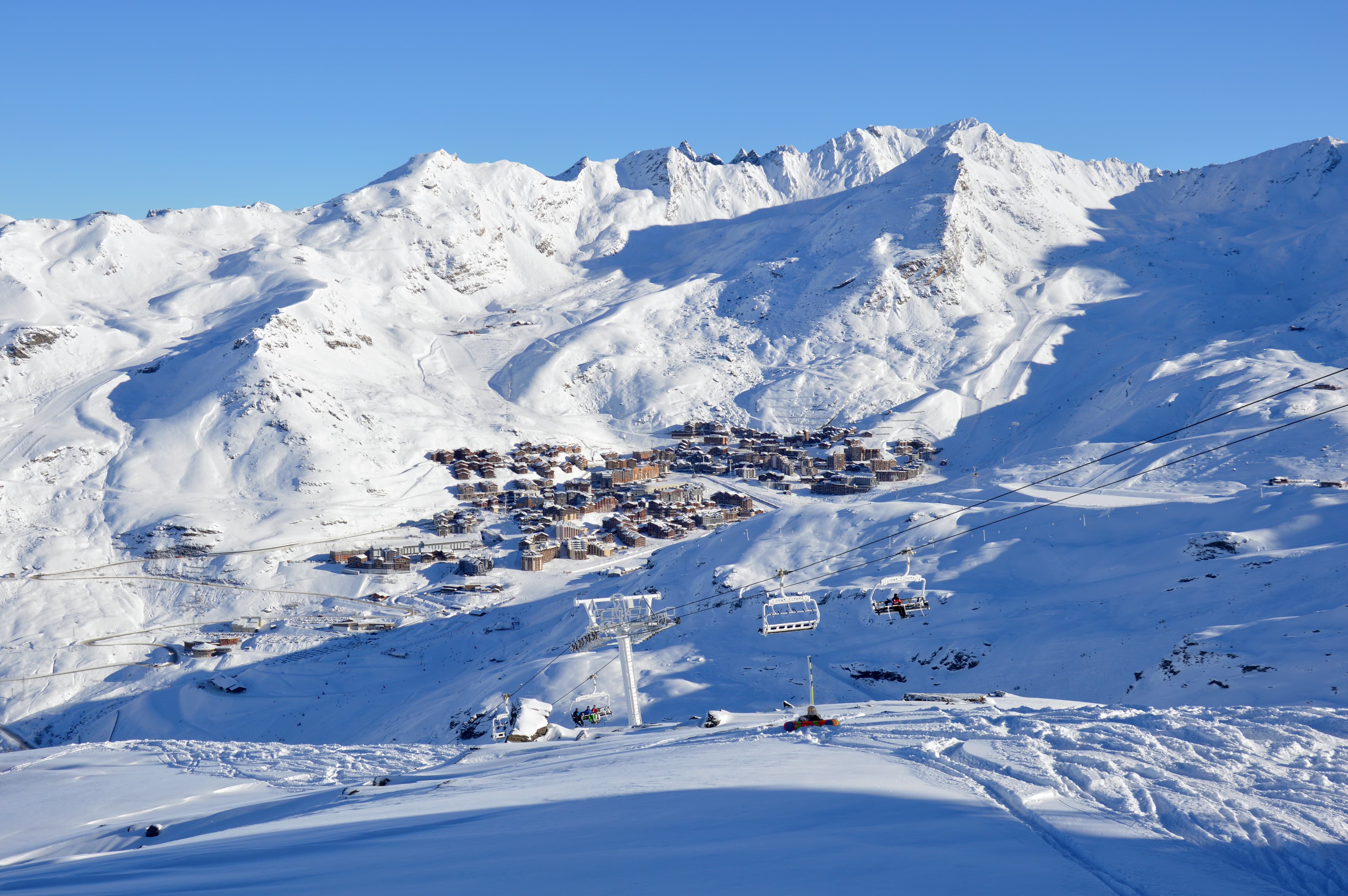 Resort
Val Thorens
France
 Resort
Chamonix
France
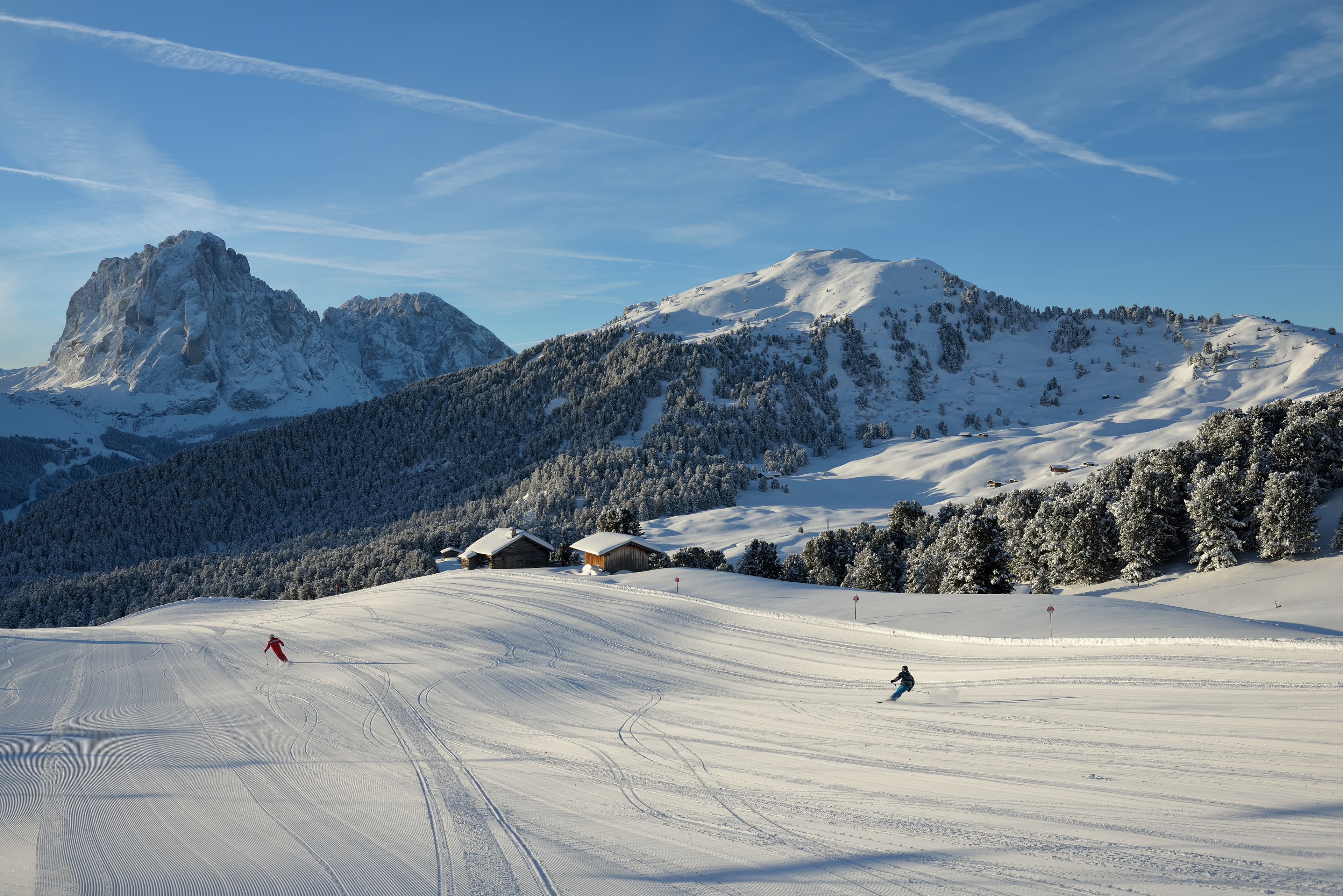 Article
First-Time Ski Holiday Checklist: What to Book, Pack & Know Before You Go
The complete first-time ski holiday checklist — what to book, what to pack, how much it costs, resort picks for beginners, and the etiquette rules nobody tells you. Everything you need so nothing catches you off guard.
