
comparisonchoosing a resortski resort guidedecision makingresort ratings
How to Choose the Right Ski Resort: A Complete Comparison Guide
The Mountain Marker Team11 min read
Choosing the right European ski resort is the single decision that determines whether your trip is a highlight of the year or an expensive lesson in mismatched expectations. A family with young children at St. Anton will have a fundamentally different experience than the same family at Flaine: not because either resort is bad, but because they are designed for different skiers. An intermediate couple at Chamonix will spend most of the trip on terrain that either scares them or bores them, while the same couple at Meribel will find a resort that feels purpose-built for exactly their ability level.
This guide provides a systematic framework for matching your group, budget, ability, and priorities to the right resort. Mountain Marker rates every resort across 15 categories on a 1-10 scale, and the comparison tool lets you stack up to four resorts side-by-side. This article explains how to use those ratings to make a confident choice.
Step 1: Know Your Group
The composition of your travel group is the most important variable, and it should narrow your search before anything else.
Families with Young Children (Under 10)
Young children need: gentle terrain, quality ski school, a compact village where you are not hauling equipment long distances, and accommodation close to the slopes. They do not need 600km of terrain or a legendary apres-ski scene.
Best picks:
- Flaine: Family rating 10/10, value 8/10, 165 miles (265km) of terrain, purpose-built so everything is close together. Snow reliability 8/10 means you will not arrive to bare slopes.
- Les Gets: Gateway to the Portes du Soleil, charming French village, excellent ski school, Geneva just 90 minutes away.
- La Plagne: Family-friendly infrastructure linked to Les Arcs via the 265-mile (425km) Paradiski area. Multiple villages at different altitudes give you options.
- Lech: Family rating 9/10, upscale Austrian village, excellent children's facilities. Budget accordingly; value rating is 2/10.
Families with Teenagers
Teenagers who ski well need terrain that challenges them. Teenagers who do not ski need things to do. The ideal resort for this group has both.
Best picks:
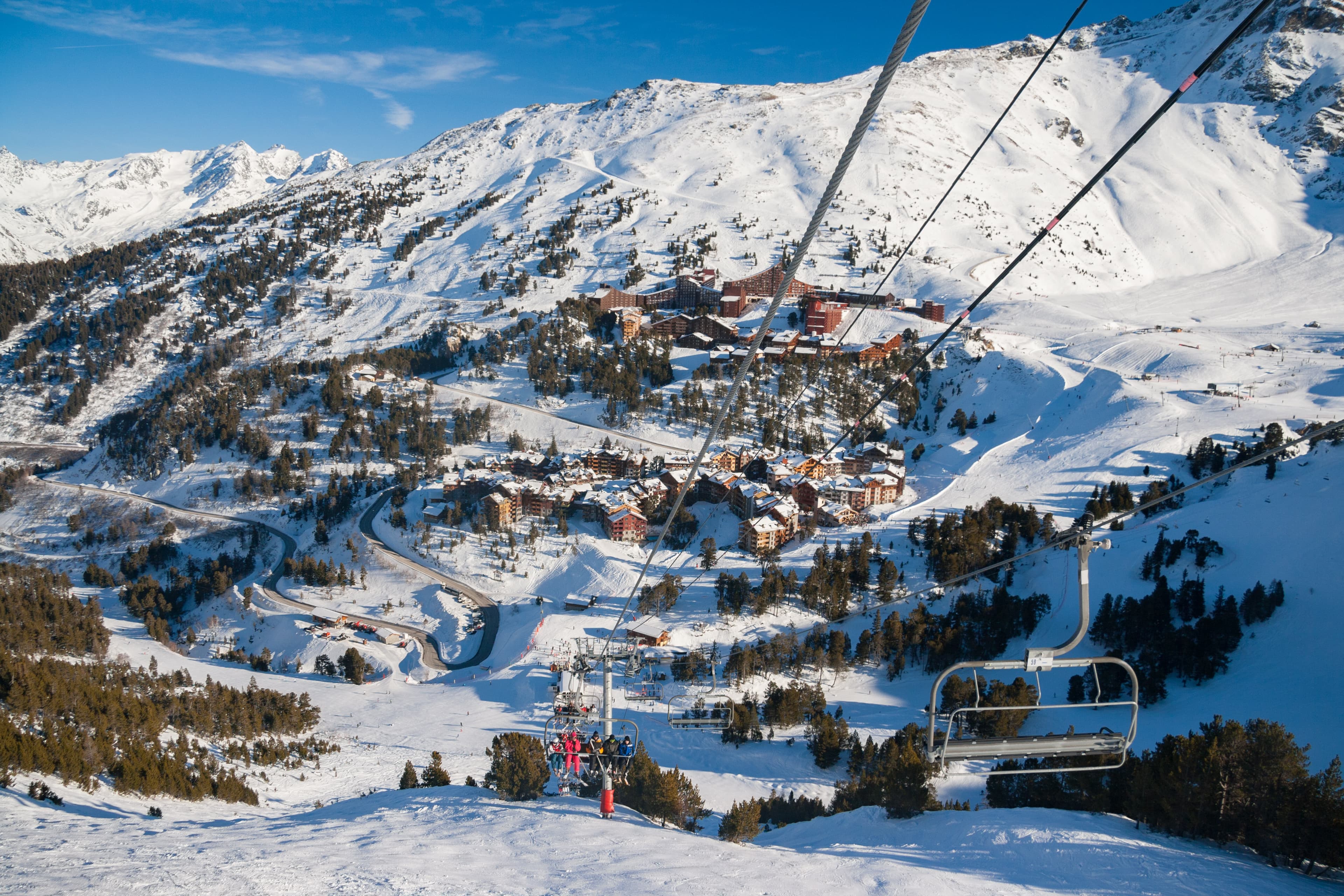
- Les Arcs: 265 miles (425km) of Paradiski terrain with everything from nursery slopes to serious off-piste. Arc 1950 is a convenient, well-designed base.
- Val Thorens: 370 miles (600km) of Trois Vallees terrain, snow guaranteed, and enough variety to keep strong teenage skiers busy for a week.
- Mayrhofen: The Harakiri run (78% gradient) gives bragging rights, the Zillertal valley offers varied terrain, and the apres-ski is teen-appropriate in the early evening.
Couples
Couples without children can optimize for experience quality over logistics. Scenery, dining, and village atmosphere move up the priority list.
Best picks:
- Zermatt: Scenery 10/10 (the Matterhorn), car-free village, excellent restaurants, 224 miles (360km) of terrain. Expensive, but this is the trip you remember.
- Kitzbuhel: Apres 9/10, dining 9/10, scenery 9/10, a medieval town center that is one of the most beautiful in the Alps. Snow reliability (4/10) means targeting January-February.
- Val Gardena: UNESCO World Heritage Dolomite scenery, access to the 745-mile (1,200km) Dolomiti Superski area, Italian food, and a value rating of 8/10.
Groups of Friends
Friend groups want terrain variety (mixed abilities within the group are common), strong apres-ski, and accommodation that works for 6-12 people.
Best picks:
- St. Anton: Apres 10/10, expert terrain 10/10, off-piste 10/10. The Arlberg delivers for advanced groups who want to ski hard and celebrate harder.
- Ischgl: Apres 10/10, snow 9/10, and a well-designed ski area with plenty of intermediate terrain so the less-advanced members of the group are not left behind.
- Mayrhofen: Apres 9/10, value 7/10. The best combination of fun atmosphere and reasonable prices for a group trip.
Step 2: Assess Your Ability Level
European resorts vary dramatically in how well they serve different ability levels. A resort that is perfect for an advanced skier can be genuinely miserable for a beginner, and vice versa.
Beginners
Look for resorts with dedicated beginner areas separated from main traffic, gentle long runs (not just a single nursery slope), and quality ski school infrastructure.
Best picks:
- Flaine: Wide, gentle runs in the bowl above the village, free beginner lifts, strong ESF school.
- Les Arcs: Free beginner lifts at Arc 1800 and Arc 1950, gentle blues that build confidence.
- Alpbach: A small, manageable ski area where beginners are not intimidated by the scale.
Avoid: Chamonix (expert-oriented, limited beginner terrain), St. Anton (steep, fast, and the main runs are highways of confident skiers).
Intermediates
Intermediates need the largest number of blue and red runs, ideally linked across a big ski area so boredom never sets in. This is where the mega-resort areas shine.
Best picks:
- Meribel: Intermediate terrain 9/10, sitting in the heart of the Trois Vallees with 370 miles (600km) of terrain to explore, much of it perfectly suited to confident intermediate skiing.
- Val Gardena: The Sella Ronda circuit is one of the great intermediate ski experiences: a full-day loop around the Sella massif through four valleys, all on well-groomed red and blue runs.
- Les Arcs: Paradiski's 265 miles (425km) include a huge spread of intermediate terrain, and the link to La Plagne doubles your options.
Advanced and Expert
Advanced skiers need steep groomed runs, mogul fields, and accessible off-piste with quality guiding services available.
Best picks:
- St. Anton: Expert 10/10, off-piste 10/10. The Arlberg is the birthplace of Alpine skiing technique, and the terrain demands every bit of it.
- Chamonix: Off-piste 10/10, expert 10/10, scenery 10/10. The Vallee Blanche, the Grands Montets, and the couloirs off the Aiguille du Midi are bucket-list terrain.
- Verbier: The Four Valleys offer extensive expert terrain, including the infamous Mont Fort descent and the Bec des Rosses face (home of the Freeride World Tour).
- Andermatt: The Gemsstock offers steep, north-facing freeride terrain that rivals anything in Switzerland.
Step 3: Set Your Budget
European ski holidays range from affordable to astronomical, and the country you choose is the single biggest cost driver.
Budget Tier: $1,500-$2,500 Per Person Per Week (Excluding Flights)
Austria and Italy offer the best value. Accommodation, lift passes, food, and drink are 20-40% cheaper than France and 40-60% cheaper than Switzerland.
Best value picks:
- Mayrhofen: Value 7/10, Innsbruck 1 hour, substantial Zillertal terrain.
- Livigno: Duty-free status drops prices on everything.
- Sauze d'Oulx: Via Lattea terrain at Italian prices, Turin 1.5 hours.
- Cervinia: Italian pricing with a link to Zermatt's terrain (Swiss pass upgrade available).
- Obertauern: Snow 10/10 at Austrian prices. Hard to beat for reliability per dollar.
- Flaine: Value 8/10, one of the best-value French options with serious terrain.
Mid-Range Tier: $2,500-$4,000 Per Person Per Week
Most French resorts and upper-end Austrian resorts fall here. You get access to the mega-resort ski areas without Swiss surcharges.
Best mid-range picks:
- Val Thorens: Value 3/10 reflects high French pricing, but you get the Trois Vallees and guaranteed snow.
- Les Arcs: Value 7/10, Paradiski terrain, reasonable apartment pricing.
- Meribel: Value 3/10 but the intermediate terrain quality justifies the premium for the right skier.
- St. Anton: Austrian pricing but at the upper end; the experience justifies it for expert skiers.
- Alpe d'Huez: 155 miles (250km) of terrain at below-average French prices.
Premium Tier: $4,000+ Per Person Per Week
Switzerland and high-end resort villages.
Premium picks:
- Zermatt: The Matterhorn, car-free village, 224 miles (360km) of terrain, glacier skiing.
- Verbier: Four Valleys expert terrain, Swiss quality, lively village.
- Lech: Upscale Arlberg village, family rating 9/10, snow 9/10. Value 2/10 reflects the premium.
- Saas-Fee: Glacier reliability, car-free Swiss village.
Step 4: Factor in Travel Logistics
A resort that requires 5 hours of transfers after a transatlantic flight is a different proposition than one 90 minutes from the airport. For first-time European ski travelers, shorter transfers reduce stress and maximize ski time.
Easiest Access from the US
These resorts are within 2 hours of a major international airport:
- Chamonix: Geneva 1.5 hours
- Flaine: Geneva 1.5 hours
- Les Gets: Geneva 1.5 hours
- Kitzbuhel: Munich 1.5 hours, Innsbruck 1.5 hours (accessibility 9/10)
- Mayrhofen: Innsbruck 1 hour
- Andermatt: Zurich 1.5 hours
- Obertauern: Salzburg 1.5 hours
Longer Transfers (2.5-3.5 Hours)
These resorts require more travel but reward the effort:
- Val Thorens: Geneva 3 hours, Lyon 2.5 hours
- Meribel: Geneva 2.5 hours
- Zermatt: Zurich 3.5 hours (scenic train), Geneva 3 hours
- St. Anton: Zurich 2.5 hours, Innsbruck 1.25 hours
- Val d'Isere: Geneva 3.5 hours
The comparison tool includes transfer time data for every resort, so you can filter by accessibility.
Step 5: Prioritize Your Non-Negotiables
Mountain Marker rates every resort across 15 categories. Not all of them matter equally to every traveler. Identify your top 3-4 and use those to make your final decision.
The 15 Mountain Marker Categories
- Terrain variety: How diverse is the skiing? One trick or many?
- Snow reliability: Can you count on coverage? (See our snow reliability guide)
- Lift system: Modern gondolas and fast chairs, or old fixed-grip doubles?
- Family friendliness: Kids' facilities, village walkability, gentle terrain access.
- Apres-ski: Bars, nightlife, the scene after the lifts close.
- Off-piste: Backcountry access, freeride terrain, guiding availability.
- Beginner suitability: Nursery slopes, progression terrain, ski school quality.
- Intermediate terrain: The blue and red run count, grooming quality, variety.
- Advanced terrain: Blacks, moguls, steeps, challenge.
- Value for money: What you get per dollar across accommodation, passes, food.
- Accommodation quality: Range and standard of places to stay.
- Dining options: Mountain restaurants, village dining, variety and quality.
- Accessibility: Airport proximity, transfer ease, public transport.
- Scenery and charm: Does the setting make you stop and stare?
- Ski school quality: Instruction standards, English availability, children's programs.
How to Use the Comparison Tool
Mountain Marker's comparison tool lets you select up to four resorts and see their scores across all 15 categories displayed side-by-side. Here is how to get the most from it:
- Start with 6-8 candidates from the guidance above.
- Compare in pairs based on your top priorities. If snow reliability and family friendliness are your non-negotiables, compare Val Thorens vs. Flaine vs. Obertauern.
- Look at the gaps. A resort that scores 10 in your top priority and 3 in your second priority may not beat a resort that scores 8 in both.
- Weight your priorities honestly. If you say snow matters most but actually spend every vacation choosing the resort with the best restaurants, follow your actual behavior.
Quick Decision Trees
If you want a fast answer, here are the most common scenarios and Mountain Marker's top recommendation for each.
"Best Overall Resort for a First European Ski Trip"
Les Arcs: Value 7/10, family 8/10, 265 miles (425km) of Paradiski terrain, manageable transfer from Geneva, strong beginner and intermediate terrain, modern village at Arc 1950. It covers the most bases without any major weakness.
"Best for Guaranteed Snow, Period"
Val Thorens: Snow 10/10, the highest resort in Europe, 370 miles (600km) of Trois Vallees terrain. If your trip depends on having snow, this is the answer.
"Best for Expert Skiers Who Want to Be Challenged"
St. Anton: Expert 10/10, off-piste 10/10, apres 10/10. The complete expert package with Austrian hospitality and a legendary reputation earned on every metric.
"Best for a Romantic Couples Trip"
Zermatt: Scenery 10/10 (the Matterhorn), car-free village, excellent dining, 224 miles (360km) of terrain. Expensive. Worth it.
"Best Family Resort on a Budget"
Flaine: Family 10/10, value 8/10, snow 8/10. The purpose-built architecture is not charming, but the skiing, children's facilities, and pricing are hard to argue with.
"Best Apres-Ski Scene"
Ischgl: Apres 10/10, snow 9/10. If the post-skiing celebration is as important as the skiing itself, Ischgl is purpose-built for your priorities.
"Best Scenery and Village Charm"
Val Gardena: UNESCO Dolomites backdrop, access to the 745-mile (1,200km) Dolomiti Superski area, Italian food, value 8/10. The Sella Ronda circuit is one of the best ski days you will ever have.
"Best Under-the-Radar Pick"
Serre Chevalier: 155 miles (250km) of varied French terrain at below-average prices, genuine valley atmosphere, and almost no American tourists. See our full guide to hidden gem resorts.
"Best for Spring Skiing"
Solden: Two glaciers keep the terrain open well into May. The Otztal valley setting is dramatic, and spring conditions bring warm sun and soft snow on the upper slopes.
"Best All-Around Value"
Mayrhofen: Value 7/10 with apres 9/10, strong intermediate terrain, and Innsbruck just 1 hour away. Austrian hospitality and pricing without compromising on the skiing experience.
Common Mistakes to Avoid
Choosing on Terrain Size Alone
A resort with 600km of linked terrain sounds twice as good as one with 300km. In practice, most skiers cover 20-30km in a day. After a week, you will have skied less than 15% of the Trois Vallees. Terrain quality matters more than terrain quantity for most travelers.
Ignoring Transfer Time
A 4-hour transfer after an overnight transatlantic flight is exhausting, especially with children. If this is your first European trip, prioritize resorts within 2 hours of the airport. You can tackle the remote destinations once you know the logistics.
Defaulting to the Most Famous Name
Chamonix is one of the most famous ski destinations in the world, and it is genuinely incredible, but only for expert skiers. For intermediates and families, it is a poor choice: limited beginner terrain, a town-not-resort layout, and a snow reliability score of just 6/10 at the base due to its low-valley position. Fame does not equal fit.
Booking a Swiss Resort on an Austrian Budget
Switzerland is 40-60% more expensive than Austria for comparable quality. If your budget is $2,000 per person for the week, a Swiss resort will feel constrained. An Austrian resort at the same budget will feel generous. Be honest about what you want to spend, and pick the country accordingly.
Skipping Travel Insurance
US health insurance does not cover you in Europe. A broken leg on the slopes can generate a $30,000+ medical bill, and helicopter evacuation from a remote off-piste location costs even more. Budget $80-$150 for a winter sports travel insurance policy. It is the cheapest line item in your trip budget and the one you absolutely cannot skip.
Putting It All Together
The framework is straightforward:
- Who is going? Family, couple, friends, solo. This narrows the resort type.
- What can you ski? Beginner, intermediate, advanced. This narrows the terrain profile.
- What can you spend? Budget, mid-range, premium. This narrows the country and resort tier.
- What matters most? Pick your top 3 categories from the 15. This makes the final call.
Then use Mountain Marker's comparison tool to validate your choice with data.
Every resort we cover includes detailed scores across all 15 categories, honest descriptions of strengths and weaknesses, practical travel information, and links to booking partners. Browse the full resort directory to start your search, or explore our curated guides for more specific recommendations.
The right resort is out there. The framework above will help you find it.
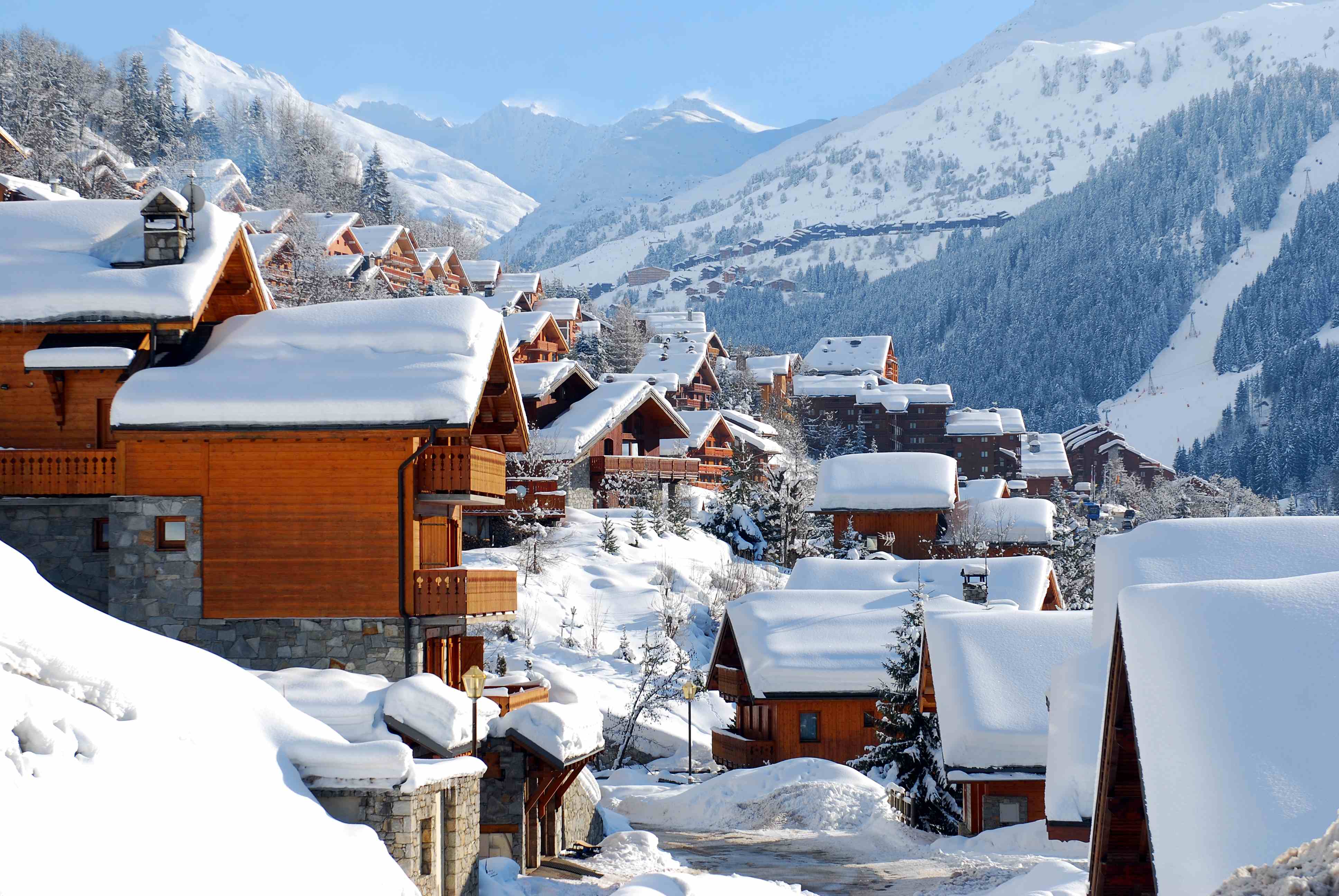
Where to stay in Méribel
Browse hotels and accommodation near Méribel.
Find hotels on ExpediaSponsored — we earn a small commission when you book through Expedia. It doesn't cost you more.
 Resort
Méribel
France
 Resort
Les Arcs
France
 Article
First-Time Ski Holiday Checklist: What to Book, Pack & Know Before You Go
The complete first-time ski holiday checklist — what to book, what to pack, how much it costs, resort picks for beginners, and the etiquette rules nobody tells you. Everything you need so nothing catches you off guard.