
methodologyratingshow-it-works
How We Rate Ski Resorts at Mountain Marker
The Mountain Marker Team5 min read
Why We Built a Rating System
There's no shortage of ski resort content online. The problem is that most of it isn't designed to help you make a decision — it's designed to make a resort look appealing. Glossy photography, vague superlatives, and "world-class terrain" copy that could describe anywhere from Aspen to a small Slovenian hill resort.
Mountain Marker exists to cut through that. We're built specifically for American travelers planning European ski holidays, and we treat resort comparison the same way Wirecutter treats consumer electronics: structured, transparent, and opinionated. This page explains exactly how our ratings work so you know what you're comparing when you put two resorts side by side.
The 15 Categories
Every resort we cover is scored across 15 categories on a 1–10 scale. Here's what each one actually measures.
1. Terrain Variety (1–10)
How well does the resort serve skiers of different abilities? A high score here means a resort genuinely has something for everyone — not just a dedicated beginner slope and then everything else is black. We look at the distribution of piste difficulty, the availability of off-piste access, and whether different areas of the mountain are meaningfully distinct or just the same slope with different names.
2. Snow Reliability (1–10)
Based on historical snowfall data, altitude, aspect, and the resort's investment in snowmaking infrastructure. A resort at 1,200m base altitude in the French Préalpes will score differently than one at 1,800m in the Austrian Arlberg — not because we're unfair to lower resorts, but because the data supports that distinction. We also weight recent seasons more heavily than historical averages to account for changing conditions.
3. Lift System (1–10)
Queues are the enemy of a good ski day. We score lift systems on capacity (uphill skiers per hour), age and technology of the infrastructure, the proportion of gondolas and fast chairlifts versus slow fixed-grip chairs and old drag lifts, and how well the network handles peak holiday weeks. A resort with a newly installed 10-person gondola scores better than one relying on a 1980s chairlift grid even if the latter has more total lifts.
4. Family Friendliness (1–10)
This composite score covers dedicated beginner areas, ski school quality and availability, childcare options, village walkability, and how the resort handles the practical needs of traveling with children. A resort that forces you to cross a blue run to reach the ski school meeting point loses points here, even if the skiing itself is excellent.
5. Apres-Ski (1–10)
European apres-ski culture varies enormously — from Ischgl's notoriously loud club scene to the civilized vin chaud scene in a quiet French village. We score based on the range and quality of options, not just the volume. A resort with three excellent wine bars and a good live music venue scores as well as one with fifteen identical shot bars.
6. Off-Piste Access (1–10)
For experienced skiers, the quality of off-piste terrain is often the deciding factor. We score based on the quantity and quality of off-piste routes, guide availability, avalanche risk management infrastructure, and how the resort's geography creates (or limits) natural off-piste opportunities. This score is most relevant to advanced skiers and is one we explicitly call out in our resort summaries.
7. Beginner Suitability (1–10)
A dedicated score for absolute beginners and first-timers. Different from terrain variety — this specifically asks: is this a good place to learn? We look at the size and quality of dedicated learning zones, the separation of learner areas from faster traffic, the quality of ski schools, and whether the terrain progression is logical (somewhere for beginners to go once they've mastered the nursery slope).
8. Intermediate Terrain (1–10)
Intermediates are the largest group of skiers, and many resorts either neglect them (focusing marketing on experts) or overstate what's available. We score based on the quantity of genuinely interesting blue and red runs, whether the resort gives intermediates a sense of adventure and variety over a week, and the quality of grooming.
9. Advanced Terrain (1–10)
Black runs, mogul fields, steeps, and technical challenges. We score on both quantity and quality — a resort with ten black runs that are really just steep reds scores lower than one with fewer but genuinely challenging descents. We also consider whether advanced terrain is connected to the lift network or requires significant effort to access.
10. Value for Money (1–10)
Ski holidays are expensive. This score attempts to contextualize the cost relative to what you get. A Swiss resort charging $80 for a lift pass but offering 300km of piste, excellent infrastructure, and reliable snow may score higher than a smaller resort at $50 per day with mediocre facilities. We factor in typical accommodation costs, restaurant prices, and equipment rental rates alongside the headline lift pass price.
11. Accommodation Quality (1–10)
The range, quality, and variety of places to stay. We look at whether the resort has good options across price points (not just luxury chalets), the proximity of accommodation to slopes and village facilities, and the overall standard of self-catering and catered chalet options that US families typically prefer.
12. Dining Options (1–10)
Beyond the obligatory mountain restaurant, how good is the food scene? We consider the variety of on-mountain dining, the quality of village restaurants, whether there are genuine local specialties worth seeking out, and how well the resort caters to non-skiers spending time in the village.
13. Accessibility (1–10)
Specifically: how easy is it to get to this resort from the US? We score based on proximity to major international airports, quality of transfer options, and whether direct or straightforward connections exist from major American cities. A stunning resort that requires three flights and a four-hour drive will score lower here than an equally good resort that's 90 minutes from Geneva.
14. Scenery and Charm (1–10)
Deliberately subjective, but still scored consistently. We ask: does the village have genuine character, or is it a purpose-built concrete block from the 1970s? Are the mountain views extraordinary, or functional? Does skiing here feel like an experience, or just a transaction? High-scoring resorts tend to be traditional alpine villages with centuries of history — though some purpose-built resorts earn partial credit through excellent architecture and mountain settings.
15. Ski School Quality (1–10)
Separate from beginner suitability, this specifically evaluates the ski schools themselves. We look at the reputation and training of instructors, availability of English-speaking lessons (important for American visitors), group-to-instructor ratios, and the range of lesson types available — from toddler lessons to adult technique clinics to avalanche safety courses.
How We Aggregate Scores
Each category score feeds into an overall resort score, but not equally. We weight categories based on what matters most to our core audience: US travelers planning European ski holidays, many of whom are traveling with mixed ability groups.
The weights aren't published in full (they're our editorial judgment), but broadly: terrain and snow reliability together carry the most weight, followed by accessibility and family friendliness. Apres-ski and scenery carry less weight than skiing quality — we're rating ski resorts, not nightclubs or photography locations.
What Our Scores Don't Capture
No rating system captures everything. Our scores are a starting point for comparison, not a substitute for reading the full resort profile. Things that don't translate well to numbers: how a specific resort will feel for your specific group, regional character and culture, and the experience of specific weeks (peak holiday periods are a different product than early-season quiet weeks).
Use the scores to narrow your shortlist. Then read the details.
Where to stay in Val Thorens
Browse hotels and accommodation near Val Thorens.
Find hotels on Expedia →Sponsored — we earn a small commission when you book through Expedia. It doesn't cost you more.
 Resort
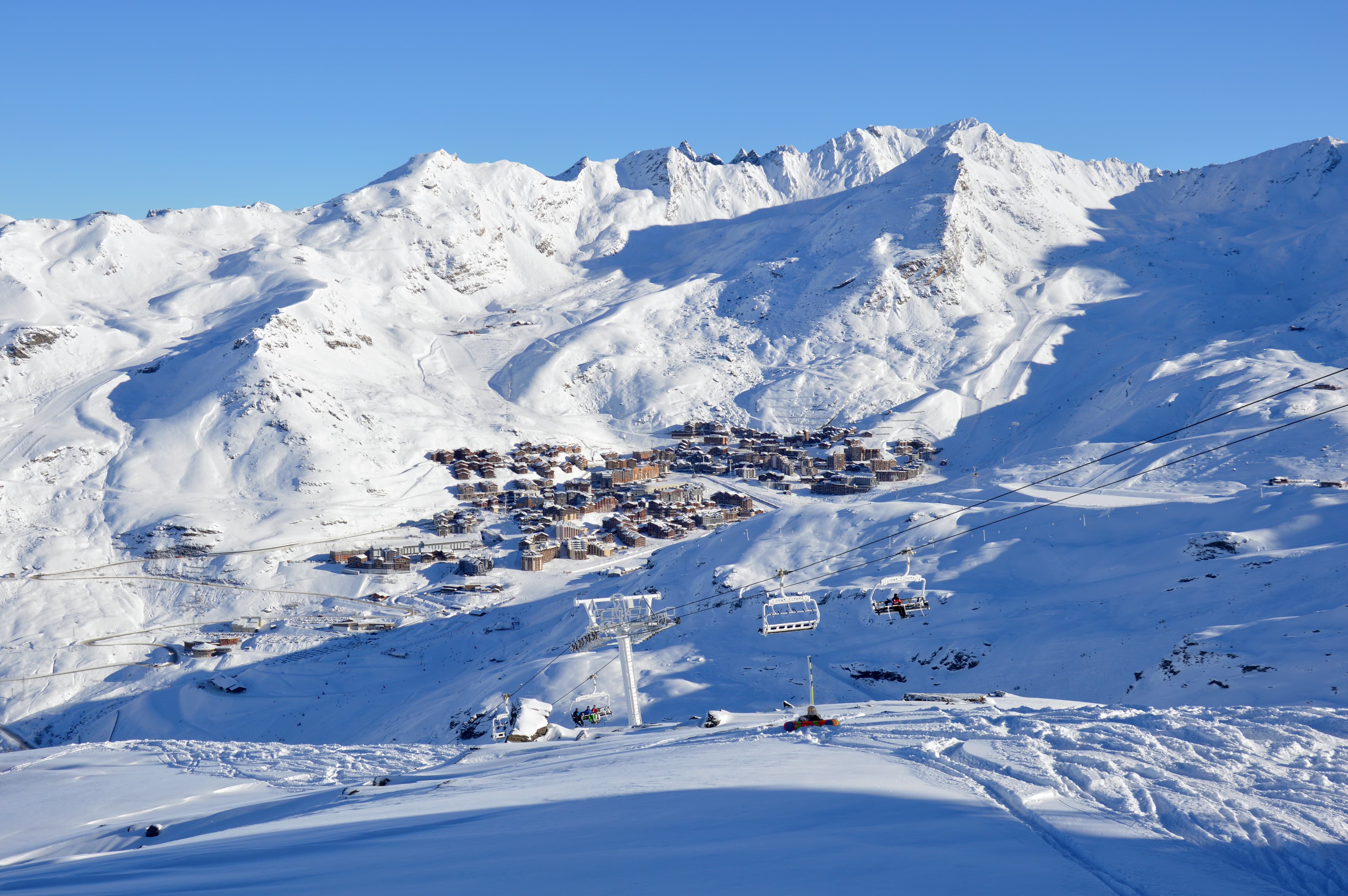
Val Thorens
France
 Article
How to Choose the Right Ski Resort: A Complete Comparison Guide
With hundreds of European ski resorts competing for your attention, choosing the right one is the decision that shapes your entire trip. Here is a systematic framework for getting it right.
 Article
Best Ski Resorts with the Most Reliable Snow
Snow reliability separates a great ski holiday from an expensive walk in brown grass. These European resorts score highest for consistent coverage, thanks to altitude, glaciers, and geography.