


IschglSt AntonAustria skiingTyrolean Alpsapres-skiSki ArlbergSilvretta Arenaski trip comparison
Ischgl vs St Anton: Which Austrian Ski Resort Is Right for You?
The Mountain Marker Team11 min read
The Austrian Alps above St Anton am Arlberg: birthplace of alpine skiing
Two of Austria's most celebrated ski resorts sit roughly 40 minutes apart by car in the Tyrolean Alps, connected by the same stretch of the Inn Valley. But St Anton and Ischgl attract fundamentally different skiers, and choosing the wrong one will cost you a week of what should have been the right trip. St Anton is the birthplace of alpine skiing: a resort built on serious terrain, legendary off-piste, and a traditional Tyrolean village that has drawn hardcore skiers since the 1920s. Ischgl is its polished, modern counterpart: a resort engineered around flawless lift infrastructure, manicured pistes, duty-free shopping on the Swiss border, and a nightlife scene that books headline concert acts. One resort earns its reputation on the mountain. The other earns it everywhere else.
This comparison breaks down where each resort excels and who should book which.
Terrain and Skiing
St Anton
St Anton is the anchor of Ski Arlberg, the largest interconnected ski area in Austria and one of the largest in the world. The combined area covers 190 miles (305 km) of marked piste spread across St Anton, Lech, Zurs, Warth-Schrocken, Stuben, and St Christoph. The base sits at 4,278 feet (1,304m) and the peak, the Valluga, reaches 9,222 feet (2,811m), delivering a vertical drop of nearly 5,000 feet (1,507m).
The terrain leans expert. The Valluga descent is one of the most storied runs in the Alps: a steep, narrow, north-facing chute that requires a guide and delivers genuine exposure. Beyond the marked runs, St Anton's off-piste reputation is what fills its hotels every winter. Vast backcountry bowls, couloirs above Stuben, and the long powder runs through the trees below Rendl attract skiers who would find a groomed-only resort boring by lunchtime. That said, the expansion of Ski Arlberg, particularly the connection to Warth-Schrocken, has added hundreds of kilometers of gentler intermediate terrain. St Anton is not exclusively a black-diamond resort, even if its hardest terrain defines its identity.
Ischgl
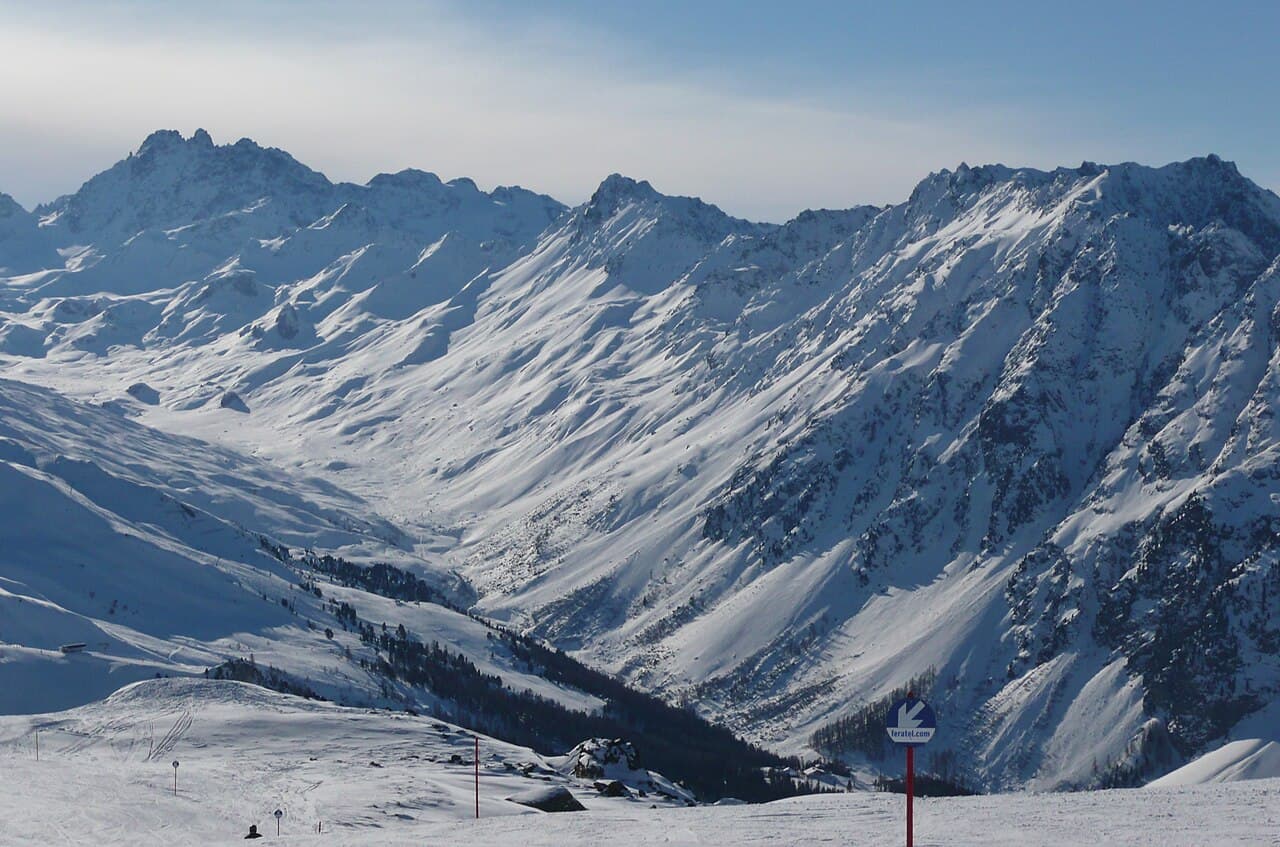
Ischgl anchors the Silvretta Arena, a cross-border ski area shared with the Swiss village of Samnaun. The combined area covers 148 miles (239 km) of marked piste with a base at 4,518 feet (1,377m) and a summit of 9,423 feet (2,872m). The altitude profile is slightly higher than St Anton's, which contributes to reliable snow coverage into April.
Where Ischgl distinguishes itself is infrastructure. The lift system is among the most modern in the Alps: 45 lifts with no remaining drag lifts, high-capacity gondolas, and heated seats on the main chairlifts. The emphasis is on speed and comfort: getting skiers onto groomed terrain with minimal waiting and maximum efficiency. The pistes are wide, well-maintained, and skew intermediate. You can cover enormous distances across the Silvretta Arena in a single day, crossing into Switzerland and back without noticing the border except for the sudden appearance of duty-free shops in Samnaun. Off-piste terrain exists but is limited compared to St Anton's backcountry, and the resort does not cultivate the same freeride culture.
Verdict
St Anton wins on terrain depth, off-piste access, and raw skiing challenge. Ischgl wins on lift infrastructure and groomed cruising. If you fly to Austria to ski hard and chase powder, St Anton is the clear choice. If you want perfectly groomed boulevards served by a frictionless lift system, Ischgl delivers a smoother, more comfortable day on the mountain.
Apres-Ski and Nightlife
St Anton
St Anton did not invent apres-ski, but it might as well have. The MooserWirt and Krazy Kanguruh, both sitting at the base of the Galzig slopes, are the two most famous apres-ski bars in the Alps, and they have been setting the template since long before Instagram existed. The scene starts at 3:00 PM with skiers in boots dancing on tables, beer in hand, Eurobeat at deafening volume. It is loud, chaotic, unapologetic, and deeply Austrian. The party moves down to the village as evening arrives: the Sennhutte, Piccadilly, and a string of bars along the main street keep things going until the early hours.
This is not subtle. It is not curated. It is a beer-soaked, communal, occasionally rowdy tradition that has survived a century because it works. If you have never experienced real Austrian apres-ski, St Anton is the original and still the benchmark.
Ischgl
Ischgl's nightlife operates at a different frequency. The resort brands itself as the "Ibiza of the Alps" and backs it up with the Top of the Mountain concert series, which has booked Elton John, Robbie Williams, Tina Turner, and comparable headliners for open-air performances on the slopes. The Trofana Arena is one of the largest nightclubs in any ski resort, anywhere. Pacha, the Ibiza club brand, operates a venue here. The atmosphere is polished, expensive, and more club than beer hall.
Where St Anton's apres-ski feels spontaneous and communal, Ischgl's feels produced and VIP-adjacent. The drinks are more expensive. The dress code, while not strict, skews toward people who packed going-out clothes alongside their ski gear. It is a fundamentally different energy: less "beer tent after a great day on the mountain," more "Las Vegas decided to build a ski resort."
Verdict
St Anton for authentic, raucous, table-dancing apres-ski tradition. Ischgl for polished nightclubs, headline concerts, and a curated party scene. Neither is objectively better; they serve completely different appetites. But if you are visiting Austria partly for the cultural experience of real apres-ski, St Anton is where that tradition lives.
Village and Character
St Anton
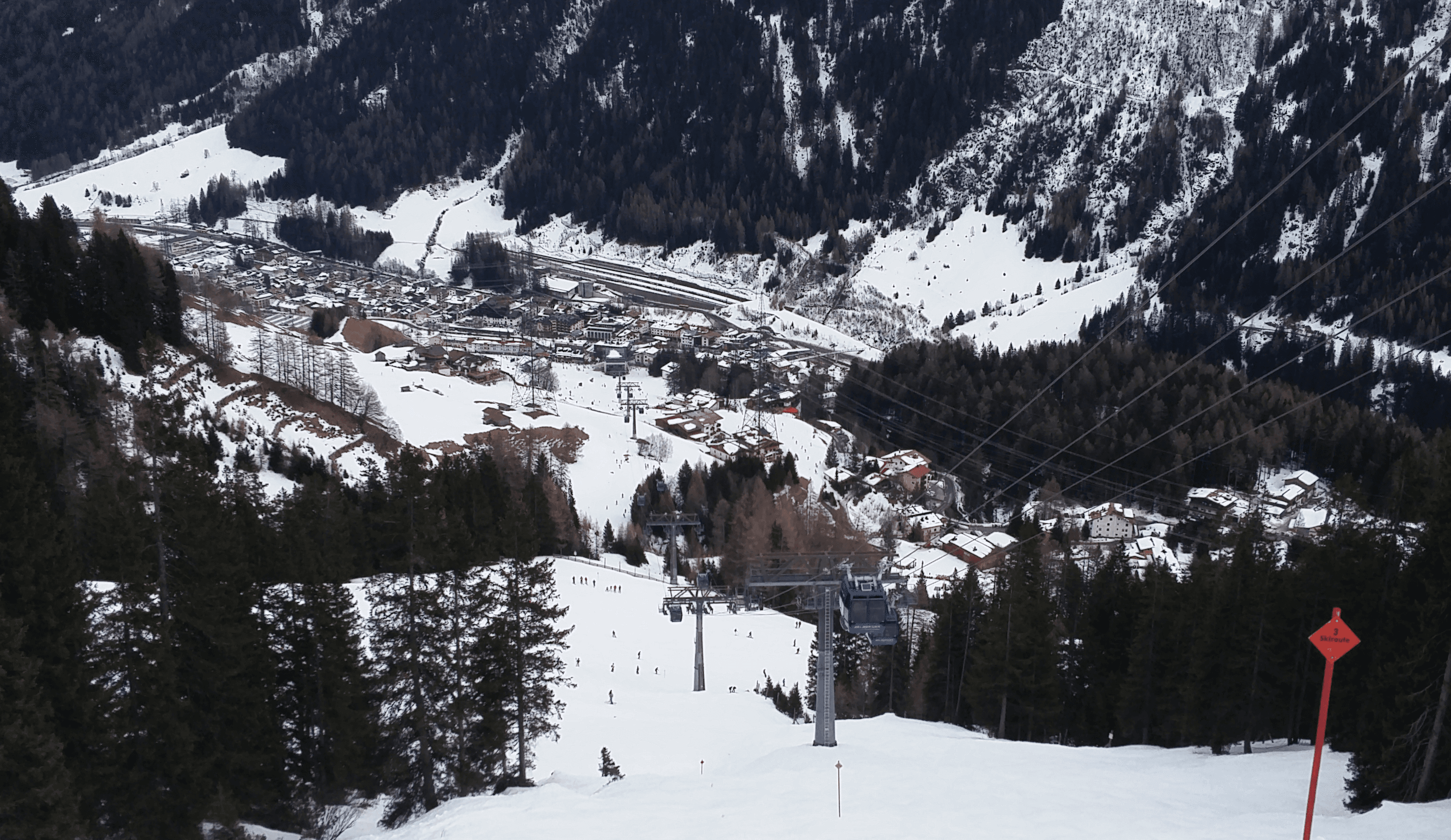
St Anton is a real village. People live here year-round. The main street is narrow and pedestrianized, lined with traditional Tyrolean buildings: stone bases, timber upper floors, painted facades. Hotels range from century-old gasthofs with wood-paneled dining rooms to modern four-star properties, but the overall architectural language is coherent and rooted in the region. There is a church at the center of town. There are locals buying groceries.
The skiing heritage is tangible. The Ski and Heimat Museum documents the village's role in the development of alpine skiing. Hannes Schneider, who essentially invented modern ski instruction, operated his ski school here starting in 1922. Walking through St Anton, you get the sense that this is a place that happens to be a ski resort, not a resort pretending to be a place.
Ischgl
Ischgl feels more engineered. The village sits in the narrow Paznaun valley, and much of its accommodation stock is modern: clean lines, glass, wellness spas, and design hotels that could be in any upscale European resort. The architecture is functional rather than charming. The duty-free shopping connection to Samnaun adds a commercial dimension that St Anton lacks entirely: you can ski across the border and buy discounted perfume, alcohol, and electronics.
This is not a criticism so much as a description. Ischgl invests heavily in polish (the wellness facilities, the concert venues, the hotel amenities), and the result is a resort that feels contemporary, well-maintained, and efficient. What it does not feel is historic, atmospheric, or particularly Austrian. If your Instagram feed matters more than the village church, Ischgl is purpose-built for that priority.
Verdict
St Anton for traditional Tyrolean character. Ischgl for modern amenities and polish. American visitors who have traveled to Europe seeking authentic culture and village atmosphere will strongly prefer St Anton. Those who want a sleek, high-end resort experience with strong amenities will prefer Ischgl.
Getting There
St Anton
St Anton has one of the strongest logistical positions of any ski resort in the Alps. Innsbruck airport (INN) is approximately 62 miles (100 km) east, with a transfer time of about 75 minutes. Zurich airport (ZRH) is roughly 125 miles (200 km) west, with a transfer of about 2.5 hours. Both airports receive direct flights from several US cities and major European hubs.
The decisive advantage: St Anton has its own train station on the Arlberg railway line. You can fly into Innsbruck or Zurich, board a train, and step off directly in the resort. No shuttle bus, no taxi, no transfer booking required. For American travelers navigating European logistics for the first time, this is remarkably convenient. The train from Innsbruck takes about 75 minutes; from Zurich, about 4 hours with one change.
Ischgl
Ischgl sits at similar distances from the same airports: Innsbruck is about 62 miles (100 km), Zurich about 130 miles (210 km). Transfer times are comparable. But Ischgl has no train station. The resort is accessible only by road, via the Paznaun valley from the town of Landeck on the Inn Valley floor. You will need a rental car, a pre-booked private transfer, or a shared shuttle bus.
This is not a major obstacle (transfers are well-organized and readily available), but it adds a planning step and removes the spontaneity of train travel. In bad weather, the Paznaun valley road can occasionally experience delays, though closures are rare.
Verdict
St Anton wins on access, decisively. The train station is a genuine competitive advantage, especially for US travelers who may not want to rent a car in Europe. Being able to step off a train in the center of your ski resort, luggage in hand, is a luxury that most Alpine resorts cannot offer.
Accommodation and Cost
Both resorts sit at the premium end of Austrian pricing, but the details differ.
St Anton
Accommodation in St Anton ranges from traditional gasthofs and pensions, family-run and typically offering half-board (breakfast and dinner included), to modern four- and five-star hotels. Half-board is the norm here, and it represents genuine value: a hearty Austrian dinner included in your room rate saves a significant amount over the course of a week. Expect to pay EUR 120-200 per person per night for a solid mid-range hotel with half-board during peak season. Five-star properties run EUR 300-500+.
The Ski Arlberg lift pass costs approximately EUR 72 per day for adults (2025/26 season), though multi-day passes reduce this considerably. On-mountain dining is standard Austrian pricing: expect EUR 12-18 for a hearty lunch of schnitzel or kasnocken at a mountain hut.
Ischgl
Ischgl's hotel stock trends more modern. Design hotels, large wellness properties, and aparthotels dominate. Half-board is less universal than in St Anton; many properties offer bed-and-breakfast, pushing more dining spend into the evening. Mid-range hotel rates run EUR 100-180 per person per night during peak season. The Silvretta Arena lift pass is approximately EUR 69 per day for adults, with multi-day discounts.
The unique cost factor is Samnaun's duty-free shopping. Ski across the border and you can purchase spirits, fragrances, tobacco, and electronics at prices significantly below Austrian retail. Whether this constitutes savings or merely enables spending depends on your self-control.
Verdict
Costs are broadly comparable, with St Anton running slightly higher overall. St Anton's half-board tradition offsets some of the accommodation premium by eliminating nightly restaurant bills. Ischgl's duty-free shopping is a genuine perk but benefits shoppers more than skiers.
Who Should Choose Which
Choose St Anton If:
- You are an expert or advanced skier and off-piste terrain is a priority
- You want to ski one of the largest interconnected areas in the Alps (Ski Arlberg, 305 km)
- Traditional Austrian village character and ski heritage matter to you
- You want legendary, raucous, authentic apres-ski
- Easy train access from Innsbruck or Zurich is important
- You are a ski history enthusiast: this is where modern alpine skiing began
Choose Ischgl If:
- You are an intermediate skier who values perfectly groomed pistes and modern lifts
- Nightlife, concerts, and a polished party scene are central to your trip
- You prefer modern, design-forward hotels with wellness amenities
- Duty-free shopping on the Swiss border appeals to you
- You want a high-altitude resort with reliable snow coverage into spring
- You care more about resort amenities than village atmosphere
Combine Both If:
They are only 40 minutes apart by car. If you have a rental vehicle and at least ten days, you could base yourself in the Inn Valley and ski both, though each resort deserves a minimum of three full days to explore properly. Alternatively, split a two-week trip between the two for the full range of what Austrian skiing offers: traditional and modern, rugged and polished, earned and engineered.
Further Reading
- Best Ski Resorts for Advanced Skiers: St Anton features prominently in our ranking of expert-level terrain across the Alps.
- Best Value Ski Resorts in Europe: How Austrian pricing compares across the continent.
Browse both resorts in our resort directory, or use the comparison tool to evaluate St Anton and Ischgl side by side across all 15 scoring categories.
 Resort
St. Anton am Arlberg
Austria
 Resort
Ischgl
Austria
 Article
Best Ski Resorts for Advanced Skiers: Expert Terrain Worldwide
Bored of groomed runs? These are the ski resorts that challenge, surprise, and reward advanced skiers — from the off-piste of Chamonix and Verbier to the freeride zones of Japan and the Americas.
 Article
Best Value Ski Resorts in Europe: Budget-Friendly Alps for US Travelers
European skiing doesn't have to cost a fortune. These resorts deliver serious terrain, reliable snow, and a genuine Alpine experience at prices that won't make you wince every time you open your wallet.
More Guides

