ski hireski rentalski equipmentski gear rental europeskisetintersport rentboot fittingski holiday planning
How to Hire Ski Gear in Europe: A Country-by-Country Guide
The Mountain Marker Team10 min read
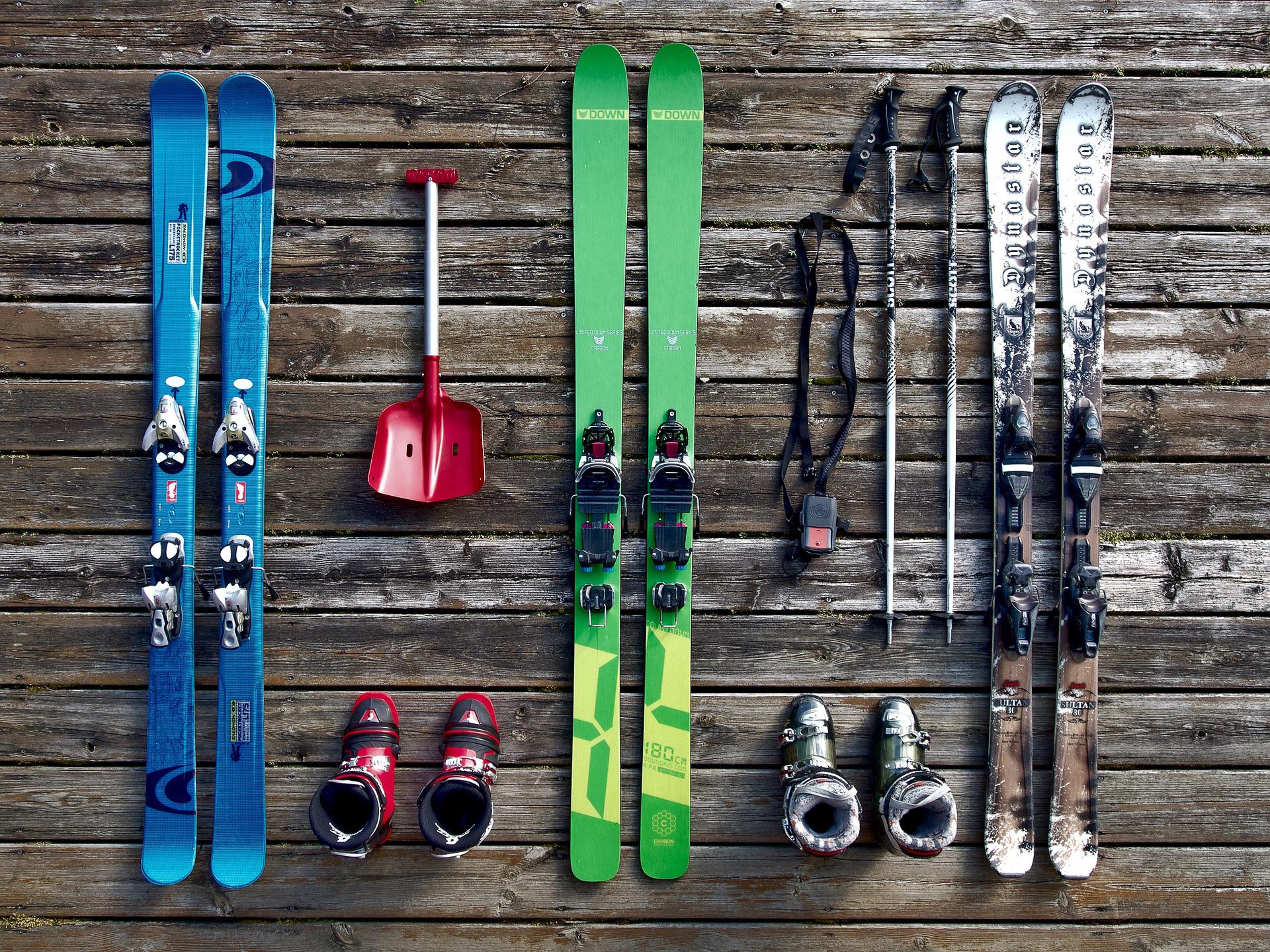
Rental gear lined up and ready — renting in Europe is cheaper, easier, and better than hauling your own across the Atlantic
Flying your own skis across the Atlantic costs $100-200 each way in airline baggage fees. You need a bulky ski bag. You risk damage in transit. And after all that, you arrive at a resort where the rental shop next door stocks current-season equipment that outperforms whatever you bought three years ago. For most American skiers heading to Europe, renting makes more sense than bringing your own gear — but the rental landscape varies significantly from country to country. Pricing, quality, booking systems, and even boot fitting standards differ between France, Austria, Switzerland, Italy, and Andorra. This guide covers all of it so you can make the right call and get the best deal.
Should You Rent or Bring Your Own?
The decision isn't always straightforward. Here's a practical framework.
Rent if: you ski fewer than two weeks per year, you want to try different ski types (all-mountain, carving, freeride) without committing, you don't want to deal with airline ski bag logistics, or you want access to current-season equipment without the purchase price. Rental shops in European resorts carry well-maintained fleets that are typically refreshed every one to two seasons. You'll ski on better equipment than most people own.
Bring your own if: you have custom-fitted boots (this is the big one), you ski 15 or more days per year, or you have specific equipment preferences — a particular ski model, binding setup, or pole length — that a rental shop is unlikely to match.
The smart compromise: bring your own boots, rent skis. Boots are the single most important piece of ski equipment, and a well-fitted pair makes a bigger difference to your comfort and performance than any ski. They're also compact enough to fit in a carry-on or standard checked bag. Rent the rest at the resort and save yourself the hassle and fees of flying with a ski bag.
The Major Rental Chains
European ski rental is dominated by a handful of large chains, each with online pre-booking systems that offer significant discounts over walk-in rates. Knowing which chain operates where helps you compare pricing before you arrive.
Skiset is the largest European rental network, with over 800 shops across France, Austria, Switzerland, Italy, and Andorra. Their online pre-booking system is well-established and typically offers 30-50% off walk-in rates. Equipment quality is consistent and reliable across locations. Skiset is rarely the absolute cheapest option at any given resort, but it's dependable — you know what you're getting. If you're renting for the first time in Europe and want a safe bet, Skiset is a solid default.
Intersport Rent has a strong presence across all major ski countries. Their equipment sits in the mid-range — good quality without the premium pricing of boutique shops. Online booking is available and usually yields 20-40% savings. Intersport shops tend to carry a wider selection of boot sizes and models than smaller competitors, which matters if you have hard-to-fit feet.
Sport 2000 is particularly strong in France and Austria, often undercutting Skiset and Intersport on price by 10-15%. Quality is solid if not spectacular. Their online platform is functional but slightly less polished than Skiset's. Worth checking for value-conscious renters.
Independent shops are where you'll find the best boot fitting, the most knowledgeable staff, and sometimes the most competitive pricing. The trade-off is that most lack sophisticated online booking systems — you may need to email or call to reserve. In resort towns with a strong local identity (think villages in the Dolomites or traditional Austrian towns), independent shops often outperform the chains on service and personal attention.
Resort-branded rental — the shop inside your hotel or at the base of the gondola — is the most convenient option and almost always the most expensive. Use it as a last resort, not a first choice.
Country-by-Country Guide
France
France has the strongest ski rental culture in Europe. The country's large, purpose-built resorts were designed with rental infrastructure baked in from the start, and competition between shops keeps quality high and prices reasonable. Skiset and Sport 2000 dominate the French market, with shops in virtually every resort from Chamonix to Les Arcs.
Pre-booking online is essential in France. Walk-in rates are genuinely 30-50% higher than online prices, and the savings compound across a family. Package deals are the standard format: skis, boots, poles, and helmet bundled together. A standard adult package for six days runs 120-180 EUR ($130-195 USD). Kids' packages are 60-90 EUR ($65-98 USD). Premium or performance packages — featuring current-season skis, better boots, and newer bindings — cost 180-250 EUR ($195-270 USD) and are worth the upgrade if you're an intermediate or better skier. French rental shops are generally efficient at processing large volumes of customers, especially in the mega-resorts. Expect a 20-30 minute fitting process on your first visit. Return is typically by 5pm on your last ski day.
Austria
Austrian rental shops are characterized by excellent equipment quality and outstanding boot fitting. The country's ski culture places a high value on technical precision, and that extends to how rental gear is set up and adjusted. Intersport has a strong presence alongside local chains like Bründl and Hagleitner, which operate high-quality shops across the Tirol and Salzburg regions.
One useful Austrian quirk: half-board hotel packages sometimes include equipment rental as part of the deal. Ask your accommodation provider before booking rental separately — you might already have it covered. Typical cost for a standard adult package is 100-160 EUR ($108-175 USD) for six days, making Austria slightly cheaper than France on average. Premium packages run 150-220 EUR ($163-240 USD). Boot fitting quality is generally excellent, even at chain stores. Austrian technicians take boot fitting seriously and will spend the time to get it right.
Switzerland
Switzerland is the most expensive rental market in Europe, consistent with the country's overall pricing. Stöckli — the premium Swiss ski brand — offers a popular rental program where you can ski on their top-of-the-line models for a premium rate. It's an opportunity to test $1,500+ skis without the purchase commitment.
Standard adult rental packages run 150-220 CHF ($165-240 USD) for six days. Premium packages can exceed 280 CHF ($305 USD). Pre-booking is essential here, not just for savings but because shops at popular resorts like Zermatt and Verbier stock out of popular sizes during peak weeks. Online discounts of 20-40% are common. Despite the higher prices, equipment quality is consistently excellent. Swiss shops tend to stock smaller, more curated selections of higher-end gear rather than the massive warehouses you'll find in French mega-resorts.
Italy
Italy offers the best rental value in the major Alpine countries. Independent shops dominate, particularly in the Dolomites, where family-run operations have been fitting boots and tuning skis for generations. Prices are noticeably lower than France or Austria — expect 80-140 EUR ($87-152 USD) for a standard adult six-day package and 120-180 EUR ($130-195 USD) for premium gear.
The main consideration for American renters is language. In the larger Dolomiti Superski resorts, English is widely spoken. In smaller resorts, particularly in the Aosta Valley or lesser-known areas of Trentino, you may encounter staff who speak limited English. This rarely causes problems — ski sizes are universal — but it can make detailed boot fitting conversations more difficult. Download a translation app as backup. Equipment quality is good to excellent, particularly at shops affiliated with local ski schools.
Andorra
Andorra's duty-free status makes it one of the most budget-friendly rental markets in Europe. With only two major resort areas — Grandvalira and Vallnord — the rental scene is more concentrated, and competition keeps prices low. Standard adult packages run 60-100 EUR ($65-108 USD) for six days, making it roughly half the cost of Switzerland. Equipment quality has improved significantly in recent years, with major chains like Skiset now operating alongside local shops. For budget-conscious families, Andorra's rental pricing alone can justify choosing it over pricier Alpine destinations.
How to Get the Best Deal
The single biggest money-saving move is pre-booking online. Every major rental chain and most independent shops offer online reservations at 30-50% below their walk-in rates. This isn't a gimmick — the discount is real and substantial. For a family of four renting for a week, the savings easily reach $150-250 USD.
Book for six days even if you're only skiing five. Most rental shops price six-day and five-day packages identically, or the sixth day adds only a few euros. You get a rest day with gear still available if you change your mind.
Avoid renting at the airport. Airport rental outlets charge a premium for convenience and the equipment selection is limited. Rent at the resort where competition and selection are both better.
Consider the performance package upgrade. The price difference between standard and performance tiers is typically 30-50 EUR ($33-55 USD) for the week, and you get meaningfully better skis and boots. Current-season skis turn better, hold an edge better, and absorb terrain better than two-year-old fleet skis. If you're an intermediate skier or above, the upgrade pays for itself in a better on-mountain experience.
Helmet rental adds 15-25 EUR ($16-27 USD) per week. Some packages include it; others charge separately. Always check whether a helmet is bundled before adding it as a line item.
Boot Fitting Tips
Boots matter more than skis. A perfectly tuned pair of $2,000 skis will underperform with poorly fitting boots, while mediocre rental skis paired with well-fitted boots will feel responsive and comfortable all day. If you're renting boots, investing 15 minutes in a proper fitting session transforms your experience.
Ask for heat-molded liners. Most quality rental shops offer this service for free or at a nominal charge of 5-10 EUR. The liner is heated in a small oven, then placed on your foot so it conforms to your exact foot shape as it cools. The process takes about 10 minutes and eliminates the pressure points that cause pain by mid-afternoon.
Arrive early in the day. Boot fitters do their best work when they're not rushed. Show up at opening rather than 4pm when everyone else is swapping gear. You'll get more attention and a better fit.
Don't size up for comfort. Ski boots should feel snug — your toes should lightly brush the front of the boot when you stand upright, then pull back when you flex forward into a skiing stance. A boot that feels comfortable in the shop will be too loose on the mountain, giving you less control and more blisters from your foot sliding around inside the shell.
Tell the fitter about any foot issues. Wide feet, high arches, bunions, previous injuries — all of these affect which shell and liner combination will work best. European boot fitters are experienced and will work with you, but they can't fix a problem they don't know about.
Further Reading
- First-time ski holiday checklist — The complete guide to what to book, pack, and know before your first European ski trip.
- Complete guide to planning a ski trip from the US — Logistics, flights, transfers, and budgeting for a transatlantic ski holiday.
- Best budget ski resorts in Europe — Where to ski in Europe without breaking the bank.
Browse all resorts in our resort directory, or use the comparison tool to find the right destination for your budget and ability level.
ArticleFirst-Time Ski Holiday Checklist: What to Book, Pack & Know Before You Go
The complete first-time ski holiday checklist — what to book, what to pack, how much it costs, resort picks for beginners, and the etiquette rules nobody tells you. Everything you need so nothing catches you off guard.
 Article
Complete Guide to Planning a Ski Trip to Europe from the US
Everything you need to plan a European ski holiday from the US — from booking flights and choosing a resort to budgeting, packing, and handling jet lag. A step-by-step timeline so nothing falls through the cracks.
 Article
Best Budget Ski Resorts: Where to Ski on a Budget in 2026
Six European ski resorts where you can ski quality terrain for significantly less than the big-name Alps destinations, with real cost breakdowns for a week-long trip.
ArticleBest Value Ski Resorts in Europe: Budget-Friendly Alps for US Travelers
European skiing doesn't have to cost a fortune. These resorts deliver serious terrain, reliable snow, and a genuine Alpine experience at prices that won't make you wince every time you open your wallet.