
South America skiingfirst time skiing South AmericaAndes skiingski trip planningChile skiingArgentina skiingbudget ski tripskiing in chile cost
First-Timer's Andes Ski Guide 2026: Costs, Flights & Altitude
The Mountain Marker Team15 min read
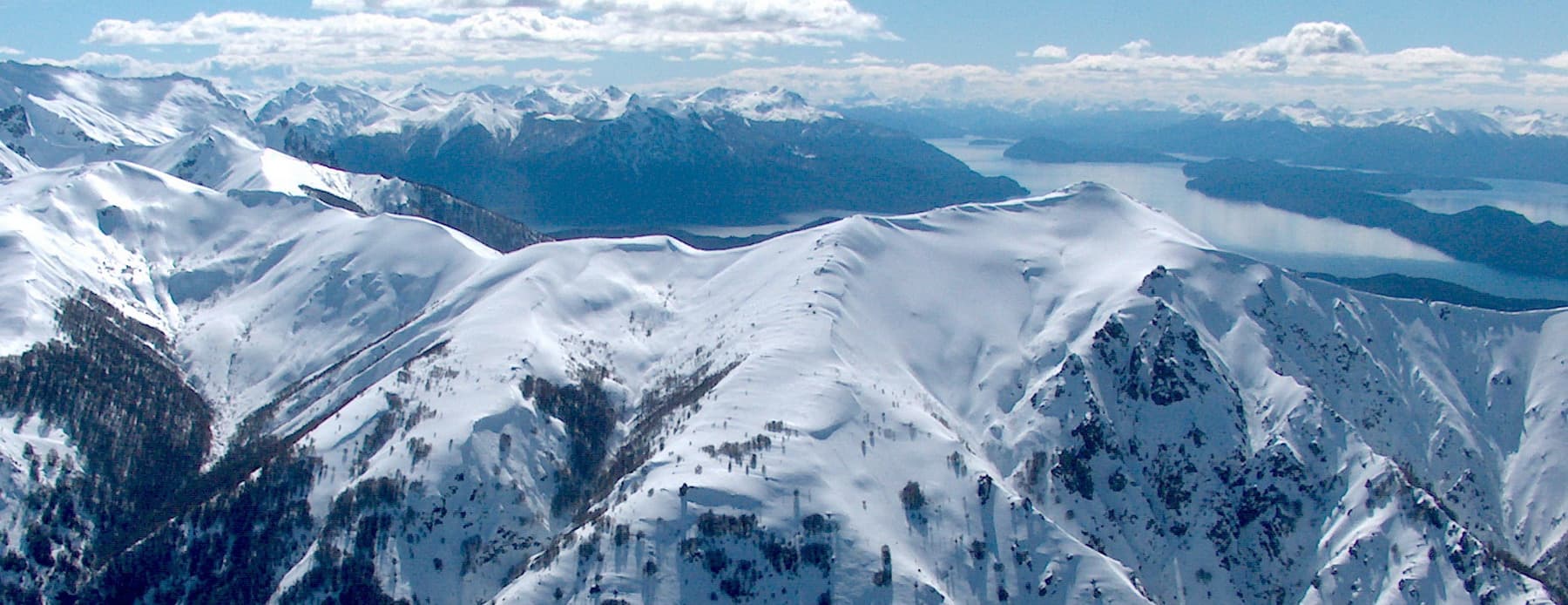
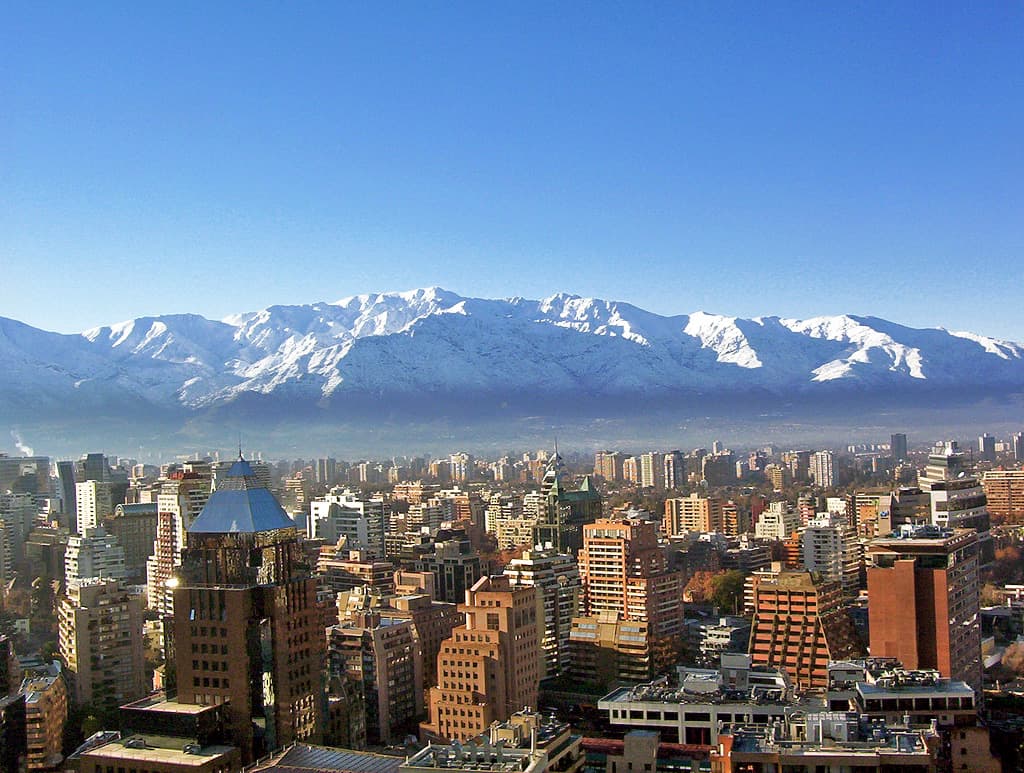
The Patagonian Andes above Bariloche — the 2026 season is underway
The 2026 South American ski season is open. Chile's resorts opened mid-to-late June; Argentine resorts followed by late June. A one-week trip from the US costs $2,000–$4,500 per person including flights, accommodation, lift passes, and food (2026 estimate) — with Argentina running 30–40% cheaper than Chile for everything except airfare. US, UK, EU, Canadian, and Australian citizens get visa-free entry to both countries. Here is everything else you need to know.
Is South America Worth It for Skiing?
Yes — but with realistic expectations. South American ski resorts are not the Alps. They're smaller, the infrastructure is less polished, and the overall resort experience is rawer. But they offer things no European or North American resort can match: skiing in the Northern Hemisphere's off-season, dramatically uncrowded slopes, Andean scenery that looks like another planet, and (in Argentina) prices that make European skiing look expensive.
If you're a skier who's done the Alps and the Rockies and wants something genuinely different, South America delivers. If you've never skied outside North America and want a smooth, frictionless experience, the Alps might be a better first international ski trip. But if you're adventurous, flexible, and willing to trade polish for character, the Andes won't disappoint.
For a full overview of every resort, read our complete guide to South American ski resorts.
Flights
From the United States
To Chile (Santiago, SCL): Santiago has direct flights from four major US cities:
- Miami (MIA): 8.5 hours, LATAM and American Airlines. Usually the cheapest gateway — $600–1,100 return.
- New York (JFK): 10–11 hours, LATAM and American. $800–1,400 return.
- Los Angeles (LAX): 11.5 hours, LATAM. $900–1,500 return.
- Dallas (DFW): 10 hours, American. $700–1,200 return.
From Santiago, Valle Nevado is 1 hour by road, La Parva and El Colorado are similar, and Portillo is 2.5 hours. You can land in the morning and be skiing by early afternoon.
To Argentina (Buenos Aires, EZE):
- Miami (MIA): 9 hours, Aerolineas Argentinas and American. $600–1,200 return.
- New York (JFK): 11 hours, Aerolineas Argentinas and American. $800–1,400 return.
- Houston (IAH): 10.5 hours, United. $700–1,300 return.
From Buenos Aires, you'll need a domestic connection: Bariloche (2 hrs, $80–200 return), Mendoza for Las Lenas (1.5 hrs), Ushuaia for Cerro Castor (3.5 hrs), or Chapelco (2 hrs).
From the United Kingdom
To Santiago: Via Sao Paulo (LATAM) or Madrid (Iberia). 16–18 hours total. GBP 700–1,200 return. To Buenos Aires: Direct on British Airways from Heathrow. 14 hours. GBP 600–1,000 return. Also via Madrid on Iberia.
Booking Tips
- Book 3–4 months ahead for July travel, 2 months for August/September
- Miami is consistently the cheapest US gateway
- Consider open-jaw tickets (into Santiago, out of Buenos Aires) for a two-country trip — the price premium is often minimal and you avoid backtracking
- Midweek departures save $100–200
- Set fare alerts — South American routes are more price-volatile than European ones
For detailed month-by-month flight pricing, see our best time to ski South America guide.
Visas and Entry Requirements
US citizens: No visa required for Chile (up to 90 days) or Argentina (up to 90 days). You need a passport valid for the duration of your stay.
UK citizens: No visa required for either country. Same 90-day allowance.
EU/Canadian/Australian citizens: Visa-free for both countries.
Reciprocity fees: Argentina previously charged a reciprocity fee to US citizens, but this has been eliminated. Chile's reciprocity fee for US citizens was also dropped years ago. Entry is straightforward — show up with a valid passport.
Health entry requirements: Neither Chile nor Argentina currently requires proof of vaccination, negative tests, or health declarations for entry as of June 2026. Check your government's travel advisory before booking in case this changes.
Altitude: What You Need to Know
This is the factor that catches first-timers off guard. Chilean ski resorts are high — significantly higher than most European and many North American resorts.
Resort Altitudes
| Resort | Base | Peak | Altitude Risk |
|---|---|---|---|
| Valle Nevado | 2,860m | 3,670m | Moderate–High |
| Portillo | 2,862m | 3,310m | Moderate–High |
| La Parva | 2,662m | 3,630m | Moderate–High |
| El Colorado | 2,430m | 3,333m | Moderate |
| Nevados de Chillan | 1,500m | 2,700m | Low |
| Las Lenas | 2,240m | 3,430m | Moderate |
| Cerro Catedral | 1,050m | 2,388m | Low |
| Chapelco | 1,250m | 1,920m | Very Low |
| Cerro Castor | 195m | 1,057m | None |
For comparison: most major Alpine resorts have bases at 1,500–2,000m and peaks at 2,500–3,500m. Chamonix's base is 1,035m. Valle Nevado's base is higher than the summit of many European resorts.
Managing Altitude
If you're skiing Chilean resorts (above 2,500m):
- Spend your first day at moderate altitude. If you fly into Santiago (520m), stay in the city for one night before heading up.
- Hydrate aggressively. The Andes are dry, and dehydration at altitude accelerates symptoms.
- Take it easy on day one. Ski half a day, skip the most strenuous runs, and see how you feel.
- Avoid alcohol on day one — it intensifies altitude effects.
- Symptoms of mild altitude sickness: headache, fatigue, mild nausea, shortness of breath. These usually pass within 24–48 hours.
- If symptoms are severe (persistent vomiting, confusion, difficulty breathing), descend immediately and seek medical attention.
If you're skiing Argentine resorts:
- Bariloche, Chapelco, and Cerro Castor are all low enough that altitude is a non-issue. You can step off the plane and ski hard.
- Las Lenas at 2,240m base is moderate — most people won't notice, but stay hydrated.
Practical advice: Don't let altitude scare you off Chilean resorts. The vast majority of fit, healthy adults adapt within a day. Just don't plan a big first day at Valle Nevado — ease in, drink water, and you'll be fine by day two.
Language
Spanish is the official language in both Chile and Argentina. English proficiency varies:
At ski resorts: Good to very good. Ski schools at major resorts (Valle Nevado, Portillo, Cerro Catedral, Las Lenas) have English-speaking instructors. Ticket offices, rental shops, and resort hotels typically have at least one English-speaking staff member. You can get through a ski holiday without Spanish at any of the major resorts.
In towns and cities: More variable. Bariloche's tourism infrastructure handles English reasonably well. San Martin de los Andes less so. Santiago is solid for English in tourist areas. Smaller towns and local restaurants — expect to use Spanish or gestures.
Useful phrases:
- "Un boleto de esqui, por favor" — One ski pass, please
- "Donde esta la escuela de esqui?" — Where is the ski school?
- "Necesito alquilar esquis" — I need to rent skis
- "La cuenta, por favor" — The check, please
- "Tiene menu en ingles?" — Do you have a menu in English?
Download Google Translate's Spanish language pack for offline use before you go. You won't need it at the resort, but it's invaluable for restaurants, taxis, and navigating towns.
What to Expect vs European/North American Skiing
Things That Are Better
- Crowds. Even at peak season, South American slopes feel emptier than a quiet midweek day at most Alpine resorts. The lift queues that frustrate European skiers simply don't exist here most of the time.
- Value (Argentina). A day of skiing including rental, lunch, and a bottle of wine at dinner costs what a lift pass alone costs in Switzerland.
- Scenery. The Andes are visually unlike anything in Europe or North America. Above-treeline volcanic terrain, vast open bowls, views that stretch to the horizon. Raw and dramatic in a way that groomed European resorts aren't.
- Uniqueness. Skiing in July when your friends are at the beach creates a particular kind of satisfaction.
Things That Are Different
- Resort infrastructure. Lifts are older and slower at most resorts. Valle Nevado has invested in modern chairlifts, but smaller resorts may have surface lifts and fixed-grip chairs that feel like a time warp for skiers used to high-speed detachable quads.
- Grooming. Less consistent than European or North American standards. Chilean resorts are better at grooming than Argentine ones. Don't expect every run to be corduroy every morning.
- Dining on-mountain. On-mountain restaurants exist but are basic compared to European huts. No white-tablecloth mountain lunches. Pack a snack.
- Trail marking. Less thorough than you're used to. Piste maps may be approximate rather than precise. Off-piste areas aren't always clearly delineated.
Things That Are Worse
- Lift systems. Fewer lifts, more surface lifts, longer queues when weather forces closure of upper lifts. The total uplift capacity is lower than comparable European resorts.
- Reliability. Weather-related closures are more common, especially at exposed above-treeline resorts. Wind is a bigger factor than in the Alps.
- Access. Getting to some resorts (Las Lenas, Nevados de Chillan) involves long drives on mountain roads. The infrastructure isn't as developed as the Alps' network of motorways and railways.
The Bottom Line
South America skiing is an 8/10 experience on the mountain and a 9/10 experience off it (in Argentina). You're not coming here for the most efficient, polished ski holiday — you're coming for the adventure, the value, and the genuine novelty. Set expectations accordingly and you'll have a remarkable trip.
Budget Breakdown: One-Week Trip
Here's what a one-week ski trip to South America actually costs, broken down for two scenarios. Flight ranges are inherently variable; the mutable line items are marked as estimates to confirm at time of booking.
Scenario 1: Chile (Valle Nevado) — Budget-Moderate
| Expense | Cost (per person) |
|---|---|
| Flights (NYC to Santiago, economy) | $900–1,200 |
| Accommodation (6 nights resort hotel, mid-range) | ~$900–1,400 |
| Lift passes (6 days) | ~$390–510 |
| Equipment rental (6 days) | ~$200–280 |
| Food and drink (6 days) | ~$360–480 |
| Airport transfers | $80 |
| Travel insurance | $80 |
| Total | ~$2,910–4,030 |
Scenario 2: Argentina (Bariloche / Cerro Catedral) — Budget
| Expense | Cost (per person) |
|---|---|
| Flights (NYC to Buenos Aires, economy) | $900–1,200 |
| Domestic flight (Buenos Aires to Bariloche) | $120–200 |
| Accommodation (6 nights, mid-range hotel in Bariloche) | ~$420–700 |
| Lift passes (6 days) | ~$240–420 |
| Equipment rental (6 days) | ~$90–150 |
| Food and drink (6 days) | ~$200–300 |
| Airport transfers | $40 |
| Travel insurance | $80 |
| Total | ~$2,090–3,050 |
How This Compares
| Destination | Approximate One-Week Cost (incl. flights from US) |
|---|---|
| Argentina (Bariloche) | ~$2,000–3,100 |
| Chile (Valle Nevado/Portillo) | ~$2,900–4,000 |
| France (Trois Vallées) | ~$3,500–5,500 |
| Austria (St. Anton) | ~$3,000–4,500 |
| Switzerland (Zermatt) | ~$4,500–7,000 |
| Colorado (Vail) | ~$3,500–6,000 |
Estimates in USD; confirm current prices at time of booking.
Argentina competes with the cheapest European options while including transatlantic flights. Chile sits in the same price band as Austria — reasonable, but not bargain-level. If you're building a trip that combines the ski mountains with city time, our guide to combining skiing with Buenos Aires or Santiago covers the logistics and costs.
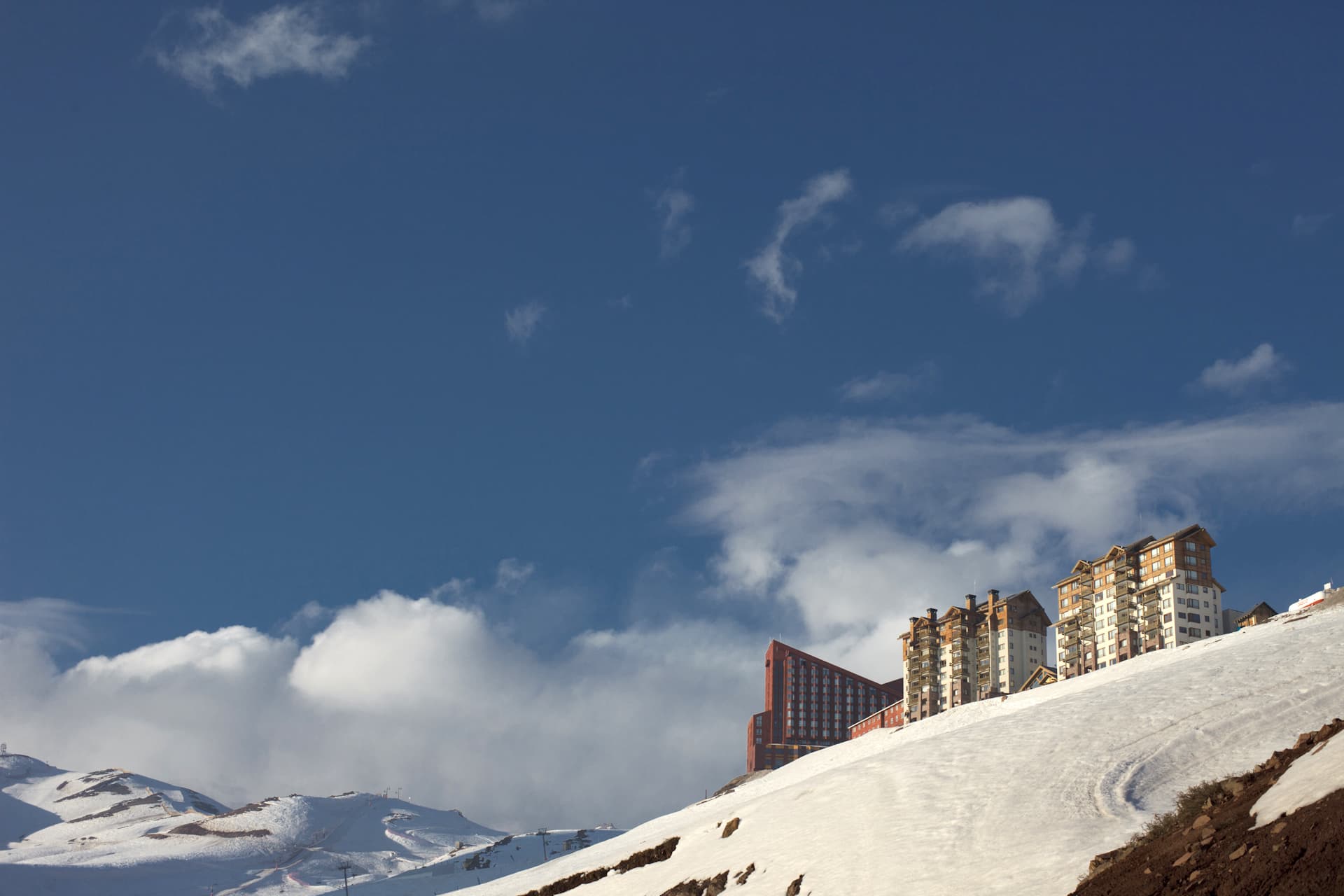
Where to stay in Cerro Catedral
Search ski apartments and rentals near Cerro Catedral.
Find chalets on Vrbo →Sponsored — we earn a small commission when you book through Vrbo. It doesn't cost you more.
Money and Payment
Chile
- Currency: Chilean Peso (CLP)
- Credit cards widely accepted at resorts and in Santiago
- ATMs available in Santiago and resort villages
- Tipping: 10% at restaurants is customary
Argentina
- Currency: Argentine Peso (ARS)
- The currency situation in Argentina has been volatile in recent years. Bring US dollars in cash — many hotels and tourism businesses prefer USD and offer favorable rates
- Credit cards accepted at resorts and hotels, but smaller restaurants and shops may prefer cash
- ATMs exist but withdrawal limits can be low and fees high — bring enough cash for small purchases
- Tipping: 10% at restaurants
Important for Argentina: Research the current exchange rate situation before your trip — the gap between official and parallel rates has historically been significant and can materially affect your costs.
Packing for the Andes
You can ski in the same gear you'd use in Europe or North America, with several adjustments that are specifically important for the Andes environment.
The Altitude and UV Kit
- Sunscreen SPF 50+. This is non-negotiable, not optional. The UV at altitude in the Andes is more intense than at comparable European altitudes because the Southern Hemisphere ozone layer is thinner and the Andes sit at lower latitude. Burned faces are a near-universal first-timer experience. Bring more than you think you need, and reapply every two hours on the mountain.
- Lip balm with SPF. Separate from sunscreen. Pack a dedicated lip balm with SPF 30+.
- High-UV goggles and sunglasses. Standard ski goggles provide adequate UV protection. Bring separate UV400-rated sunglasses for off-mountain use.
- Altitude medication. If you're concerned about altitude at Chilean resorts, consult your doctor before traveling about acetazolamide (Diamox). It's available by prescription and genuinely helps some people acclimatise faster. Not everyone needs it, but it's worth discussing if you're prone to altitude effects or travelling directly to high elevations.
- Electrolyte tablets. Dehydration at altitude happens faster than you expect. Adding electrolytes to your water bottle speeds rehydration.
- Reusable water bottle (1 litre). Carry it on the mountain and refill regularly. Hydration is your primary altitude management tool.
Layers
Temperature swings through the day can be extreme — bitterly cold mornings, warm afternoon sunshine. A good layering system matters more than a heavy jacket:
- Base layer: Merino or synthetic thermal, long-sleeved
- Mid layer: Fleece or light insulated jacket for cold mornings and upper mountain
- Shell: Breathable waterproof outer (you probably already own this)
- Buff or neck gaiter: Wind above the treeline is relentless in open Andean terrain
Other Essentials
- Electrical adapters. Chile uses Type C/L plugs; Argentina uses Type I. Bring universal adapters.
- Cash. Especially for Argentina. See money section above.
You can rent ski equipment at all major resorts, so there's no need to fly with skis unless you're particular about your setup.
Health and Safety
- Travel insurance: Essential. Make sure your policy covers skiing, altitude sickness, and medical evacuation. Many standard travel policies exclude winter sports — buy a policy that explicitly includes them. Check the small print: some "winter sports" policies exclude off-piste activity.
- Medical facilities: Major resorts have on-mountain medical stations. Santiago and Buenos Aires have excellent hospitals. Bariloche has adequate medical facilities. More remote resorts (Las Lenas, Cerro Castor) have basic medical support — serious injuries require evacuation.
- Water: Tap water is safe to drink in Chile (Santiago and resort areas) and in major Argentine cities. Bottled water is cheap and widely available.
- Food safety: No significant concerns at any of the resorts or major towns.
A Suggested One-Week Itinerary
Chile Focus (Valle Nevado + Tres Valles)
- Day 1: Arrive Santiago. Evening in the city — eat seafood at Mercado Central.
- Day 2: Morning transfer to Valle Nevado (1 hour). Settle in, easy afternoon skiing to acclimatise.
- Days 3–5: Full ski days. Explore Valle Nevado, La Parva, and El Colorado on the Tres Valles pass.
- Day 6: Half-day skiing. Afternoon back in Santiago. Dinner in Bellavista or Lastarria.
- Day 7: Fly home (or extend for a Santiago city break).
Argentina Focus (Bariloche / Cerro Catedral)
- Day 1: Arrive Buenos Aires. If time allows, steak dinner in Palermo.
- Day 2: Morning flight to Bariloche (2 hrs). Afternoon exploring the town — chocolate shops, lakefront walk.
- Days 3–6: Full ski days at Cerro Catedral. Evenings in Bariloche restaurants.
- Day 7: Morning flight back to Buenos Aires. Afternoon flight home, or add 1–2 days for Buenos Aires.
For a full itinerary combining both countries and city time, see our guide to combining skiing with Buenos Aires or Santiago.
Common First-Timer Mistakes
- Flying straight to a high Chilean resort without acclimatising. Spend a night in Santiago first. The hour you lose in convenience is worth it.
- Booking July travel to Argentine resorts without knowing about school holidays. The crowds mid-July are real. Read our timing guide.
- Not bringing enough cash to Argentina. ATM limits and card acceptance issues can leave you short. Bring USD.
- Underestimating UV at altitude. Apply SPF 50 every 2 hours. The ozone layer is thinner in the Southern Hemisphere and altitude intensifies UV exposure. This is not like skiing in the Alps.
- Expecting Alpine-level infrastructure. Calibrate expectations. The mountains are incredible; the chairlifts are not.
- Not checking road conditions (Chile). The switchback road to Tres Valles resorts can close after heavy snow. Have a contingency plan before driving up.
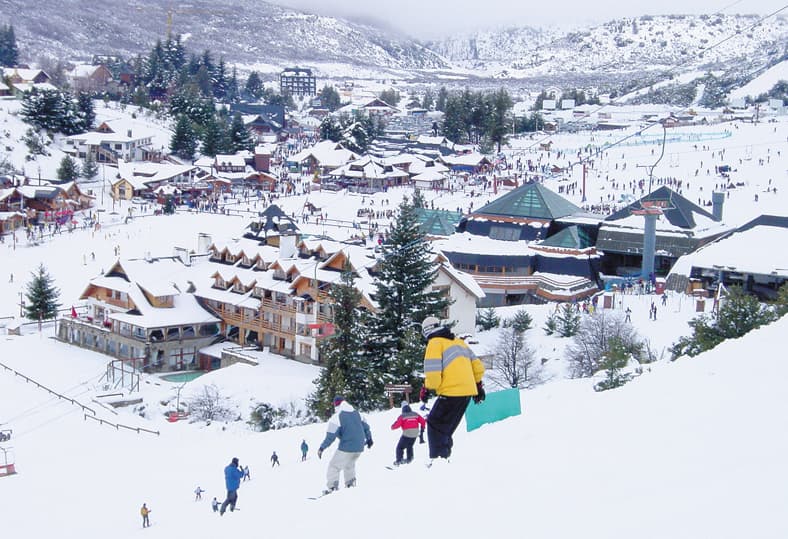
Where to stay in Valle Nevado
Browse hotels and accommodation near Valle Nevado.
Find hotels on Expedia →Sponsored — we earn a small commission when you book through Expedia. It doesn't cost you more.
Ready to Go?
South America skiing is one of the great adventures in world skiing — less predictable than the Alps, less polished than the Rockies, but genuinely unlike anything else. The 2026 season is running now through October, with the best conditions building through July and holding through August.
Start with our complete guide to South American ski resorts for detailed breakdowns of every resort. If you're choosing between countries, our Chile vs Argentina comparison will help you decide. If you're building a trip around Buenos Aires or Santiago city time, our city + ski planning guide covers the logistics. And when you're ready to pick your mountain, browse the Mountain Marker resort directory to compare options side by side.
Decided where to go?
Build your itinerary with the trip planner.
ResortValle Nevado
Chile
 Resort
Portillo
Chile
ResortCerro Catedral
Argentina
ArticleSouth America Ski Resorts: The Complete 2026 Guide to Skiing in Chile & Argentina
9 ski resorts in Chile and Argentina compared by season, terrain, and cost. Skiing in South America starts from around $1,800 per week including flights from the US.
ArticleChile vs Argentina Skiing 2026: 9 Resorts Compared
Chile vs Argentina skiing: 9 resorts compared on terrain, snow, cost and access, with budget breakdowns to help you pick the right Andes ski trip for 2026.
 Article
Combining Skiing and Buenos Aires or Santiago: The Perfect South American Trip
How to build a 7-10 day South American trip that combines world-class skiing in the Andes with the culture, food, and nightlife of Buenos Aires or Santiago — with sample itineraries and budgets.
