
where-to-ski2026-2027el-ninoepic-passikon-passski-planningeuropenorth-americajapansouthern-hemisphere
Where to Ski 2026/27: Best Resorts, Pass Picks & Snow
The Mountain Marker Team20 min read
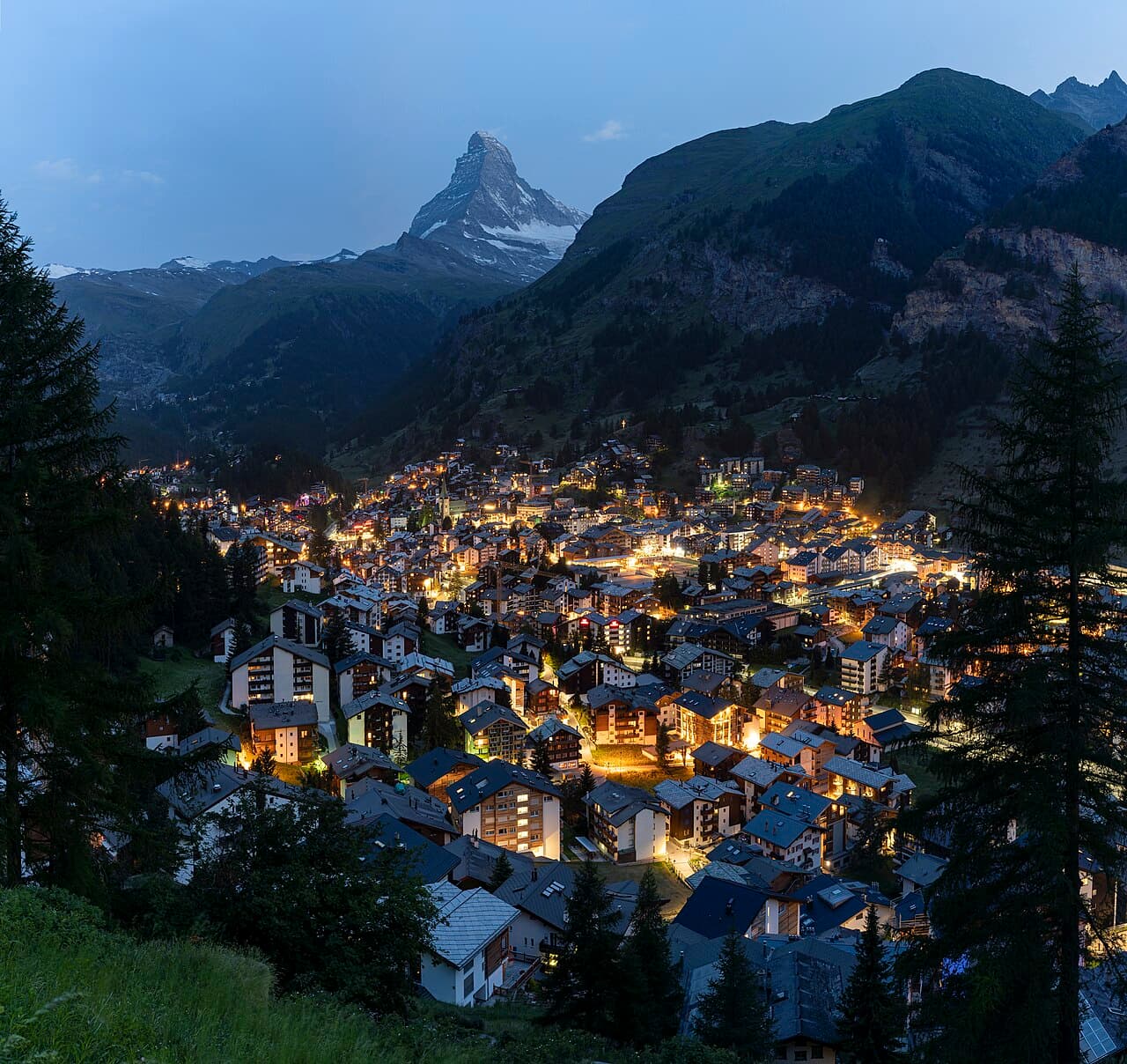
Zermatt beneath the Matterhorn: glacier skiing to 3,883m makes it one of the most snow-reliable resorts in the Alps
The 2026/27 ski season is shaping up to be one of the most strategically interesting in recent memory. A developing El Nino pattern, fresh pass landscape changes, and a brutal 2025/26 season for Western US resorts have rewritten the playbook. Here is where to go, why, and how to book it right.
If you only read this paragraph: book high. Resorts above 2,000 metres in Europe and the southern tier of the American West are the strongest 2026/27 picks. Japan and the Canadian Rockies remain reliable. The southern hemisphere (Argentina, Chile, New Zealand) gives you a second winter from June onwards. Pass economics changed this year in skier-friendly ways, particularly for travellers under 30. The headlines from last season were rough, but the conditions that produced them are reversing. The best ski trips of 2026/27 will be booked by people who understand which way the storm tracks are moving.
Chasing snow this week rather than planning a season? See where it is snowing right now: current snow conditions and 7-day snowfall forecasts for 200+ ski resorts worldwide, refreshed every six hours.
The rest of this guide explains why.
Why next season is worth getting excited about
Last winter was hard for parts of the ski world. Vail Resorts reported 20 percent fewer skier visits across its North American mountains. The American West saw historically low snowpack. The story dominating headlines this spring has been retreat: closures, layoffs, weak quarters.
That story misses something important: 2026/27 is unlikely to look like 2025/26. The dominant climate pattern is flipping, and pattern flips are exactly what Western North America has been waiting for.
The Pacific Ocean is in the late stages of a weak La Nina. ENSO (the El Nino Southern Oscillation) is the climate cycle in the equatorial Pacific that swings between cool (La Nina), warm (El Nino), and neutral phases roughly every two to seven years. Each phase changes global storm tracks and snowfall distribution in characteristic ways. If you want a deeper read on the mechanism, our El Nino vs La Nina guide covers it in detail.
NOAA declared El Nino on 11 June 2026, and the Climate Prediction Center's 10 September 2026 discussion puts a 75 percent chance on a historic event in October to December, defined as a 3-month RONI value of +2.5C or more (CPC ENSO Diagnostic Discussion, 10 September 2026). The chance of a very strong event, at the lower +2.0C threshold, is 98 percent for that same window, easing to 75 percent for December to February and 39 percent for January to March (Strength Probabilities, Sep 2026), while the chance of El Nino conditions of any strength continuing through December to February is 100 percent (Probabilities, Sep 2026). The median forecast path peaks at +2.67C in October to December and decays from there, so the tilt is strongest as the season opens — see the El Nino forecast for the season-by-season path. El Nino tilts the storm track south. Based on NOAA's historical El Nino winter composites, that favours the Sierra Nevada, the southern Rockies covering southern Colorado and New Mexico, and the American Southwest. The Pacific Northwest and Northern Rockies, which suffered most of last season's pain, are associated with drier-than-average odds. Northern Utah and north-central Colorado sit near the transition between those two patterns rather than inside the favoured zone: the Climate Prediction Center indicates a weak tilt toward below-normal precipitation across portions of the central West, and forecast probabilities there are modest in either direction.
For Europe, the El Nino signal is weaker, but the underlying message is the same one Mountain Marker has been making for two seasons: altitude matters more than ENSO. Resorts above 2,000 metres deliver consistently. The variability sits at lower elevations, and that is now true regardless of which Pacific phase is dominant.
The point is not that next winter is guaranteed. Long-range forecasts carry meaningful uncertainty at six- to twelve-month lead times. The point is that the conditions that made last season disappointing are not the conditions skiers face for 2026/27. Different patterns, different favoured regions, different opportunity. Skiers who plan around the actual outlook will have an excellent season.
The pass landscape changed in your favour
Updated August 2026: the prices in this section are the launch prices as published in March 2026 and are kept here as a record of what the two operators announced. As of August 2026 the full adult Epic Pass is $1,119 and the full adult Ikon Pass is $1,449. Both operators step pricing up through the autumn, and Ikon lists its current prices as valid until October 8, 2026. See our passes page for current figures.
The two passes that anchor international ski travel, Epic and Ikon, both released their 2026/27 lineups in March. The headline numbers and the structural changes are worth understanding before you book anything else. Our ski passes page covers the full breakdown by resort.
Epic Pass 2026/27
The full Epic Pass is $1,089 for adults, a 3.6 percent increase that is below typical inflation. The Epic Local Pass is $809.
The standout change: a new 20 percent discount for skiers and riders aged 13 to 30. That brings the full Epic Pass to $869 and the Local to $649 for the under-30 tier. Vail is explicit about the strategy of capturing the next generation of skiers, and CEO Rob Katz has confirmed this pricing is intended to persist beyond 2026/27.
The resort lineup is unchanged from last season. The 2025 Austrian additions (Solden, Mayrhofen, Hintertux, Saalbach, Kitzsteinhorn, Silvretta Montafon) remain on the pass with five days of access each (launch-period detail as published in March 2026, not re-verified for 2026/27: the Epic pass page as extracted in August 2026 groups these under 36 European Partner Resorts and does not state a day limit). Verbier and the broader 4 Vallees network in Switzerland also retain their five-day inclusion. The North American core is the same: Vail, Whistler Blackcomb, Park City, Breckenridge, Beaver Creek, Heavenly, and 31 others.
If you are 30 or under, the Epic Pass is the most aggressive value play in skiing right now.
Ikon Pass 2026/27
The full Ikon Pass is $1,399 for new buyers ($1,349 with the renewal discount offered at launch; the Ikon prices published as of August 2026 do not list a renewal tier), up 5 percent. The Ikon Base Pass is $949. The Ikon Session Pass starts at $299 for two-, three-, or four-day options.
Ikon's structural changes matter more than its pricing. Arapahoe Basin, acquired by Alterra in 2024, is now unlimited on the Ikon Base Pass — a significant upgrade. Snowmass joins the Base Pass with five days of access. Three new Midwest resorts join the network: Tamarack (Idaho), Devil's Head (Wisconsin), and additional bonus mountains in Minnesota, Massachusetts, and British Columbia.
For groups, Alterra's new "Squad Pack" prices five Base Passes for buyers aged 23 to 28 at $750 each, a meaningful saving for friend groups. There is also a new refundable purchase option: pass holders who don't scan their pass by January 15, 2027 receive a 100 percent refund. Scan once, get 50 percent back. This effectively removes the downside risk of buying early.
Which pass is right for you
The honest answer depends on where you actually want to ski.
If your itinerary leans Colorado, Utah, or the Northeast US, the right choice is Ikon. The Aspen, Snowbird, Alta, Steamboat, Killington, and Big Sky combination is unmatched.
If your itinerary leans toward Whistler, Park City, Breckenridge, Vail, or includes European travel, choose Epic, particularly with the Austrian additions and Verbier access.
If you are under 30 and want maximum flexibility, choose Epic without question. The 20 percent discount is the best value proposition of either programme.
If you ski fewer than five days a year, neither full pass makes sense. The Epic Day Pass or Ikon Session Pass is the right product.
We will publish a deeper Epic vs Ikon comparison next week with break-even calculations for typical itineraries. For now, the Mountain Marker passes page shows which resorts sit on which pass, and the strategic point is that both passes got better for travellers. The shift toward youth pricing and refundability is a structural improvement worth taking advantage of.
Europe in 2026/27: book high, book early
Europe is the largest ski market in the world for a reason. Centuries of infrastructure, interconnected lift networks that span hundreds of kilometres, and resort villages built before the chairlift was invented. For the 2026/27 season, the editorial line is straightforward: prioritise altitude.
The Alps are not as climate-sensitive to ENSO as North America, but the warming trend in the western Alps over the past five seasons has been measurable. Lower-elevation resorts (anything with a base under 1,500 metres) have seen more variability. Higher-elevation resorts have not.
Scandinavia answers the snow question with latitude rather than altitude. Sälen, in Sweden, is about half an hour by road from Scandinavian Mountains Airport; see transfers to Sälen.
The standout 2026/27 picks for Europe:
Val Thorens, France. The highest base elevation in the Alps at 2,300 metres. Connected to the broader Three Valleys network (600km of pistes), with snow security built into the geography. If you want one resort that will deliver regardless of what the season produces, this is it.
Zermatt, Switzerland. Glacier skiing to 3,883 metres, year-round terrain access, and a car-free village beneath the Matterhorn that is genuinely as picturesque as the photos suggest. Higher price point than France, but the snow reliability is worth it.
Chamonix, France. The Mont Blanc valley, with terrain ranging from beginner-friendly to among the most serious lift-accessed off-piste in the world. The Aiguille du Midi cable car gives you 2,800 metres of vertical from a single lift. Best for advanced skiers and any traveller who values atmosphere as much as turns.
St Anton, Austria. Sits at the meteorological convergence of Atlantic storm systems and consistently posts among the highest snowfall totals in the Alps regardless of climate phase. The Ski Arlberg ski area has expanded significantly over the past decade and now offers 305km of pistes across linked lifts. The apres-ski reputation is real, and the off-piste is serious.
Espace Killy (Tignes / Val d'Isere), France. 300km of pistes with a base above 1,800 metres and the Grande Motte glacier providing year-round snow. Tignes itself is utilitarian; Val d'Isere is where most travellers prefer to stay.
For value-led trips, look at Bansko (Bulgaria) and Sierra Nevada (Spain) — both deliver real Alpine skiing at meaningfully lower price points. For families, the Austrian resorts (Saalbach in Salzburgerland, Westendorf and Söll in Tyrol) remain the gentlest entry into European skiing.
Bulgaria's case does not rest on Bansko alone. Borovets is about 80 minutes by road from Sofia airport, and the resort page lists the operators under transfers to Borovets. Pamporovo is about 90 minutes from Plovdiv; for a family trip, where to stay in Pamporovo is the first decision. In Bansko itself, start with ski schools in Bansko.
Further north, Romania's Poiana Brasov sits on a plateau above the city of Brașov, about 2 hours 40 minutes by road from Bucharest airport; the resort page lists the shops under ski hire in Poiana Brasov. Slovakia's Jasná, in the Low Tatras, is a little over three hours by road from Bratislava airport; see where to stay in Jasná.
For deep dives by region, see our country guides for France, Switzerland, Austria, and Italy.
North America in 2026/27: the south is back
The American West had a difficult 2025/26 winter. The American West will have a better 2026/27 winter, and the regions that suffered most last year are not the regions to bet on this year.
With El Nino declared and strengthening, the storm track shifts south. Southern Sierra (Mammoth, Palisades Tahoe, Heavenly, Northstar) and the southern Rockies (Telluride, Crested Butte, and the New Mexico resorts) are the favoured regions. The Southwest, including the smaller resorts of New Mexico and Arizona, typically benefits from El Nino moisture as well.
Utah and the central Colorado resorts are a more honest maybe. Park City, Snowbird, Alta and Deer Valley sit in the Wasatch, and Vail and Beaver Creek in north-central Colorado; NOAA's outlook maps place both near the transition between the favoured southern tier and the drier northern one, with a weak tilt toward below-normal precipitation across portions of the central West. They are excellent mountains and they may well have an excellent winter. What they do not have is a seasonal outlook pointing their way, and this page said otherwise until 2026-09-09.
Mammoth Mountain is the standout 2026/27 American pick. Highest in California at 3,369 metres, longest season in the Lower 48 (often skiing into July), and the El Nino storm track sits directly over it. Expensive, but reliable.
Park City and Deer Valley are the Utah picks if you are going to Utah regardless of the outlook — which is a reasonable thing to do. They benefit from elevation and from the Wasatch's lake-effect-style snowfall when storms hit right, neither of which is an ENSO effect. The "Greatest Snow on Earth" license plate is overstated for marketing reasons but the underlying claim is grounded in real meteorology. Utah snow is consistently lighter and drier than other Western ski regions.
Telluride and Aspen Snowmass are the Colorado standouts. Both sit higher than Vail and Breckenridge, both deliver more reliably in marginal seasons, and both connect to substantially better off-piste terrain. The four-mountain Aspen network (Aspen Mountain, Aspen Highlands, Buttermilk, and Snowmass), fully on the Ikon Pass, is among the strongest pass values in North America.
The Northeast has its own logic. New England snowmaking is among the best in the world, and Killington, Stowe, Sugarbush, and Stratton stay open longer than their natural snowfall would suggest. La Nina winters have favoured the Northeast in recent seasons, and El Nino does not reverse that: parts of the Northeast tend to see above-average precipitation odds during strong El Nino events, according to NOAA's historical composites. The qualifier matters more here than elsewhere, because the region turns on storm track and temperature at once and an active southern jet can deliver precipitation that falls as rain at lower elevations. The signal is real but weaker and less consistent than the Sierra or southern Rockies signal.
Worth flagging: the Pacific Northwest (Whistler, Mt Baker, Crystal Mountain) and the Northern Rockies (Big Sky, Jackson Hole, Schweitzer) face a more challenging outlook for 2026/27. These remain great resorts. Jackson and Big Sky in particular are among the most serious mountains in the world, but the storm pattern is less favourable than in the Southern Sierra. If you are flexible on region, lean south. If you have your heart set on Whistler, book accommodation in Whistler Village proper rather than Creekside, get travel insurance that covers conditions, and plan for late January or February rather than December.
For the full North American picture, see our United States guide.
Canada in 2026/27: head inland
Canadian skiing splits cleanly along a coastal-versus-interior line in El Nino winters. The interior wins.
Coastal British Columbia (Whistler Blackcomb, Cypress Mountain, Grouse) sees more rain and higher snow lines during El Nino. Whistler is a magnificent resort and will still ski well, but the marginal weeks (late November, mid-December, late March) will be more variable.
Interior BC and the Alberta Rockies are where Canadian skiing makes the most sense for 2026/27. Revelstoke (the largest vertical drop in North America, 1,713 metres), Kicking Horse (steep, technical, snow-rich), and Sun Peaks (large, mellower, family-friendly) all benefit from continental air masses that are largely independent of Pacific phase.
Banff Sunshine and Lake Louise in Alberta are the safest 2026/27 Canadian picks. Cold, dry, high-altitude, and reliably long seasons. Both connect via the SkiBig3 ticket, which also includes Mt Norquay. Banff town itself is one of the great mountain towns in North America.
For Eastern Canada, Mont Tremblant in Quebec is the strongest pick. Smaller than Western resorts, but the village is exceptional and access from Montreal makes it a viable long-weekend trip from US East Coast cities.
For the full Canada picture, see our Canada guide.
Japan: the certainty pick
Japan is the resort region least affected by ENSO. The snowfall machine that buries Hokkaido and Honshu each winter is driven by Siberian cold air pulling across the Sea of Japan, picking up moisture, and dumping it on the western coastal mountains. That mechanism runs every winter regardless of what the Pacific is doing.
Niseko United (Hokkaido) is the headline destination: four interconnected resorts on Mt Niseko-Annupuri, a deep international scene, and snowfall that averages 14 metres a season. December is the iconic powder month; February delivers slightly less snow but better visibility and longer days.
Hakuba Valley (Nagano) offers more terrain variety than Niseko and steeper, more technical mountains. Eleven separate resorts share a lift pass. Hakuba 47, Happo-One, and Goryu are the standouts. Better for advanced skiers; Niseko is friendlier for intermediates.
Nozawa Onsen (Nagano) is the cultural pick: a centuries-old onsen village with excellent skiing wrapped around it. Less international, more Japanese, more memorable for travellers who care about culture as much as turns.
Furano (Hokkaido) is the underrated alternative. Less crowded than Niseko, drier snow, and a clear view of the Tokachi mountain range. Worth combining with Niseko on a longer trip.
The practical case for Japan in 2026/27: the snow is reliable, the yen is favourable for international travellers, and demand has not yet caught up to supply. Lift ticket prices, food, and accommodation in Japan remain meaningfully lower than equivalent quality in North America or Europe. That gap will not last forever.
For more, see our Japan guide and our complete guide to skiing Japan's powder.
Beyond: the southern hemisphere and emerging destinations
The Northern Hemisphere ski season runs roughly November to April. The Southern Hemisphere runs June to October. Skiers who think in twelve-month cycles get two winters a year.
Argentina offers the most to international travellers. Las Lenas in Mendoza Province has lift-served terrain that rivals Chamonix for serious skiers. Cerro Catedral in Bariloche is the largest resort in South America. Cerro Castor in Tierra del Fuego, the world's southernmost ski resort, runs a notably long season into October.
Chile is the alternative. Portillo, set above a turquoise alpine lake at 2,880 metres, runs a unique week-based booking model that produces an unusually social atmosphere. Valle Nevado near Santiago offers the largest lift network in the country and is the easiest South American resort to access from a major international airport.
New Zealand delivers from late June through September. Coronet Peak and The Remarkables near Queenstown are the best-known; Mt Hutt on the South Island is more weather-exposed but rewards travellers willing to chase storms.
Australia has a short, intense season, running from late June to early October at best. Falls Creek, Mt Buller, Hotham, and Perisher are the main resorts. All four now appear on the Epic Pass (Falls Creek and Hotham added in recent seasons), making Australian skiing more accessible to Northern Hemisphere pass holders than ever before.
For deeper coverage, see our Argentina, Chile, New Zealand, and Australia country guides, our South America ski guide, our Chile vs Argentina comparison, and our Southern Hemisphere season overview. The Andes and Australia are both featured in our Trending Ski Destinations 2026/27 tracker, which is updated monthly with live search and booking signals.
Booking the trip
The strategy for 2026/27 reduces to four moves:
1. Buy your pass early. Both Epic and Ikon were at their lowest 2026/27 prices before May 25, 2026, and both have risen since. As of August 2026 the full adult Epic Pass is $1,119 and the full adult Ikon Pass is $1,449, and Ikon lists its current prices as valid until October 8, 2026. The refundable Ikon option (full refund if unused by January 15, 2027) removes the downside risk of buying early. See our passes page for the full lineup and current pricing.
2. Book accommodation now for December and February. December accommodation in popular European resorts (Val Thorens, Verbier, Zermatt, St Anton) is already filling. February half-term weeks (UK and US school holidays overlap in the third week of February) book out by August in most years. Cabin and chalet inventory is most exposed; hotels offer more flexibility.
3. Book flights in two windows. For European trips from the US East Coast, fares typically dip between mid-July and early September. For West Coast US to European Alps, the better window is October. Flight prices for North American resorts are less seasonal but track availability rather than price discounts; book popular weeks (President's Day, Christmas, MLK weekend) at least four months out. Our guide to the cheapest ways to fly to ski resorts covers airline strategy in detail.
4. Get travel insurance with snow coverage. Standard travel insurance does not cover poor snow conditions. Ski-specific policies (World Nomads Explorer Plan, Allianz Sport, Snowcard) cover piste closures, lift outages, and journey interruption due to weather. For 2026/27 specifically, given the regional variability El Nino is likely to introduce, this is worth the extra spend.
Mountain Marker's Trip Planner tool handles the full sequence (pass selection, resort recommendations, flights, accommodation, and equipment hire) in one place. The Help Me Choose quiz is the fastest way to get a curated shortlist for any travel profile.
What we are watching
A few things will shift this story between now and the start of the season:
Vail Resorts' next move. Vail's 2025 Austrian announcement landed in late May. Andermatt-Sedrun was announced in March. The historical pattern is clear: major Vail news drops between March and June, ahead of summer pass-buying. CEO Rob Katz, returned to the helm in 2025, has signalled "evaluating all aspects" of the pass programme. The next 6 to 8 weeks are when this could materialise: a new resort partnership, a new European acquisition, restructured pass tiers, or holiday-week access restrictions at always-busy resorts like Breckenridge and Vail Mountain. We are watching.
Alterra's late-spring announcements. Alterra is privately held and signals less aggressively, but typically announces strategic moves in the May-July window. Any new Ikon partnerships or owned-mountain acquisitions would likely land here.
NOAA's monthly ENSO advisory. El Nino is declared and the advisory now tracks strength rather than development. The figures that would change the regional guidance above are the monthly Nino index values, the probability of the very strong threshold of +2.0C (98 percent for October to December 2026, easing to 75 percent for December to February and 39 percent for January to March), and the seasonal outlook maps for the western US. A weakening event would soften the southern tilt; it would not move the favoured regions north on its own.
Booking velocity. If the El Nino signal continues to firm up, expect demand to concentrate in the favoured regions and prices to climb accordingly. The strongest play is to book the trip now, hedge with refundable rates where available, and sit on the booking through the noise of summer.
We will update this guide as the season approaches, and the deep-dive articles in our Where to Ski 2026/27 series will publish across the next eight weeks.
Wherever you are heading, it is shaping up to be a season worth taking seriously.
Decided where to go?
Build your itinerary with the trip planner.
The Mountain Marker Team is the editorial group behind Mountain Marker, building the most useful ski resort discovery and trip planning platform on the internet. We cover 230+ resorts across 30+ countries and rate every resort using the same methodology. For 2026/27 ski trip help, start with the Help Me Choose quiz or browse the resort catalogue.
More Guides
