
South America skiingPortilloValle NevadoBarilocheLas LenasChapelcoCerro CastorLa ParvaEl ColoradoNevados de ChillanChile skiingArgentina skiingsummer skiingAndes skiingbest ski resorts south america
South America Ski Resorts: The Complete 2026 Guide to Skiing in Chile & Argentina
The Mountain Marker Team13 min read
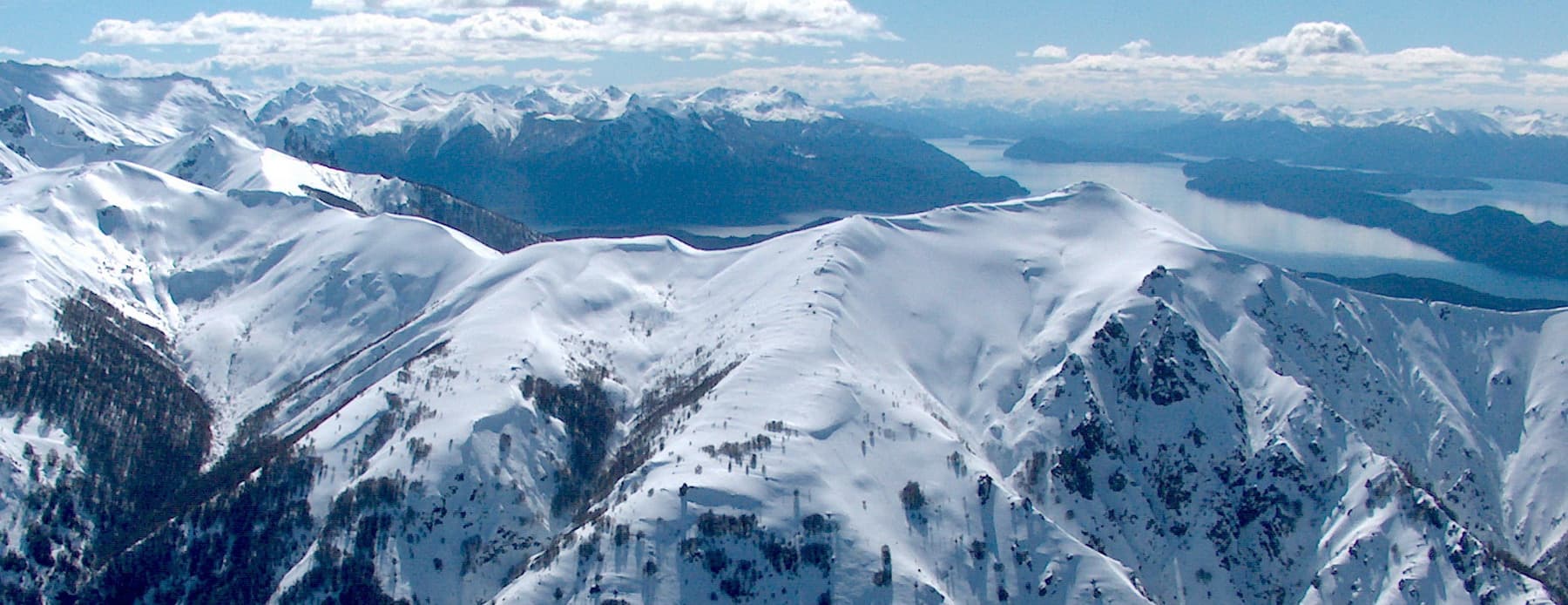
The Patagonian Andes above Bariloche: home to South America's largest ski resort
South America has nine ski resorts worth knowing: five in Chile, four in Argentina. They operate June through October, the northern hemisphere's off-season, in the Andes at altitude comparable to the best Alpine terrain. Chile offers drier snow, purpose-built resorts, and direct flights from the US into Santiago with a 45-to-90-minute transfer to the slopes. Argentina offers real mountain towns, Patagonian scenery, and (at current exchange rates) some of the most affordable skiing available to US travelers anywhere in the world. A week in Bariloche, including transatlantic flights, can come in under $2,000 per person.
The 2026 season is live now. For 2027 planning: the current 2026/27 El Nino carries a 69% chance of a historic event during October to December 2026, and a 95% chance of a very strong one (NOAA CPC, August 2026). Strong El Nino winters have historically correlated with heavier central Andean snowfall, but the timing matters: those odds describe the northern hemisphere winter, and the very strong probability falls to 0% by March to May 2027, months before the 2027 Andes season opens in June. See our El Nino 2026/27 ski forecast for how the NOAA data decays through 2027 and what it does and does not tell you about the southern season.
For a full side-by-side country comparison, read our Chile vs Argentina skiing guide. Planning your first Andes trip? The first-timer's planning guide covers flights, visas, altitude, and budget in detail.
The 9 South America Ski Resorts at a Glance
All South American resorts operate roughly June through October. Exact opening dates depend on snowfall. Prices are approximate adult day-pass rates in USD for the 2026 season.
| Resort | Country | 2026 Season | Lift pass/day (USD) |
|---|---|---|---|
| Portillo | Chile | Jun 20 to Sep 26 | All-inclusive only |
| Valle Nevado | Chile | Jun 21 to Oct 5 | ~$65-85 |
| La Parva | Chile | mid-Jun to early Oct | ~$55-75 |
| El Colorado / Farellones | Chile | mid-Jun to Sep | ~$50-70 |
| Nevados de Chillan | Chile | mid-Jun to Oct | ~$45-65 |
| Cerro Catedral | Argentina | Jun 28 to Oct 5 | ~$40-70 |
| Las Lenas | Argentina | Jun 28 to Sep 14 | ~$50-70 |
| Chapelco | Argentina | late Jun to Sep | ~$35-55 |
| Cerro Castor | Argentina | mid-Jun to Oct | ~$40-60 |
Dates are the resorts' published 2026 schedules where available, otherwise typical season ranges. Actual opening and closing depend on conditions; check resort websites before booking.
As of August 12, 2026, road access to Portillo is restricted to guests with confirmed reservations after record July snowfall.
Which Resort Is Right for You?
| If you want... | Go to... | Country |
|---|---|---|
| The best all-round resort with international infrastructure | Valle Nevado | Chile |
| A once-in-a-lifetime all-inclusive mountain experience | Portillo | Chile |
| The best-value ski holiday in the world right now | Cerro Catedral (Bariloche) | Argentina |
| Expert-level steep terrain and powder | Las Lenas | Argentina |
| Family-friendly skiing in a charming town | Chapelco (San Martin de los Andes) | Argentina |
| Linked resort skiing across multiple areas | Tres Valles (Valle Nevado + La Parva + El Colorado) | Chile |
| Hot springs and volcanic skiing | Nevados de Chillan | Chile |
| Easiest access from Santiago for a day trip | El Colorado / Farellones | Chile |
| Bucket-list skiing at the end of the world | Cerro Castor (Ushuaia) | Argentina |
| The cheapest possible ski trip from the US | Cerro Catedral: all-in from ~$1,800/week | Argentina |
Decided where to go?
Build your itinerary with the trip planner.
Chile Ski Resorts
Portillo
Elevation2590m – 3310m
AirportSantiago (SCL) (165 min transfer)
Best forAdvanced skiers, Budget-conscious
Portillo is one of the oldest ski resorts in the Americas (operating since 1949) and one of the most distinctive. The model is all-inclusive and capacity-capped: 450 guests maximum, week-by-week Saturday arrivals, one hotel on the mountain. Terrain is steep and technical (35km piste, 14 lifts, 3,310m peak); beginners should look elsewhere. What it delivers for the right traveler is a tight-knit high-altitude community and guided backcountry access through Andean terrain that sees very few visitors. Packages range from approximately $2,500-5,000 per person per week (2026 estimate) depending on room category. Book well ahead for July.
Where to stay in Portillo
Browse hotels and accommodation near Portillo.
Find hotels on Expedia →Sponsored — we earn a small commission when you book through Expedia. It doesn't cost you more.
Valle Nevado
Elevation3025m – 3670m
AirportSantiago (SCL) (90 min transfer)
Best forFamilies, Advanced skiers, Budget-conscious
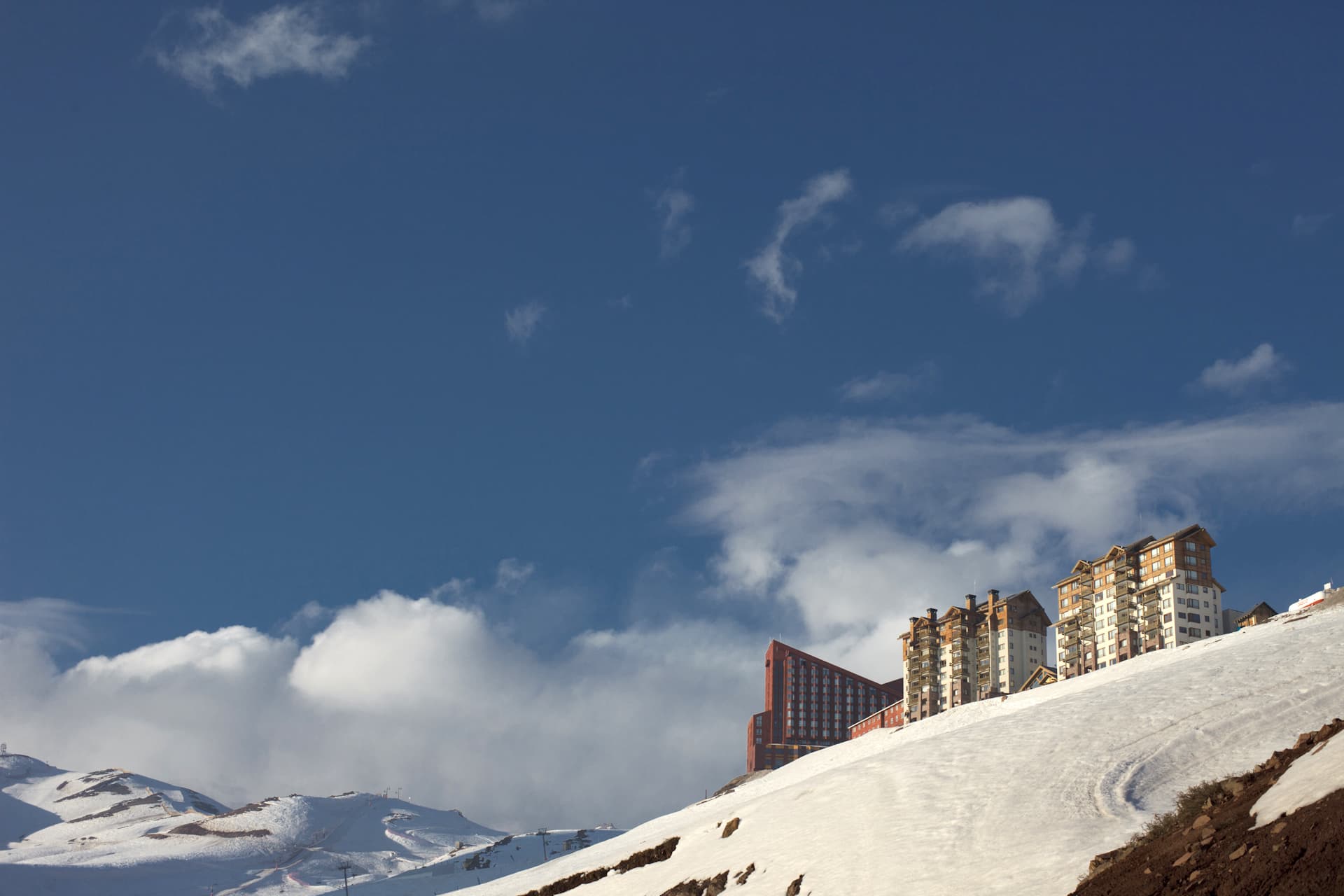
Valle Nevado is Chile's most internationally oriented resort: 100km of piste, 19 lifts, three hotels at different price points, a solid ski school, and a 60km transfer from Santiago that makes day trips feasible. It links with La Parva and El Colorado via the Tres Valles combined lift pass, giving around 100 runs on one ticket. The resort also runs one of South America's premier heliski operations, drawing expert skiers from across the world. Lift passes approximately $65-85/day (2026 estimate). Season runs June 21 through October 5.
Full resort profile: Valle Nevado
Where to stay in Valle Nevado
Browse hotels and accommodation near Valle Nevado.
Find hotels on Expedia →Sponsored — we earn a small commission when you book through Expedia. It doesn't cost you more.
La Parva
Elevation: 2,662m to 3,630m Season: mid-June to early October (typical) Airport: Santiago (SCL), 1 hour transfer Best for: Day trips from Santiago, intermediate skiers, Tres Valles combined pass
La Parva is the smallest of the three Tres Valles resorts and feels most like a local's mountain. Accommodation is mostly self-catering apartments owned by Santiago families; there are no hotels in the European sense. For international visitors it works best as part of a Tres Valles week: buy the combined pass (approximately $70-90/day, 2026 estimate) and ski La Parva alongside Valle Nevado and El Colorado. The terrain is predominantly intermediate, with expert chutes and off-piste between La Parva and Valle Nevado that are often overlooked by visitors who stay on the groomed runs.
El Colorado / Farellones
Elevation: 2,430m to 3,333m Season: mid-June to September (typical) Airport: Santiago (SCL), 45 minute transfer Best for: Beginners, families, Santiago day-trippers
El Colorado and Farellones share the same mountain and offer the shortest transfer from Santiago of any Chilean resort. Farellones at the base caters to families and first-timers: snow play, tubing, beginner slopes. El Colorado higher up has 112 runs across varied terrain, skewing easier than Valle Nevado or La Parva but with enough steep runs off the upper lifts to keep intermediates interested. The resort connects into the Tres Valles system. Lift passes approximately $50-70/day (2026 estimate). Note: the road up from Santiago has 40 switchbacks and can close after heavy snowfall.
Nevados de Chillan
Elevation: 1,500m to 2,700m Season: mid-June to October (typical) Airport: Concepcion (CCP) or Santiago (SCL); 1.5 hrs from CCP, 5 hrs from SCL Best for: Intermediate skiers, off-the-beaten-path travelers, hot springs
Nevados de Chillan is built on the flanks of an active volcanic complex and combines skiing with natural thermal hot springs. The skiing covers 28 runs across 35km of piste, with tree-lined lower terrain opening into volcanic bowls higher up. Intermediate-suitable throughout; off-piste around the volcanic craters requires a guide. The hot springs (heated by geothermal activity and open to skiers in the afternoon) are the resort's genuine differentiator; there is nothing comparable in Europe or North America. Better suited to a dedicated multi-day visit than a day trip from Santiago.
Argentina Ski Resorts
Cerro Catedral, Bariloche
Elevation1030m – 2388m
AirportBariloche (BRC) (20 min transfer)
Best forFamilies, Advanced skiers, Budget-conscious
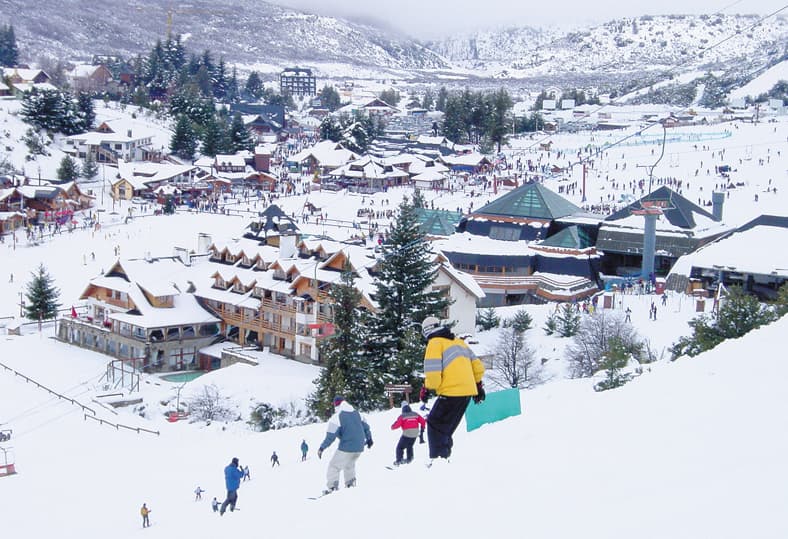
Cerro Catedral is South America's largest ski resort by piste: 120km, 35 lifts, 1,200 hectares. The base town of Bariloche is a real city of around 130,000 people with independent restaurants, Malbec wine bars, and a Lake District setting founded by German and Swiss settlers. At current Argentine peso rates, a full ski day including rental and restaurant lunch runs approximately $100-150 per person, a fraction of equivalent costs in Europe. The 1,030m base altitude means the lower mountain can be marginal in thin snow years; upper mountain conditions are stronger. Season: June 28 through October 5, 2026.
Full resort profile: Cerro Catedral
Where to stay in Cerro Catedral
Search ski apartments and rentals near Cerro Catedral.
Find chalets on Vrbo →Sponsored — we earn a small commission when you book through Vrbo. It doesn't cost you more.
Las Lenas
Elevation2240m – 3430m
AirportMalargüe (LGS) (75 min transfer)
Best forAdvanced skiers, Budget-conscious
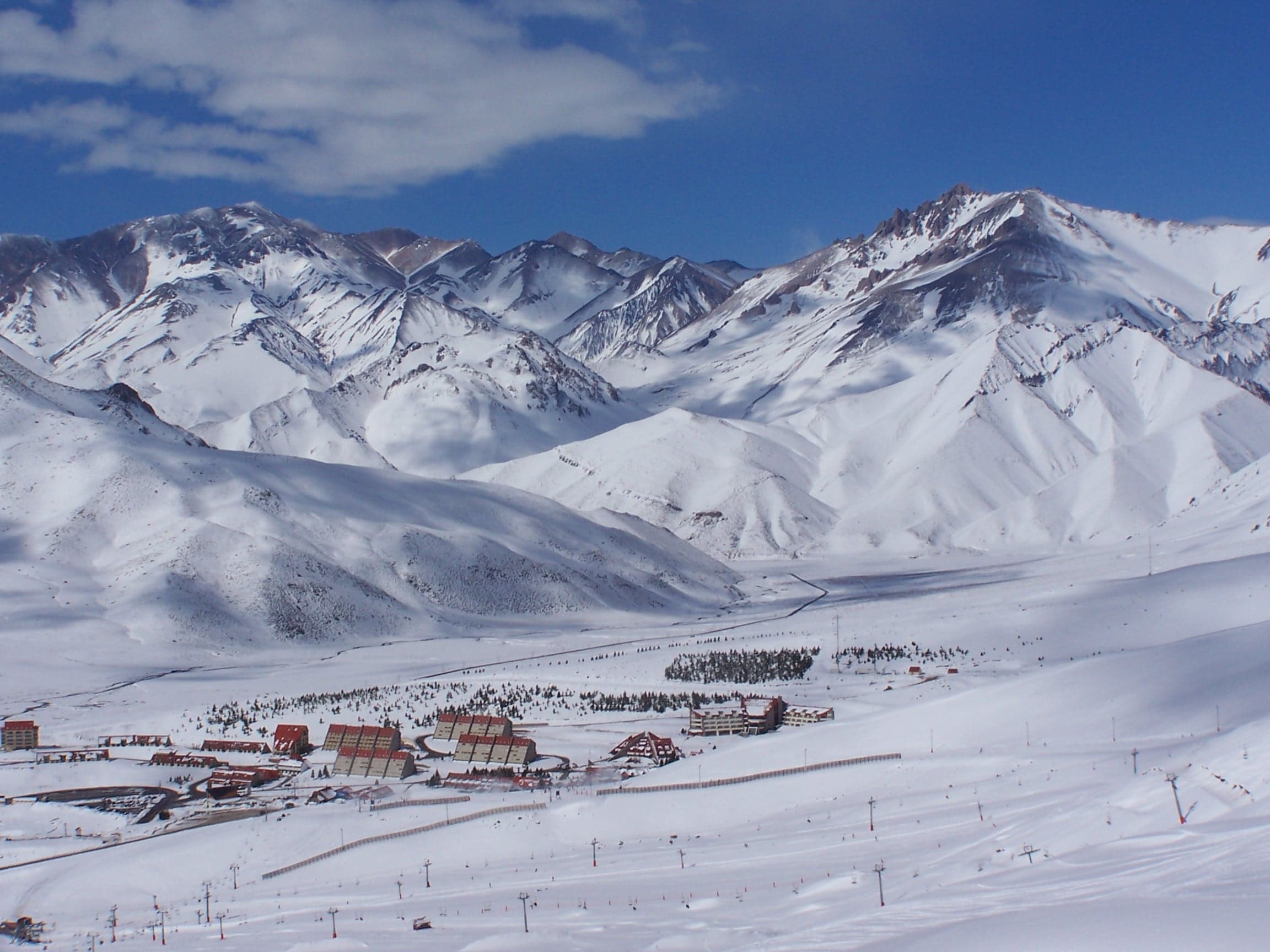
Las Lenas is Argentina's most serious ski mountain. 60km of piste, 13 lifts, 1,190m vertical; the numbers are fine for intermediates, but the resort's reputation rests on the Marte chairlift and the steep chutes, cliff drops, and open powder fields it accesses above the treeline. Expert skiers come specifically for this; when conditions align, the back bowls deliver powder days comparable to anything in the Rockies. The resort is isolated and purpose-built (no town nearby), with a nightlife culture that runs late by any standard. Access challenge: most international visitors fly to Mendoza and drive 5 hours. Season: June 28 through September 14, 2026.
Full resort profile: Las Lenas
Chapelco
Elevation: 1,250m to 1,920m Season: late June to September (typical) Airport: Chapelco (CPC), 20 minute transfer Best for: Families, intermediates, Patagonian town experience
Chapelco is San Martin de los Andes' ski mountain, and San Martin is regularly considered one of the most appealing towns in Patagonia: a lakeside setting, Patagonian lamb and trout restaurants, and a slower pace than Bariloche. The resort itself is intimate (28 runs, 12 lifts) with excellent tree skiing in the lower lenga beech forest, useful when visibility closes in on the upper mountain. The 20-minute airport transfer is one of the shortest in this guide. A good choice for families wanting authentically Patagonian character without Bariloche's busier tourism infrastructure.
Cerro Castor
Elevation: 195m to 1,057m Season: mid-June to October (typical) Airport: Ushuaia (USH), 25 minute transfer Best for: Bucket-list travelers, Patagonia itineraries, beginners/intermediates
Cerro Castor is the southernmost ski resort on Earth, located outside Ushuaia at the tip of Tierra del Fuego. The latitude (54 S) delivers cold temperatures early and a season that often runs well into October. The skiing (34 runs, 12 lifts, 600 hectares) winds through sub-Antarctic beech forest at lower altitudes than Andean resorts, with solid grooming and a ski school that serves beginners well. The reason to come is the experience: Tierra del Fuego National Park, Beagle Channel, and Antarctic cruise departures are all here. Lift passes among the cheapest in South America (~$40-60/day, 2026 estimate). Fly Buenos Aires to Ushuaia (3.5 hours).
Chile or Argentina?
This is the first decision for most travelers. Here is how the two countries compare across the factors that matter. For a full breakdown, read our dedicated Chile vs Argentina skiing comparison.
| Chile | Argentina | |
|---|---|---|
| Best resort | Valle Nevado (all-round) / Portillo (experience) | Cerro Catedral (scale) / Las Lenas (experts) |
| Snow quality | Drier, higher altitude | More variable, lower bases |
| Altitude | 2,400-3,670m | 1,030-3,430m |
| Resort scale | Smaller, purpose-built | Larger terrain areas |
| Value | Moderate (~$60-85/day passes) | Excellent (~$40-70/day passes) |
| Town vibe | Resort villages, Santiago day trips | Real towns (Bariloche, San Martin) |
| Access from US | Santiago direct flights (9-11 hrs) | Buenos Aires then connection (11-16 hrs) |
| Food and wine | Good | Outstanding (Malbec, steak, Patagonian lamb) |
| Best for beginners | El Colorado/Farellones | Cerro Catedral, Chapelco |
| Best for experts | Portillo, Valle Nevado heli | Las Lenas |
| Unique factor | Tres Valles linked skiing, volcanic hot springs | Southernmost skiing, Patagonian Lake District |
How Much Does It Cost?
Argentina is remarkably affordable for US dollar holders. Chile is moderate. Both undercut Europe. For a complete cost breakdown by country see our Chile vs Argentina skiing comparison.
Estimated one-week trip cost from the US (per person)
| Chile | Argentina | |
|---|---|---|
| Flights (round-trip) | $800-1,400 | $800-1,400 (+ $100-200 domestic) |
| Accommodation (7 nights) | ~$1,050-1,750 | ~$420-1,050 |
| Lift passes (6 days) | ~$360-510 | ~$240-420 |
| Food and drink | ~$350-560 | ~$175-350 |
| Equipment rental (6 days) | ~$210-300 | ~$90-180 |
| Total | ~$2,770-4,520 | ~$1,825-3,400 |
Estimates in USD; confirm current prices at time of booking.
A budget week in Bariloche including flights from the US East Coast can come in under $2,000 per person. That competes with a week at most US resorts after accommodation and lift passes.
When to Go
The season runs June through October, but conditions vary significantly. For the full month-by-month breakdown, see our Andes timing guide.
| Month | Conditions | Crowds | Notes |
|---|---|---|---|
| June | Early season. Higher resorts open mid-month. Coverage building. | Low | Good for deals. Not all terrain open. |
| July | Peak season. Best snow at most resorts. | High | Argentine school holidays mid-July bring large student groups to Bariloche and Las Lenas. Chilean resorts are busier but more manageable. |
| August | Prime conditions. Most consistent month overall. | Moderate-High | The reliable sweet spot for most visitors. |
| September | Spring conditions. Warmer days, softer afternoon snow. | Low-Moderate | Sunny skiing with lower prices. Some lower resorts begin closing. |
| October | Late season. Only higher resorts and Cerro Castor still open. | Low | Valle Nevado and Cerro Castor often run into October. Bargain pricing. |
Recommendation: aim for late July or August for the best combination of snow coverage and manageable crowds. Avoid the second and third weeks of July at Argentine resorts if you want smaller groups.
For regional timing detail, see our Andes ski season guide.
Getting There
From the United States
To Chile (Santiago, SCL):
- New York (JFK): Direct on LATAM and American Airlines. 10-11 hours. Approximately $800-1,400 return economy.
- Miami (MIA): Direct on LATAM and American. 8.5 hours. Often the cheapest gateway at $600-1,100 return.
- Los Angeles (LAX): Direct on LATAM. 11.5 hours. $900-1,500 return.
- Dallas (DFW): Direct on American. 10 hours. $700-1,200 return.
To Argentina (Buenos Aires, EZE):
- New York (JFK): Direct on Aerolineas Argentinas and American. 11 hours. $800-1,400 return.
- Miami (MIA): Direct on Aerolineas Argentinas and American. 9 hours. $600-1,200 return.
- Houston (IAH): Direct on United. 10.5 hours. $700-1,300 return.
- Then connect to Bariloche (BRC, 2 hrs), Mendoza (MDZ, 1.5 hrs for Las Lenas), or Ushuaia (USH, 3.5 hrs for Cerro Castor).
Prices peak in June and July when the southern hemisphere season opens and coincides with northern hemisphere summer travel. August and September typically offer better fares. Book 3-4 months ahead for the best availability on direct routes.
Plan Your South America Ski Trip
Start with these guides:
- Chile vs Argentina Skiing: Which Country Should You Choose? Full side-by-side comparison.
- Best Time to Ski in South America: Month-by-Month Guide Conditions June through October.
- Skiing the Andes: A First-Timer's Planning Guide Flights, visas, altitude, language, and costs.
- Where to Ski in Patagonia Cerro Catedral, Las Lenas, Chapelco, Cerro Castor, and multi-resort itineraries.
- Combining Skiing and Buenos Aires or Santiago How to build a trip that mixes slopes with city.
- El Nino 2026/27 Forecast What the NOAA data says about the 2027 Andes season.
Browse the full resort directory or use our resort comparison tool if you are still deciding between hemispheres.
 Resort
Portillo
Chile
ResortValle Nevado
Chile
ResortCerro Catedral
Argentina
 Resort
Las Leñas
Argentina
ArticleChile vs Argentina Skiing 2026: 9 Resorts Compared
Chile vs Argentina skiing: 9 resorts compared on terrain, snow, cost and access, with budget breakdowns to help you pick the right Andes ski trip for 2026.
ArticleWhere to Ski in Patagonia: Bariloche, Las Leñas, and Beyond
A geographic guide to skiing in Patagonia and Argentina — Cerro Catedral, Las Leñas, Chapelco, Cerro Castor, and Cerro Bayo. Terrain, travel logistics, costs, and multi-resort itineraries for US skiers.
More Guides
