
BarilocheLas LeñasArgentina skiingCerro CatedralSouth America skiingski resort comparisonAndes skiing
Bariloche vs Las Leñas 2026: Which Is Right for You?
The Mountain Marker Team12 min read
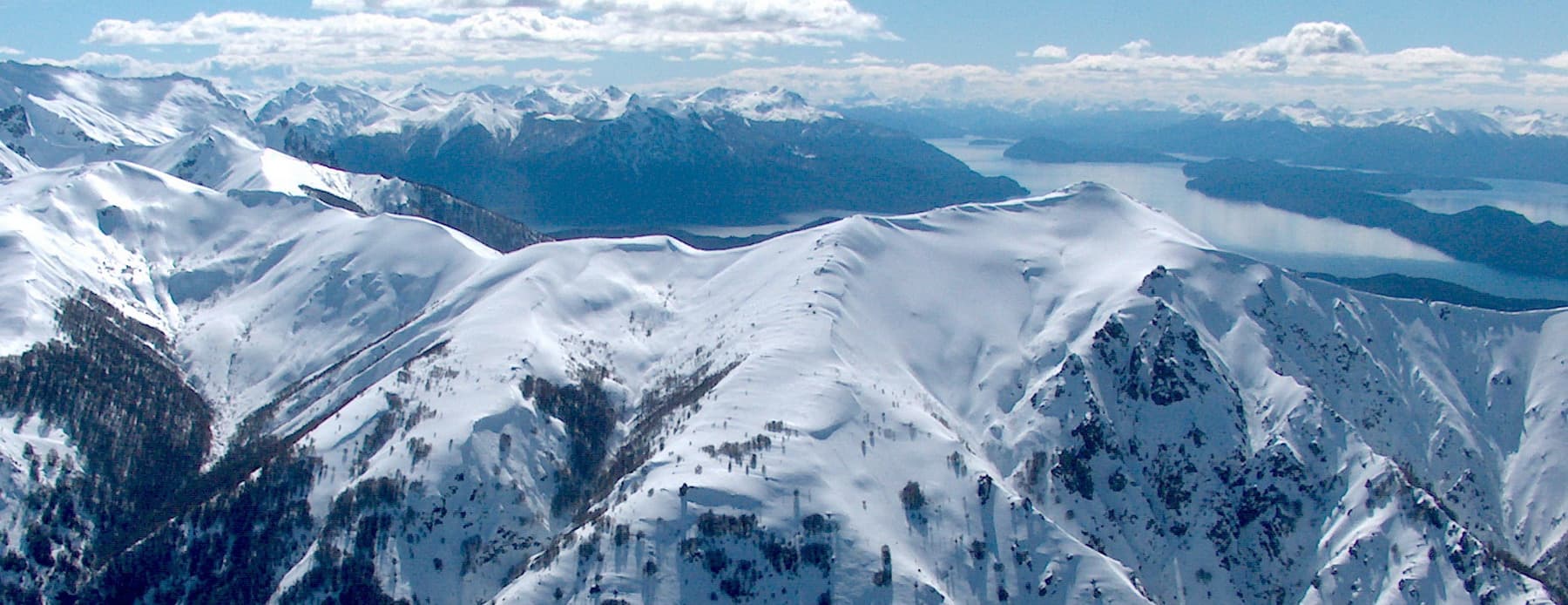
Cerro Catedral above Bariloche: South America's largest ski resort
If you only have time for one Argentine ski resort, the choice comes down to what kind of skier you are. Cerro Catedral near Bariloche is South America's largest resort: 1,200 hectares of varied terrain above a proper lakeside city with restaurants, chocolate shops, and a Patagonian culture worth experiencing on its own. Las Leñas is a different animal entirely: a remote, purpose-built resort in Mendoza Province where the draw is some of the most serious expert terrain in the Southern Hemisphere. Bariloche is the better all-around ski trip. Las Leñas is a pilgrimage for advanced and expert skiers who want to earn their turns.
Here is how they compare across every factor that matters.
Terrain and Skiing
Cerro Catedral (Bariloche)
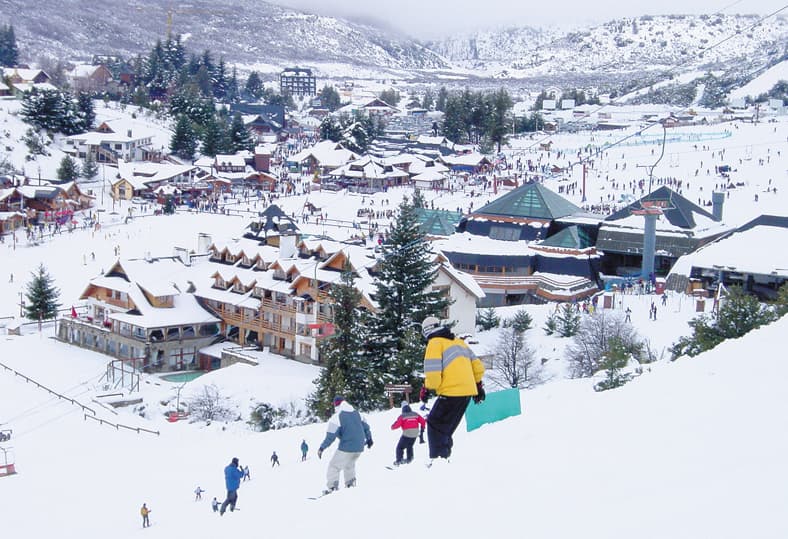
Cerro Catedral is the biggest ski area in South America, and it is not particularly close. The resort spans 1,200 hectares with over 110 marked runs served by 39 lifts, rising from a base at 3,445 feet (1,050m) to a peak of 6,890 feet (2,100m). The terrain spreads across multiple sectors with a genuine mix of difficulty levels: long groomed cruisers for intermediates, dedicated learning areas for beginners, and steeper pitches off the upper ridgelines for advanced skiers.
What sets Catedral apart from most Andean resorts is the tree skiing. The lower mountain is covered in lenga beech forest, which means you can ski between the trees on stormy days when higher, exposed terrain is shut down. This is rare in South America, where most resorts sit above the treeline on bare, wind-scoured slopes. The tree runs are not tight East Coast glades; they are spaced out and forgiving, more like the trees at a resort in the Pacific Northwest.
The lift system is aging in parts. Some of the older chairs are slow and exposed to wind, though investment in recent years has added modern detachable lifts in the main sectors. On a busy day during Argentine school holidays, the bottlenecks at key transition lifts can be frustrating. On a normal day, the mountain absorbs crowds well because of its sheer size.
Las Leñas
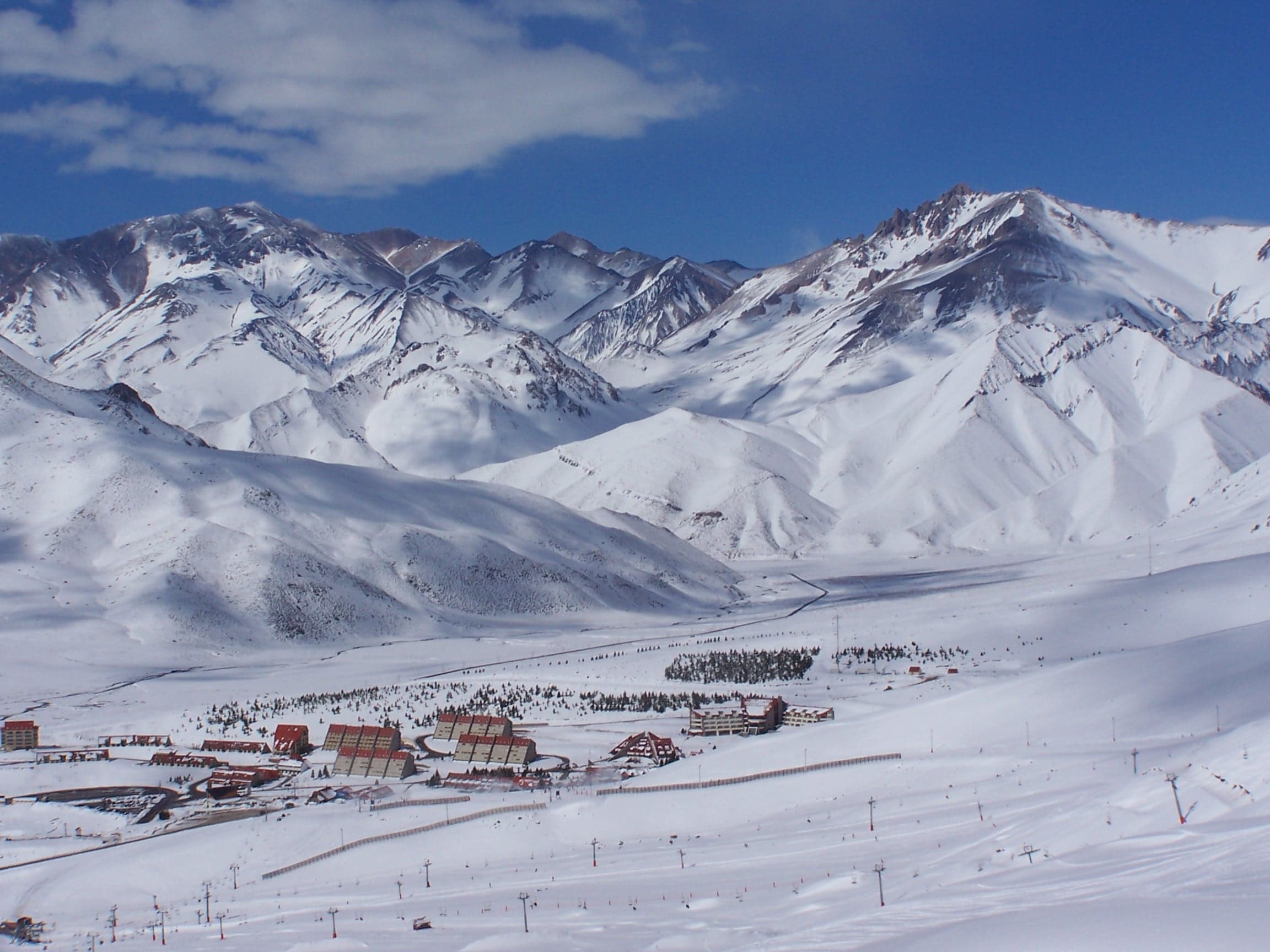
Las Leñas has roughly 40 miles (65 km) of marked piste served by 14 lifts: on paper, a fraction of Catedral's size. But the numbers miss the point. Las Leñas exists for its off-piste terrain and back bowls, which are among the most impressive in the world. The resort's vertical drop of roughly 3,940 feet (1,200m) runs from a base of 7,350 feet (2,240m) to a peak of 11,250 feet (3,430m), and the upper mountain is a vast expanse of steep chutes, open bowls, and technical couloirs that draw expert skiers from across the globe.
The key to the kingdom is the Marte chairlift, which accesses the resort's extreme upper terrain. When Marte is running and recent snowfall has filled the chutes, Las Leñas delivers powder skiing that rivals anything in the Alps, the Rockies, or Japan. The lines off Marte are steep, sustained, and committing: this is not "steep for South America," it is steep by any global standard.
The trade-off is that the marked piste skiing is limited and skews toward advanced terrain. There is some intermediate terrain on the lower mountain, but a solid intermediate skier will cover the groomed runs in a day or two and start looking for more. Beginners have a small dedicated area but will find the resort underwhelming. Las Leñas is not a balanced resort: it is an expert's resort that happens to have some easier runs.
Verdict: Terrain
Choose Catedral for variety. It has terrain for every level, tree skiing you will not find elsewhere in the Andes, and enough acreage to keep you exploring for a week. Choose Las Leñas for intensity. If the back bowls are your priority and you have the skill to ski them, nothing in South America competes.
Snow and Season
Cerro Catedral
Catedral's Achilles heel is its relatively low base elevation. At 3,445 feet (1,050m), the bottom of the mountain is vulnerable in thin snow years. Rain is possible at base level, even in mid-winter, and the lower runs can turn to slush or bare patches during warm spells. The upper mountain at 6,890 feet (2,100m) holds snow better, but wind exposure on the ridgelines can scrape terrain clean.
The season runs from June through October, though early June and late September/October can be marginal at lower elevations. Peak conditions are typically mid-July through August. Snowmaking covers some key runs but cannot compensate for a genuinely poor snow year at this altitude.
Las Leñas
Las Leñas has a significant altitude advantage. The base sits at 7,350 feet (2,240m), higher than the peak of Cerro Catedral, and the upper terrain reaches 11,250 feet (3,430m). Snow falls colder and drier at these elevations, and the pack builds deeper and lasts longer. When storms deliver, the quality of the snow is noticeably better than what Bariloche receives.
The catch is wind. Las Leñas sits in an exposed valley, and the upper mountain, particularly the Marte chairlift, is frequently shut down by high winds. It is not unusual for Marte to be wind-held for days at a stretch, even during prime season. When this happens, you are left with the lower-mountain piste skiing, which is not what you came for. The season runs June through October, with July and August offering the best combination of snowfall and (relative) wind cooperativeness.
Verdict: Snow
Las Leñas has more reliable snow, but Catedral has more reliable operations. Las Leñas' altitude delivers better snow quality when conditions align. But wind closures on the upper mountain mean you may not be able to ski the terrain you came for. Catedral's lower altitude makes it more variable, but its tree-covered lower mountain stays open in conditions that would shut Las Leñas' exposed terrain down completely.
Getting There
Cerro Catedral (Bariloche)
Getting to Bariloche is straightforward. Fly from Buenos Aires (EZE or AEP) to San Carlos de Bariloche airport (BRC): a 2-hour flight with multiple daily departures on Aerolineas Argentinas and other carriers. From the airport, Cerro Catedral is a 20-minute drive. You can land in Bariloche at noon and be on the mountain by early afternoon.
From the US, the routing is typically a flight to Buenos Aires (direct from Miami, New York, Houston, or Dallas, 10 to 11 hours), overnight in Buenos Aires or an early connection, then the domestic flight to Bariloche. Total travel time from a US East Coast airport to the slopes is roughly 16 to 20 hours depending on connections.
Las Leñas
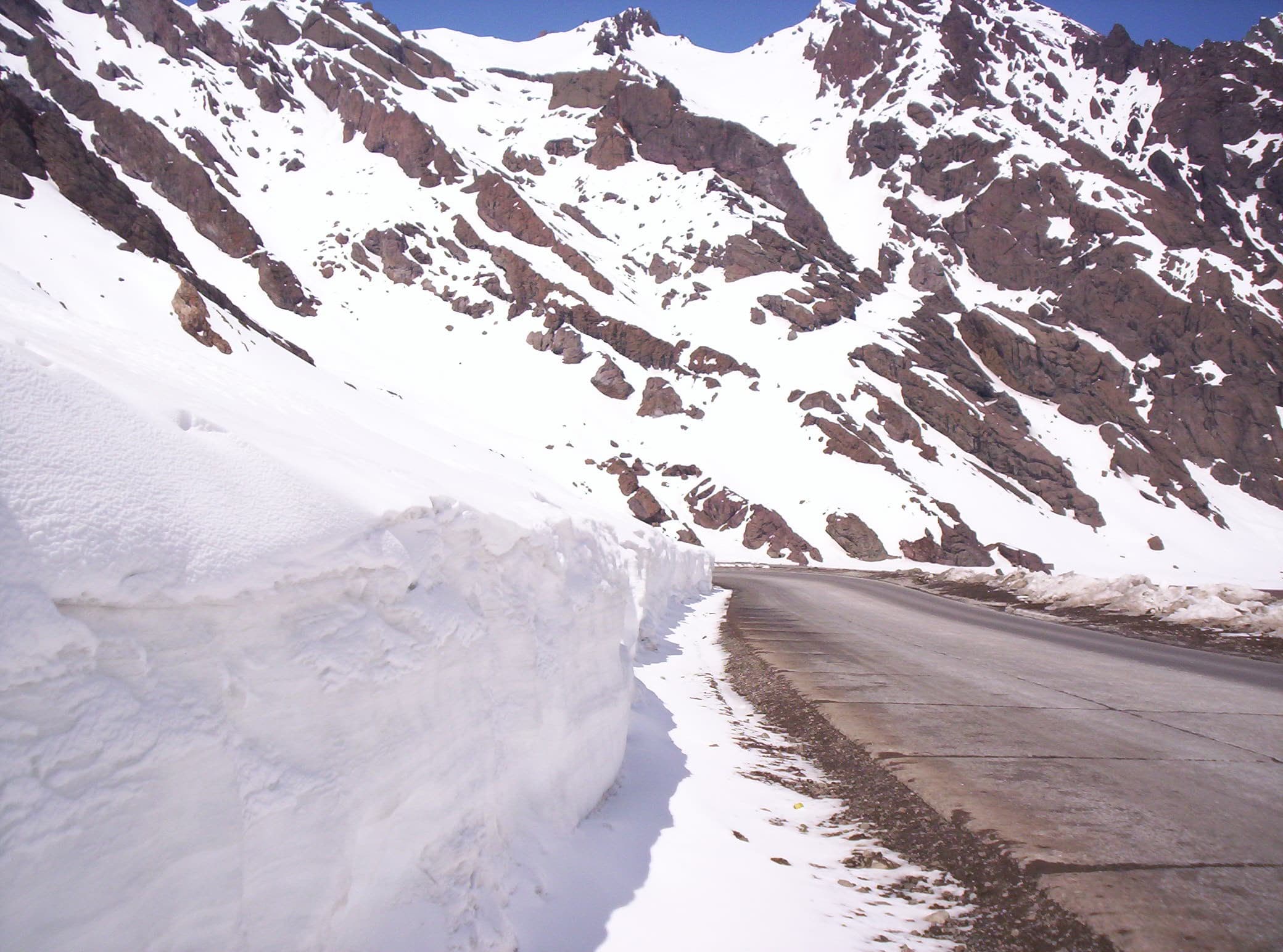
Las Leñas is logistically harder. The standard approach is to fly to Mendoza (MDZ): a 2-hour flight from Buenos Aires, then drive roughly 5 hours south through the Mendoza wine country and into increasingly remote mountain terrain. The road is paved but long, and the final stretch winds through a narrow valley that can close temporarily in heavy snow.
There is a small airport at Malargüe, about 70 km from Las Leñas, but flight schedules are limited and unreliable. Most travelers drive from Mendoza, either renting a car or arranging a shuttle through their hotel. Some skiers build in a day in Mendoza's wine region on the way, which is not a bad way to ease into the trip, though it adds time and cost.
Total travel time from a US East Coast airport to Las Leñas is roughly 22 to 28 hours, including the long drive. This is not a resort you pop into for a quick trip.
Verdict: Access
Bariloche wins clearly. Short domestic flight, short transfer, multiple daily connections. Las Leñas requires either a long drive or a gamble on limited regional flights. If ease of access matters to you, and it should on a trip involving international flights, Bariloche is the far simpler option.
Where to Stay and Town Life
Bariloche
Bariloche is a genuine city. With a population of roughly 130,000, it is the largest city in the Argentine Lake District and has the infrastructure to match. The town center sits on the shore of Lago Nahuel Huapi, framed by snow-capped peaks, and feels like a Patagonian version of a Swiss lakeside town, minus the Swiss prices.
The famous chocolate shops along Calle Mitre are a destination in their own right (Rapanui, Mamuschka, and Rapa Nui are the names to know). The restaurant scene runs from wood-fired parrillas serving Argentine beef and lamb to Patagonian craft breweries and wine bars pouring Mendoza Malbec at prices that feel almost irresponsible. There are dozens of accommodation options across every price point: hostels, family-run apart-hotels, lakeside lodges, and a handful of higher-end properties.
The town gives you something to do when you are not skiing. Lake excursions, hiking, the Circuito Chico scenic drive, and a genuine local culture that exists independent of tourism. If you are traveling with non-skiers or want rest days that do not feel like wasted days, Bariloche delivers.
Las Leñas
Las Leñas has no town. The resort is a self-contained complex of five or six hotels and apartment buildings clustered at the base of the mountain, surrounded by empty Andean terrain in every direction. There is a handful of restaurants, a few bars, a rental shop, and that is essentially it.
This isolation is part of the appeal for some skiers: there is nothing to do except ski, eat, and sleep, which creates an intensity of focus that resort towns cannot replicate. Las Leñas also has a reputation for late-night partying: the bars do not get going until midnight, and the culture skews young and Argentine. But the options are limited, and after three or four nights, you will have eaten at every restaurant and sat on every barstool.
Accommodation quality at Las Leñas is generally lower than what you would get for the same price in Bariloche. The hotels are functional but dated, and the apartment-style options can feel tired. You are paying a premium for the location, not the luxury.
Verdict: Town Life
Bariloche wins by a wide margin. If the off-mountain experience matters to you at all (food, culture, variety, non-skiing activities), there is no comparison. Las Leñas is for skiers who view everything outside the chairlift as a necessary intermission.

Cost Comparison
Both resorts benefit from the weakness of the Argentine peso, which makes Argentina one of the most affordable ski destinations in the world for travelers carrying US dollars. But the two resorts are not equally cheap.
Approximate Daily Costs (per person, in USD)
| Expense | Bariloche | Las Leñas |
|---|---|---|
| Lift pass | $40–60 | $50–70 |
| Equipment rental | $15–25 | $20–35 |
| On-mountain lunch | $10–18 | $15–25 |
| Accommodation (mid-range, per night) | $50–120 | $100–200 |
| Dinner | $15–30 | $25–45 |
Why the Gap?
Bariloche's accommodation market is competitive. With a large city's worth of hotels, apart-hotels, and rental apartments, prices stay reasonable even in peak season. Las Leñas has a captive market: there is nowhere else to stay within an hour's drive, so the handful of base-area hotels can charge more for less.
Food costs follow the same pattern. Bariloche's restaurant scene is diverse and competitive. Las Leñas has limited options, and prices reflect the isolation and transport costs of supplying a remote mountain resort.
The one exception is flights. Getting to Las Leñas via Mendoza can actually be slightly cheaper than flying to Bariloche, since Mendoza has more international connections including some direct flights from neighboring countries. But the 5-hour drive from Mendoza adds its own costs (rental car, fuel, or shuttle).
Verdict: Cost
Bariloche is the better value. You get more for your money across accommodation, food, and overall trip cost. Las Leñas is not expensive by North American or European standards, but it costs more per quality level than Bariloche, and the isolation premium is real.
Who Should Choose Which?
Choose Bariloche If You Are...
- A family: Cerro Catedral has terrain for every ability level, ski schools, and a town full of activities for rest days or non-skiers
- An intermediate skier: Catedral's strength is its breadth of blue and red runs across a huge mountain
- A first-time South America skier: Easy access, real town infrastructure, and a forgiving learning curve for navigating Argentine travel logistics
- Traveling with non-skiers: Bariloche has enough to fill a week without ever clicking into bindings
- On a budget: The best value ski trip in South America, full stop
Choose Las Leñas If You Are...
- An expert skier making a pilgrimage: The back bowls and Marte terrain are genuinely world-class, and you should experience them at least once
- A powder chaser: When conditions align (recent snow, low wind, Marte running), Las Leñas delivers some of the best untracked skiing on Earth
- Someone who has already done Bariloche: If you have skied Catedral and want something different, Las Leñas is the next step
- Comfortable with uncertainty: Wind closures, remote location, and variable conditions mean you need flexibility and patience
- Skiing as the sole priority: If you genuinely do not care about town life, restaurants, or non-skiing activities, Las Leñas' isolation becomes a feature rather than a bug
Can You Do Both in One Trip?
In theory, yes. But they are far apart, roughly 1,200 miles (1,930 km) by road. The practical routing is to fly Buenos Aires to Mendoza, drive to Las Leñas, ski for 3-4 days, drive back to Mendoza, fly to Bariloche, ski for 4-5 days, then fly home via Buenos Aires. It is doable in two weeks but involves significant travel days. For a single week, pick one.
Decided where to go?
Build your itinerary with the trip planner.
Further Reading
- South America Ski Resorts: The Complete Guide: Every resort in Chile and Argentina, with terrain details and practical info.
- Chile vs Argentina Skiing: Which Country Should You Choose?: Side-by-side comparison if you are still deciding between countries.
- Skiing the Andes: A First-Timer's Planning Guide: Flights, visas, altitude, costs, and everything you need for your first Andes trip.
Browse all South American resorts in our resort directory, or use the comparison tool to evaluate Cerro Catedral and Las Leñas side by side.
ResortCerro Catedral
Argentina
 Resort
Las Leñas
Argentina
 Article
Chile vs Argentina Skiing 2026: 9 Resorts Compared
Chile vs Argentina skiing: 9 resorts compared on terrain, snow, cost and access, with budget breakdowns to help you pick the right Andes ski trip for 2026.
ArticleFirst-Timer's Andes Ski Guide 2026: Costs, Flights & Altitude
2026 season open. Plan your first Andes ski trip: flights, visas, altitude & budget breakdown. Argentina from $2,000/week, Chile from $2,900.