
Patagonia skiingArgentina skiingBarilocheCerro CatedralLas LeñasChapelcoCerro CastorCerro BayoAndes skiingSouth America skiingUshuaia
Where to Ski in Patagonia: Bariloche, Las Leñas, and Beyond
The Mountain Marker Team13 min read
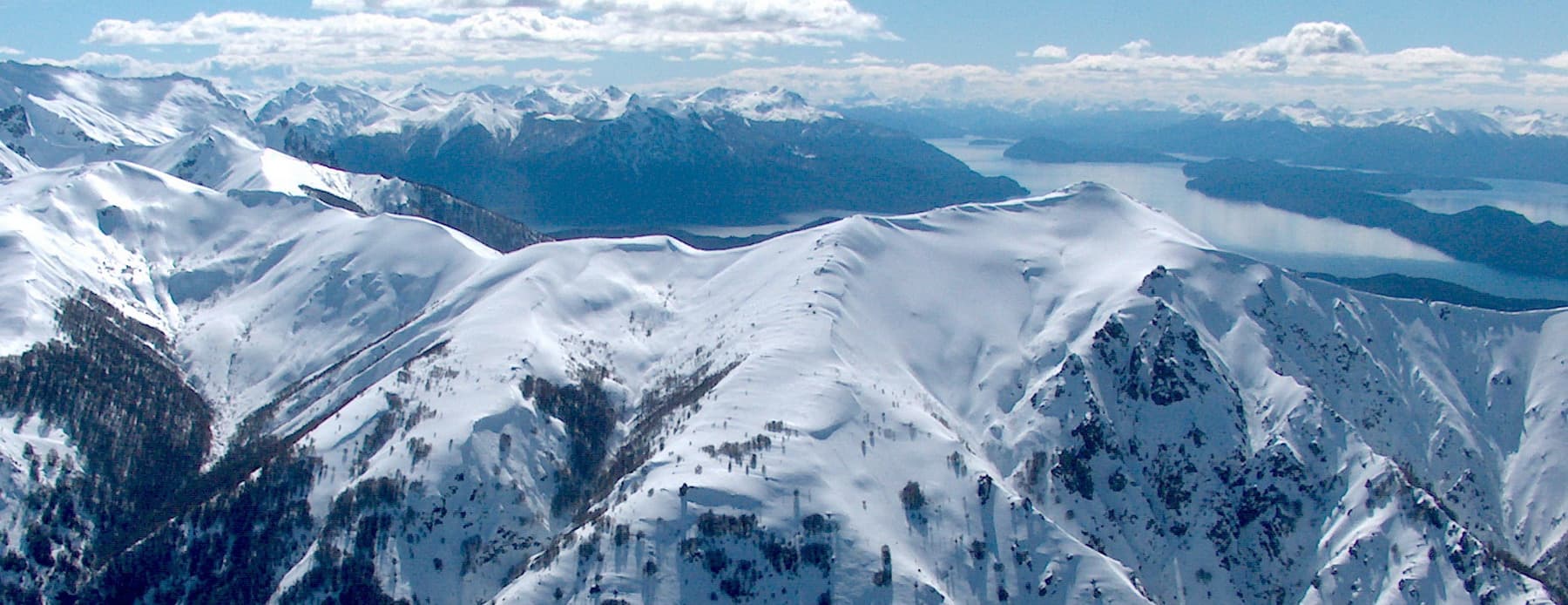
Cerro Catedral rising above Lago Nahuel Huapi — the gateway to Patagonian skiing
Argentina's Andean spine runs nearly 3,500 miles (5,600 km) from the Bolivian border to Tierra del Fuego, and scattered along its southern half are ski resorts unlike anything you will find in North America or Europe. The terrain is volcanic and glacial — jagged peaks rising above ancient beech forests, frozen lakes stretching to the horizon, and slopes that stay empty even on a Saturday in peak season. The scale of the landscape makes even large European resorts feel claustrophobic by comparison.
For US skiers, the practical appeal is just as strong as the scenery. The Argentine peso's persistent weakness against the dollar means a week of skiing in Patagonia costs roughly what a long weekend costs at a major Colorado resort. Lift passes run $40 to $70 per day. A proper sit-down dinner with a bottle of Malbec comes in under $30. Equipment rental is $15 to $35. These are not budget-travel compromises — the resorts are real, the snow is real, and the mountain infrastructure, while not always modern, is entirely functional. The season runs June through October, which means you can ski during the Northern Hemisphere summer without burning vacation days from your winter allocation.
Here are six Argentine resorts worth knowing about, from the biggest to the most remote.
Cerro Catedral, Bariloche — South America's Flagship
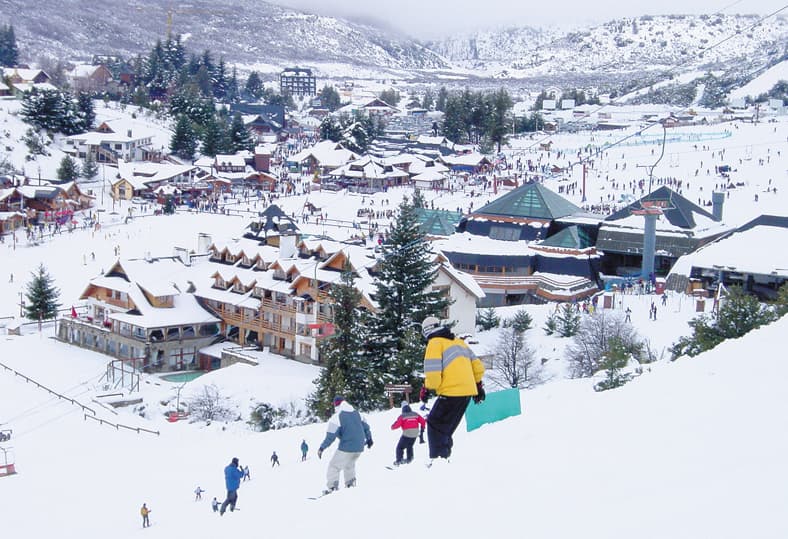
Cerro Catedral is the largest ski resort in South America, and the one most US visitors should start with. Spread across 1,200 hectares (roughly 2,965 acres) with over 110 marked runs served by 39 lifts, it offers a scale and variety that no other Andean resort matches. The base sits at 3,445 feet (1,050m) and the peak reaches 6,890 feet (2,100m) — modest numbers by Rocky Mountain standards, but the southern latitude compensates with colder temperatures and reliable snow through the core season.
What distinguishes Catedral from every other major Andean resort is the tree skiing. The lower mountain is blanketed in lenga beech forest, a gnarly sub-Antarctic hardwood that creates spaced, forgiving glades perfect for stormy days when higher terrain shuts down. Most Andean resorts sit above the treeline on bare, wind-scoured slopes where a storm day means a bar day. At Catedral, a storm day means tree runs. If you have skied the glades at Stowe or the trees at Big Sky, imagine that, but with nobody in them.
The terrain spans every ability level genuinely, not just on the trail map. Beginners have dedicated learning areas near the base with gentle, wide pistes and a solid ski school with some English-speaking instructors. Intermediates get long, rolling cruisers across multiple sectors — enough to spend a full week exploring without repeating runs. Advanced skiers find steeper pitches off the upper ridgelines and some serious off-piste if they know where to look or hire a local guide. It is a balanced mountain in a region where most resorts skew heavily toward one ability level.
The town of San Carlos de Bariloche is the other half of the equation. This is not a purpose-built resort village — it is a genuine Patagonian city of 130,000 people on the shore of Lago Nahuel Huapi. Bariloche is Argentina's chocolate capital (Rapanui and Mamuschka are the shops you will hear about), and the restaurant scene runs from wood-fired parrillas serving Patagonian lamb to craft breweries pouring local IPAs. The accommodation market is large and competitive, with options from $40/night hostels to $200/night lakeside lodges. If you are traveling with non-skiers or want rest days that feel like vacation rather than detention, Bariloche delivers in ways that remote Andean resorts simply cannot. The drive from town to the ski area is 20 minutes — close enough to be convenient, far enough to separate the mountain experience from town life.
Las Leñas — The Expert's Pilgrimage
Las Leñas is not a resort you choose for convenience, comfort, or variety. You choose it for some of the most serious expert terrain in the Southern Hemisphere, accessible by a single chairlift that the wind may or may not allow to operate. That is the deal, and for the right skier, it is worth every complication.
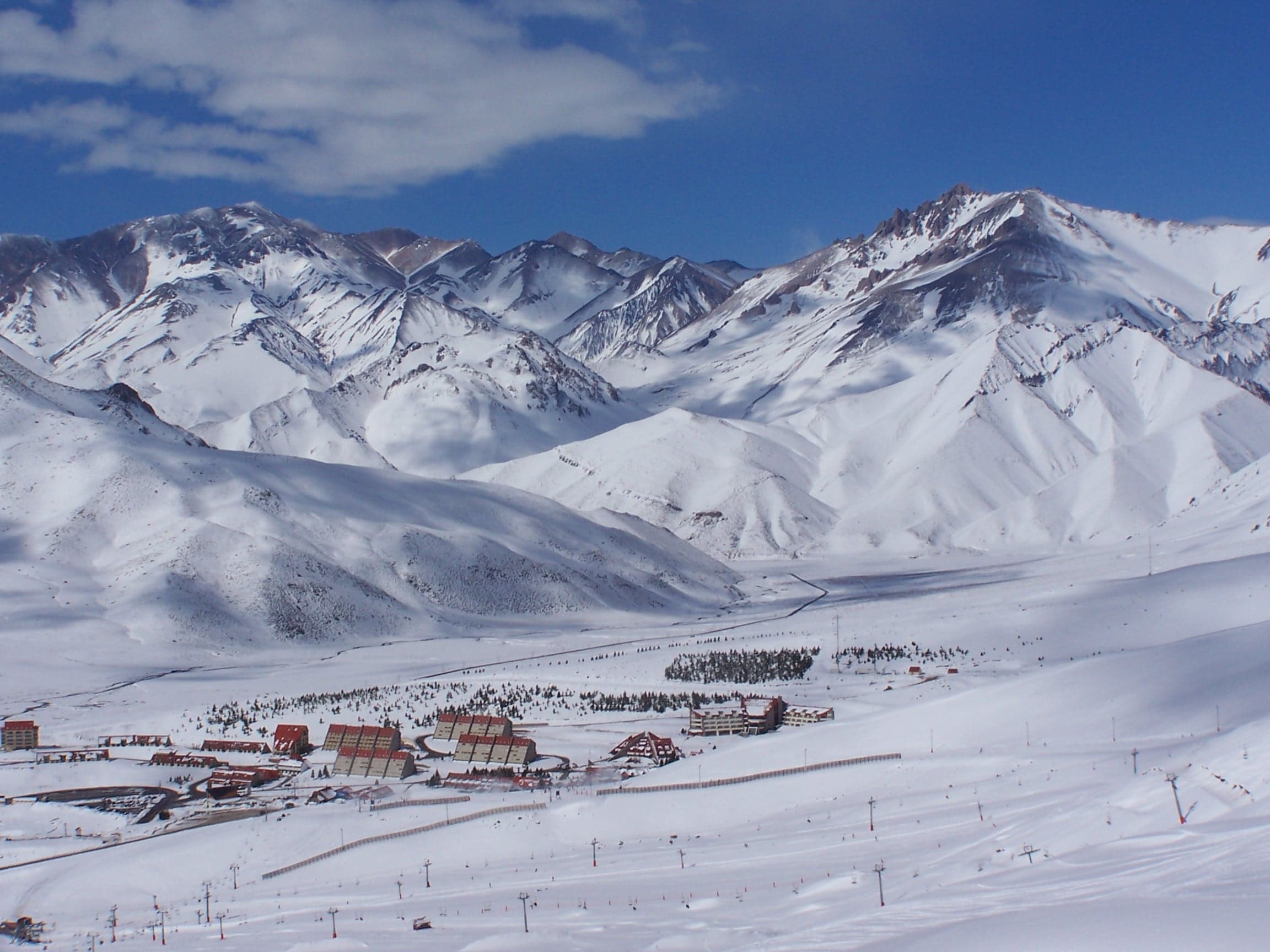
The numbers tell part of the story. The base sits at 7,350 feet (2,240m), the peak at 11,250 feet (3,430m), and the vertical drop of nearly 3,940 feet (1,200m) is served by 14 lifts across roughly 40 miles (65 km) of marked piste. But the marked piste is not why people come. The Marte chairlift accesses the upper mountain — a vast expanse of steep chutes, open bowls, and sustained couloirs between roughly 9,840 feet (3,000m) and the summit. When Marte is running and recent snowfall has loaded the chutes, Las Leñas delivers powder skiing that stands alongside anything in the Alps, the Rockies, or Hokkaido. The lines off Marte are steep, committing, and long. This is not "steep for South America." It is steep by any global standard.
The gamble is real. Las Leñas sits in an exposed high valley in Mendoza Province, and the upper mountain is frequently hammered by Andean winds that shut the Marte chair for days at a stretch. When this happens — and it happens often, even in prime season — you are left with the lower-mountain piste skiing, which is adequate for intermediates but not what you flew 5,000 miles to experience. A five-day trip where Marte runs for three of those days is a good outcome. Expecting it to run every day is a recipe for frustration.
The resort itself is self-contained and isolated — five or six hotels and apartment buildings clustered at the base, a handful of restaurants, a few bars that do not get going until midnight, and absolutely nothing else within an hour's drive. Getting there requires flying to Mendoza (a 2-hour flight from Buenos Aires), then driving roughly 5 hours south through wine country and into increasingly remote terrain. Accommodation is functional but dated, and you will pay more per quality level than you would in Bariloche. The isolation premium is real. But for expert skiers who understand what they are signing up for, Las Leñas is a pilgrimage worth making at least once.
Chapelco — The Quieter Alternative
The town of San Martin de los Andes is widely considered one of the most beautiful in Argentine Patagonia — a smaller, quieter, more alpine-feeling version of Bariloche, set at the end of Lago Lacar and surrounded by thick Andean forest. Its ski resort, Chapelco, sits 12 miles (19 km) outside town with a base at roughly 5,250 feet (1,600m) and a peak around 6,300 feet (1,920m).
Chapelco is a smaller operation than Cerro Catedral — 28 runs served by 12 lifts across a compact but well-designed mountain. The terrain tilts toward beginner and intermediate, with some genuinely good advanced runs off the upper ridge. Like Catedral, the lower mountain has lenga beech tree skiing, and the trees here are arguably even better — less tracked, less crowded, and beautifully spaced. On a powder day, Chapelco's tree runs are a quiet treasure that most international visitors never discover because they default to Bariloche.
The lack of crowds is the main draw. Even during Argentine school holidays, when Catedral gets genuinely busy, Chapelco remains manageable. Lift lines are short or nonexistent. The mountain has a calm, family-friendly atmosphere that Cerro Catedral's scale sometimes works against. If you are an intermediate skier who values quiet slopes over vast terrain, or a family that wants a relaxed pace without sacrificing quality, Chapelco deserves serious consideration.
San Martin de los Andes has excellent restaurants (Patagonian lamb, trout, craft beer), charming accommodation ranging from cabins in the forest to small boutique hotels, and a walkable center with genuine local character. It feels less touristy than Bariloche — smaller, slower, and more intimate. The airport at Chapelco (CPC) receives direct flights from Buenos Aires, making access straightforward.
Cerro Castor — Skiing at the End of the World
If you want to ski at the bottom of the planet, Cerro Castor near Ushuaia is where you go. Located on the island of Tierra del Fuego at roughly 54 degrees south latitude, it holds the title of the world's southernmost ski resort. The altitude is modest — base around 1,310 feet (400m), peak around 3,610 feet (1,100m) — but the extreme latitude compensates with cold temperatures that preserve snow quality and extend the season, often running from mid-June well into October.
The skiing covers 30 runs served by 12 lifts across terrain that favors intermediates and beginners, with some steeper off-piste accessible from the upper lifts. The landscape is unlike any other ski resort in the world: sub-Antarctic forest, wind-sculpted terrain, and views across the Beagle Channel toward Chile. On a clear day, the light has an eerie, low-angled quality that makes the snow glow.
Ushuaia itself — the self-proclaimed "fin del mundo" (end of the world) — is a genuine town with strong infrastructure thanks to its role as a gateway for Antarctic cruise ships. Accommodation is plentiful and affordable. Cerro Castor is a 16-mile (26 km) drive from town. The combination of skiing and the broader Ushuaia experience — Beagle Channel boat trips, Tierra del Fuego National Park, king crab dinners — makes this a destination where the resort is part of a bigger trip rather than the sole reason for it. Fly from Buenos Aires to Ushuaia (USH) in about 3.5 hours.

Cerro Bayo — A Quiet Day on the Lake
Tucked behind the village of Villa La Angostura on the northern shore of Lago Nahuel Huapi, Cerro Bayo is a small, family-oriented resort with roughly 500 acres (200 hectares) of skiable terrain. The mountain rises to about 5,905 feet (1,800m), served by 12 lifts across 24 runs that favor beginners and intermediates.
The skiing is not the headline — the views are. Cerro Bayo's slopes look directly out over Lago Nahuel Huapi and the surrounding Patagonian peaks, creating a visual backdrop that larger resorts in the area cannot match. Villa La Angostura is a small, quiet town with good restaurants and a handful of boutique hotels. The village is reachable from Bariloche in about 80 minutes by car along the famous Ruta de los Siete Lagos (Route of the Seven Lakes), making Cerro Bayo a feasible day trip if you are based in Bariloche and want a change of scenery. It is also worth considering as a base for skiers who want to split time between Cerro Catedral and a smaller, mellower mountain.
Travel Logistics for US Skiers
Getting to Buenos Aires
Buenos Aires is the hub for all Argentine skiing. Direct flights run from Miami (roughly 9 hours), New York JFK (11 hours), Houston (11 hours), and Dallas (11 hours) on American, United, Delta, and Aerolineas Argentinas. Buenos Aires has two airports: Ezeiza (EZE) for international flights and Aeroparque (AEP) for most domestic connections. You will need to transfer between them — they are about 45 minutes apart by taxi or shuttle. Build at least 3 to 4 hours between your international arrival and domestic departure, or better yet, spend a night in Buenos Aires.
Domestic Flights
- Bariloche (BRC): 2 hours from Buenos Aires. Multiple daily flights. The most frequent and reliable connection.
- Chapelco (CPC): 2 hours from Buenos Aires. Fewer flights than Bariloche but still daily during ski season. Serves San Martin de los Andes.
- Ushuaia (USH): 3.5 hours from Buenos Aires. Multiple daily flights. The longest domestic hop.
- Mendoza (MDZ) for Las Leñas: 2 hours from Buenos Aires, then a 5-hour drive south to the resort. A small airport at Malargüe (LGS), closer to Las Leñas, has limited and unreliable service.
Rental Cars and Road Conditions
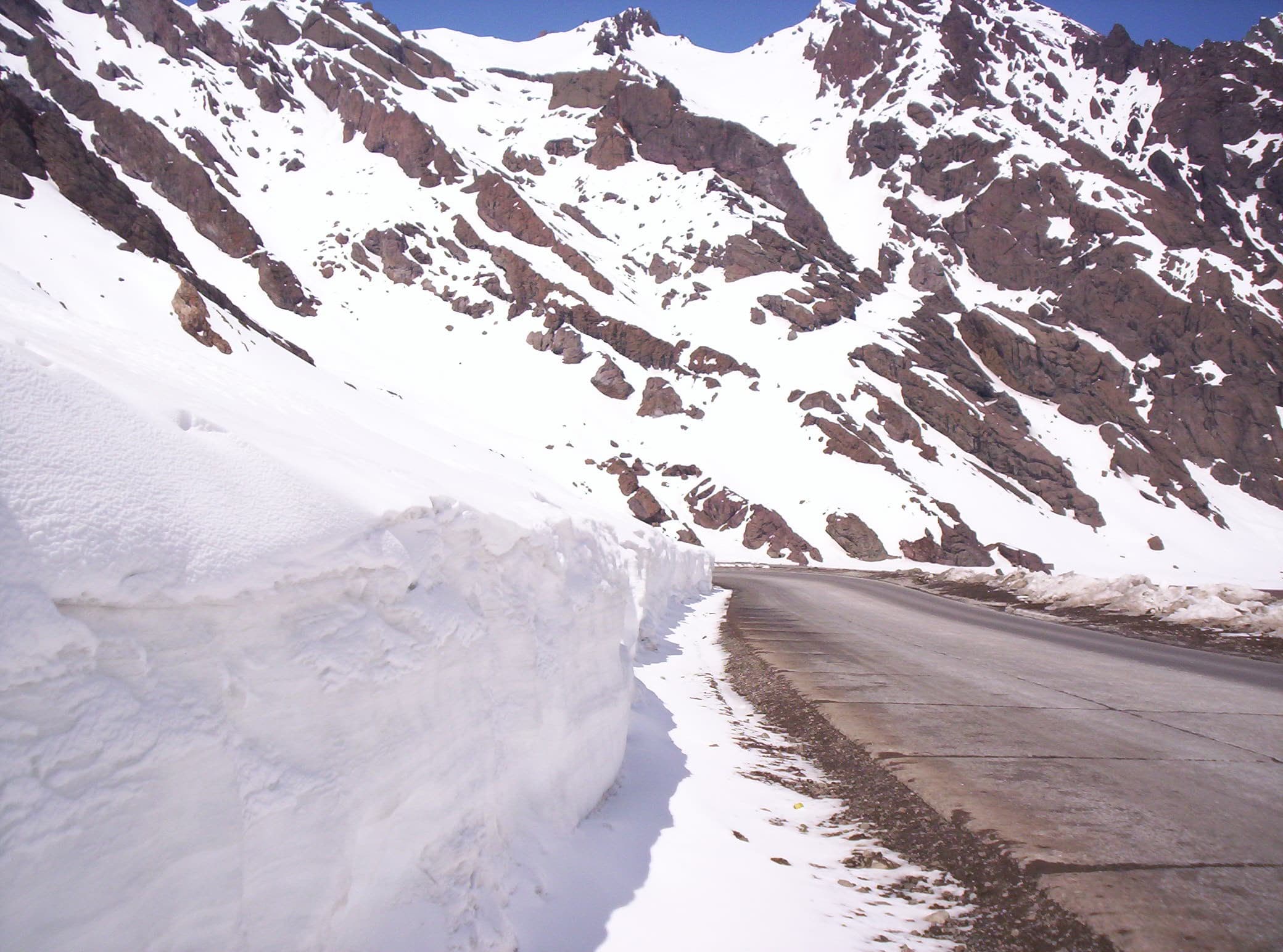
Renting a car is straightforward in Bariloche, Mendoza, and Ushuaia. Major international agencies (Hertz, Avis) and local companies operate at the airports. Roads between major towns are paved and well-maintained, though the drive to Las Leñas from Mendoza includes remote stretches where gas stations are infrequent — fill up whenever you can. Winter tires or chains are recommended for mountain roads, particularly the final approach to ski resorts. Argentine drivers are assertive; the Ruta 40 highway has some single-lane stretches where overtaking trucks requires patience.
Multi-Resort Itineraries
A two-week trip can realistically cover two or three resorts. The most practical combinations:
- Bariloche + Chapelco (or Cerro Bayo): All within the Lake District. Drive between them or take the scenic Ruta de los Siete Lagos. Three to four days at each.
- Las Leñas + Bariloche: Fly to Mendoza, drive to Las Leñas for 3-4 days, return to Mendoza, fly to Bariloche for 4-5 days. Add a day in Mendoza wine country on the transit.
- Bariloche + Ushuaia: Fly between them via Buenos Aires. Different worlds — Lake District Patagonia versus sub-Antarctic Tierra del Fuego. A genuine adventure itinerary.
Accommodation Patterns and Costs
Argentine ski accommodation splits into two models: resort-based and town-based.
Resort-based (Las Leñas): You stay at the mountain because there is nowhere else. Hotels and apartments are priced at $100 to $200 per night for a mid-range double, with limited options at either extreme. Book through the resort or through Argentine travel agencies. Choice is limited; availability during peak weeks (mid-July) tightens early.
Town-based (Bariloche, San Martin de los Andes, Villa La Angostura, Ushuaia): You stay in town and drive or shuttle to the ski area. This model gives you far more choice and better value. In Bariloche, mid-range accommodation runs $50 to $120 per night. San Martin de los Andes is similar. Ushuaia ranges from $40 to $150. Apart-hotels (self-catering apartments with hotel services) are common and excellent value for families — a two-bedroom apartment with kitchen in Bariloche costs $80 to $150 per night, letting you cook breakfasts and pack lunches to keep costs down.
Across all resorts, prices in US dollars are remarkably affordable by North American standards. A couple can ski for a week in Bariloche — including accommodation, lift passes, equipment rental, and eating out every night — for $1,500 to $2,500 total. That is not a misprint.
Further Reading
- Bariloche vs Las Leñas: Which Argentine Resort Is Right for You? — Head-to-head comparison of Argentina's two flagship resorts.
- Chile vs Argentina Skiing: Which Country Should You Choose? — Side-by-side country comparison for skiers deciding between the two Andean nations.
- South America Ski Resorts: The Complete Guide — Every resort in Chile and Argentina, with terrain details and practical info.
- Andes Ski Season: When to Visit — Month-by-month breakdown of conditions, crowds, and pricing across the Andes.
- Combining Skiing and Buenos Aires — How to build a trip that includes both the slopes and Argentina's capital.
Browse all South American resorts in our resort directory, or use the comparison tool to build a side-by-side evaluation.
Decided where to go?
Build your itinerary with the trip planner.
ResortCerro Catedral
Argentina
 Resort
Las Leñas
Argentina
ArticleBariloche vs Las Leñas 2026: Which Is Right for You?
Bariloche or Las Leñas? Compare Argentina's two flagship ski resorts on terrain, snow, access, cost, and town life to find out which is right for you.
 Article
Chile vs Argentina Skiing 2026: 9 Resorts Compared
Chile vs Argentina skiing: 9 resorts compared on terrain, snow, cost and access, with budget breakdowns to help you pick the right Andes ski trip for 2026.
ArticleSouth America Ski Resorts: The Complete 2026 Guide to Skiing in Chile & Argentina
9 ski resorts in Chile and Argentina compared by season, terrain, and cost. Skiing in South America starts from around $1,800 per week including flights from the US.
ArticleThe Andes Ski Season: When to Visit, Where, and Why
Understand Andes snow patterns across central Chile, Patagonia, and Mendoza, including El Niño effects, month-by-month conditions, and practical travel timing for US skiers.
More Guides