southern hemisphereArgentinaChileAustraliaNew Zealandski seasonplanning
Southern Hemisphere Ski Season 2026: Argentina, Chile, New Zealand and Australia
The Mountain Marker Team6 min read
Looking for conditions rather than season dates? See where it is snowing right now: current snow conditions and 7-day snowfall forecasts for 200+ ski resorts worldwide, refreshed every six hours. This guide covers when the seasons open; Pow Alert covers what the snow is doing today.
Why Ski the Southern Hemisphere?
When the lifts shut down across Europe and North America in April, the snow is just starting to build on the other side of the equator. The Southern Hemisphere ski season runs roughly June through October, peaking in July and August, which means you can ski year-round if you're willing to chase the winter south. For serious skiers, it's the ultimate off-season move. For families, it's a chance to combine a ski trip with a completely different travel experience.
The skiing is different from what you'll find in the Alps or the Rockies. Resorts tend to be smaller, the terrain more raw, and the infrastructure less polished. But the trade-off is uncrowded slopes, dramatic landscapes, and the novelty of skiing in places most Americans never consider.
Argentina
South America offers some of the most dramatic ski terrain in the Southern Hemisphere, and Argentina delivers the best combination of quality skiing and value.
Cerro Catedral
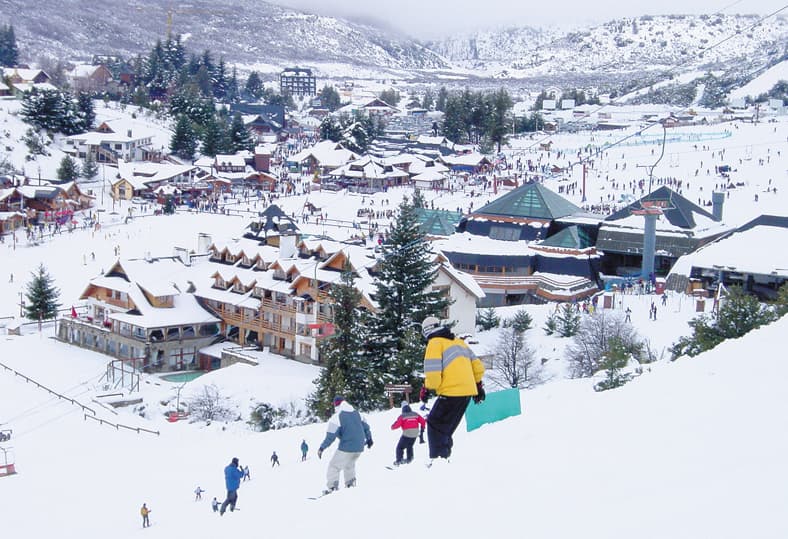
Cerro Catedral is the largest ski resort in South America, sitting above the lakeside town of Bariloche in Patagonia. The terrain is steep and varied, with genuine expert-level runs through volcanic rock formations and wide-open bowls. The town itself has a strong European feel, as German and Swiss immigrants settled the area in the early twentieth century, and the restaurant scene punches well above what you'd expect from a ski town. Advanced skiers will find this the most rewarding resort in the Southern Hemisphere.
Best for: Expert skiers looking for challenging terrain at South American prices.
Chile
Chile's Andes resorts sit at high altitude with reliable snowfall, and the proximity of Santiago makes them surprisingly accessible.
Valle Nevado
Valle Nevado is Chile's most modern resort, purpose-built at 9,800 feet (3,000m) in the Andes about 90 minutes from Santiago. The terrain is wide and well-groomed, with above-treeline skiing that feels more like the high Alps than anything else in South America. Snow reliability is strong thanks to the altitude, and the resort has invested heavily in lift infrastructure over the past decade.
Best for: Intermediate skiers who want reliable conditions and easy access from Santiago.
Portillo
Portillo is a legend. This single-hotel resort perched above the Laguna del Inca has been operating since 1949 and has a devoted following among serious skiers. The terrain is steep and the experience is intimate: only 450 guests at a time. Portillo operates on a week-long booking model, which keeps it exclusive and uncrowded. It's not cheap by South American standards, but the experience is unlike anything else on this list.
Best for: Dedicated skiers who want a boutique, all-inclusive mountain experience.
Australia
Australian ski resorts won't win any size comparisons with the Alps, but they offer a genuine snow sports experience in a country most Americans associate with beaches. The season is shorter and more variable, but a good Australian snow year delivers solid skiing from mid-June through September.
Perisher
Perisher is Australia's largest ski resort, spread across four interconnected areas in New South Wales. With 78 miles (125km) of terrain, it offers the most variety of any Australian resort. The Perisher Valley base and nearby Smiggin Holes provide accommodation options, and the Skitube underground railway from Jindabyne is a unique way to access the slopes.
Falls Creek
Falls Creek in Victoria is Australia's most family-friendly ski resort. The village is car-free in winter, with ski-in/ski-out access from most accommodation. The terrain suits beginners and intermediates, and the kids' programs are well-regarded.
Best for: Families with young children.
Thredbo
Thredbo has Australia's longest ski run and the most vertical drop of any Australian resort. The village has a lively atmosphere and the terrain offers more challenge than most Australian alternatives.
Mount Buller and Mount Hotham
Mount Buller is the most accessible resort from Melbourne (about three hours' drive) and works well for weekends. Mount Hotham sits higher and gets more snow, with terrain that leans toward intermediate and advanced skiers.
New Zealand
New Zealand is the standout destination for Southern Hemisphere skiing. The resorts are spread across both islands, the scenery is extraordinary, and the terrain quality genuinely surprises skiers who arrive expecting a compromise.
North Island
Whakapapa and Turoa
Whakapapa and Turoa sit on opposite sides of Mount Ruapehu, an active volcano in Tongariro National Park. Skiing on a volcano is exactly as dramatic as it sounds: the landscape is lunar, with lava formations and crater views that make every run feel otherworldly. Whakapapa is the larger of the two, with terrain spanning beginner to expert.
Best for: Skiers who want a genuinely unique setting.
South Island: Queenstown Region
The Queenstown area is the heart of New Zealand skiing, with four resorts within easy reach of a single base.
Coronet Peak is the closest resort to Queenstown (20 minutes) and offers reliable grooming with night skiing. The Remarkables sits across the valley with more dramatic terrain and excellent beginner facilities. Both are operated by NZSki and covered by a single pass.
Cardrona is the family pick: wide, sunny terrain parks, excellent kids' programs, and a relaxed atmosphere that takes the pressure off parents managing small children on the snow.
Best for: Families and freestyle skiers.
South Island: Canterbury and Wanaka
Treble Cone near Wanaka is New Zealand's expert mountain. The terrain is steep, the off-piste is extensive, and the views across Lake Wanaka are some of the best in world skiing. This is where New Zealand's serious skiers go.
Mt Hutt in Canterbury offers the longest season of any New Zealand resort, frequently opening in early June and running into October. The terrain suits all levels, and it's well-positioned for trips combined with Christchurch.
Best for: Treble Cone for experts, Mt Hutt for reliable early and late season snow.
Practical Tips for Southern Hemisphere Ski Trips
Book flights early. June through August is peak travel season to the Southern Hemisphere for ski tourists. Direct routes from the US to Santiago, Buenos Aires, Sydney, and Auckland fill up; book at least four to five months ahead.
Peak season is July and August. This is when snow coverage is most reliable across all four countries. June can be thin, and September is increasingly spring-like except at higher altitude resorts like Valle Nevado and Mt Hutt.
Expect a different scale. Southern Hemisphere resorts are generally smaller than their European counterparts. The trade-off is fewer crowds and a more laid-back atmosphere. Don't arrive expecting 600km of linked pistes. Arrive expecting good snow, short lift lines, and terrain that rewards exploration.
Combine with a broader trip. A ski trip to New Zealand pairs naturally with time in Queenstown's adventure scene or a road trip through the South Island. Argentine skiing combines with Buenos Aires and Patagonia hiking. Think of the skiing as one part of a bigger itinerary.
Currency advantage. The US dollar goes further in Argentina, Chile, Australia, and New Zealand than in the European Alps. South American resorts in particular offer outstanding value: expect to pay 30 to 50 percent less than a comparable European trip for accommodation, dining, and lift passes.
Start Planning Your Southern Hemisphere Trip
The 2026 Southern Hemisphere season opens in June, which means now is the time to book flights and accommodation. Use the Mountain Marker Trip Planner to organise your group, compare resorts across countries, and build a shareable trip estimate so everyone knows what they're signing up for.
Where to stay in Cerro Catedral
Search ski apartments and rentals near Cerro Catedral.
Find chalets on VrboSponsored — we earn a small commission when you book through Vrbo. It doesn't cost you more.
 Resort
Cerro Catedral
Argentina
 Resort
Portillo
Chile
 Article
South America Ski Resorts: The Complete 2026 Guide to Skiing in Chile & Argentina
9 ski resorts in Chile and Argentina compared by season, terrain, and cost. Skiing in South America starts from around $1,800 per week including flights from the US.