
South America skiingBuenos AiresSantiagoski trip planningValle NevadoPortilloCerro CatedralLas LeñasAndes skiingcity and ski trip
Combining Skiing and Buenos Aires or Santiago: The Perfect South American Trip
The Mountain Marker Team11 min read
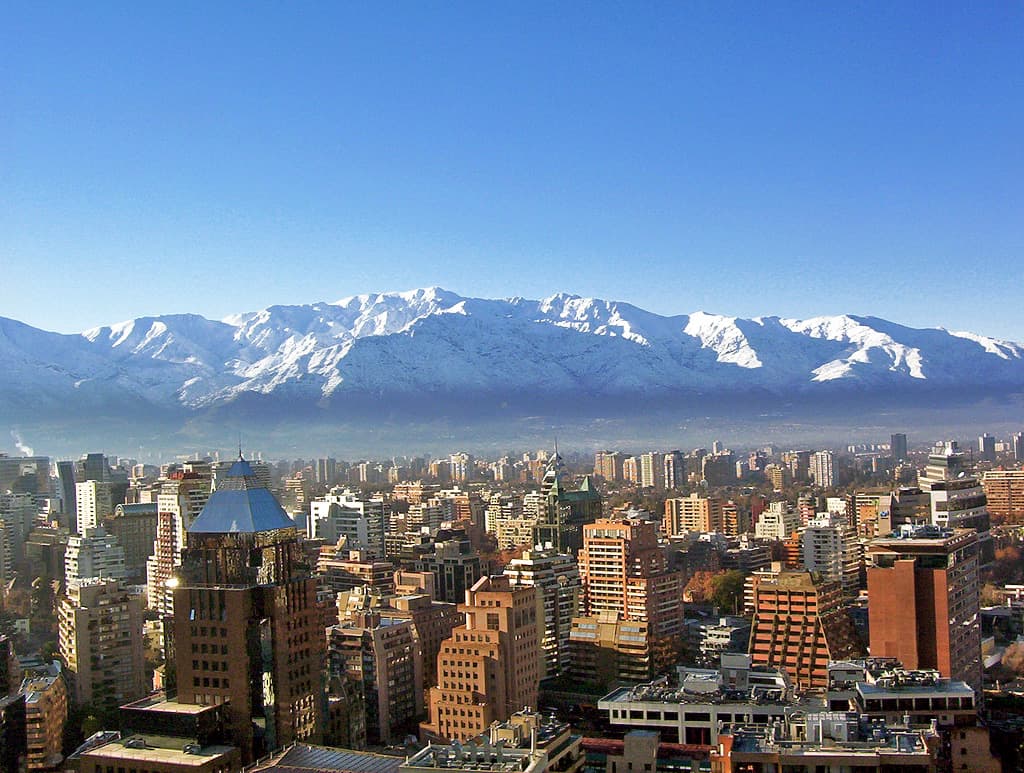
Santiago de Chile with the snow-covered Andes rising behind the city
South America is the only place in the world where you can eat a world-class steak dinner in a major capital city, sleep off the jet lag, and be skiing at 11,000 feet the next afternoon. Buenos Aires and Santiago are not gateway cities you endure on the way to the mountains — they are destinations that justify a trip on their own. Buenos Aires has the steak, the tango, the Malbec, and the late-night energy of a city that genuinely does not start dinner before 9pm. Santiago has the wine, the ceviche, the street art, and a backdrop of Andean peaks visible from downtown on a clear winter day.
The trick is building a trip that does justice to both. A rushed two days in a capital followed by four exhausted days on the slopes is a waste of two good things. This guide lays out tested itineraries — Santiago plus skiing, Buenos Aires plus skiing, and the ambitious two-country combination — with realistic timing, costs, and logistics for each.
The Santiago + Skiing Itinerary
Days 1-2: Santiago
Santiago is a city of distinct neighborhoods, and spending two full days here before heading to the mountains is time well used. Start in Lastarria, the walkable arts district with independent coffee shops, galleries, and the Museo Chileno de Arte Precolombino — one of the best small museums in South America. Cross into Bellavista for lunch at one of the restaurants along Pio Nono, then walk up Cerro San Cristobal for a panoramic view of the city with the Andes filling the eastern horizon.
Spend your second day in Providencia for upscale dining and wine bars, or head to Mercado Central early for the freshest seafood in the city — the congrio (conger eel) is a Chilean staple you will not find at home. Chilean wine is the underrated star here: Carmenere is the signature grape, and a bottle that would cost $40 in the US sells for $8 at a Santiago restaurant.
One practical note: Santiago sits at roughly 1,700 feet (520m) above sea level. The ski resorts you are heading to sit between 8,200 and 12,000 feet (2,500-3,670m). Two days at city elevation will not acclimatize you, but staying hydrated and going easy on the wine the night before you head up will make the first morning at altitude more comfortable.
Days 3-6: Skiing from Santiago
Santiago's proximity to serious skiing is its superpower. You have three options, and the right one depends on how many ski days you want and what kind of experience you are after.
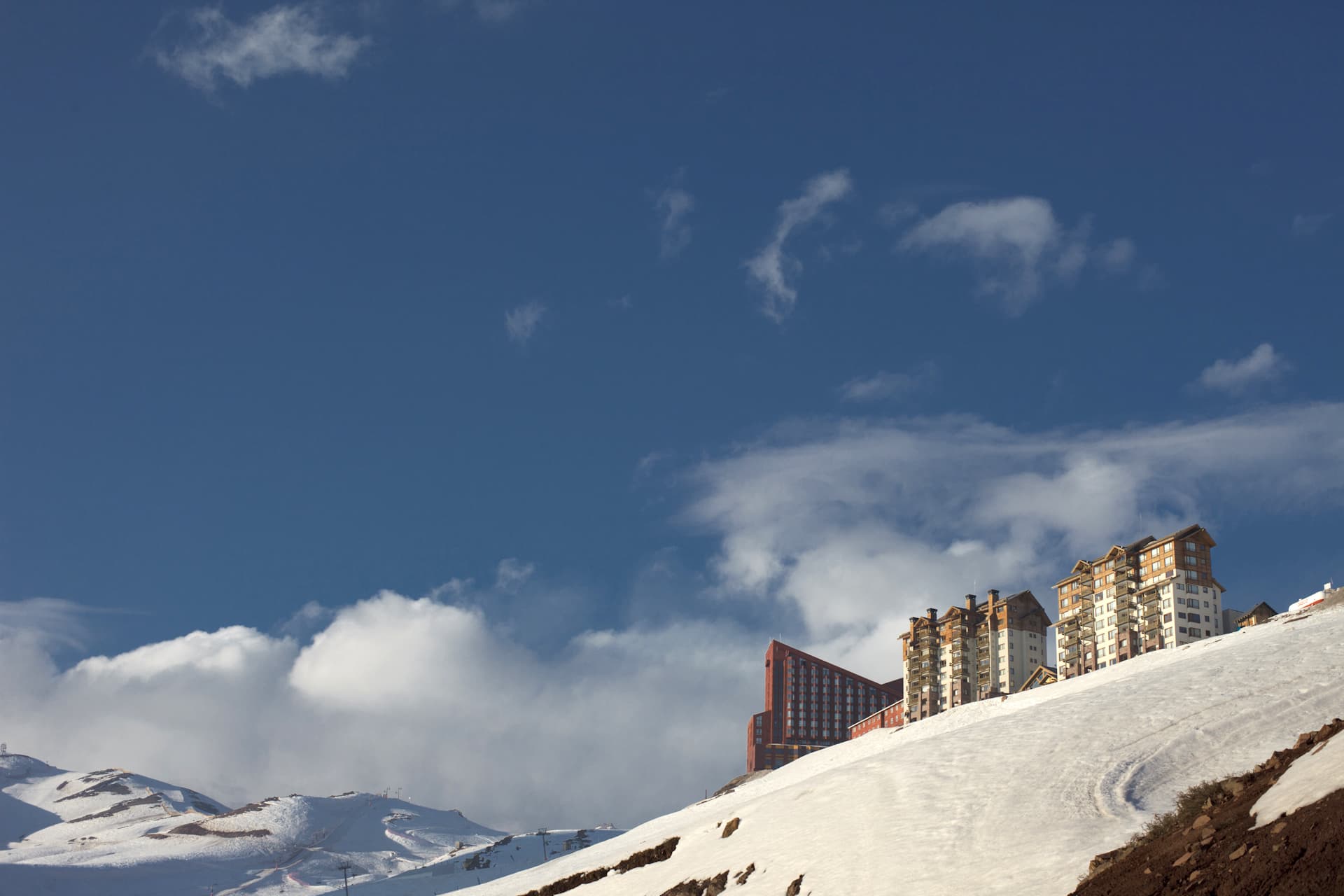
Option 1: Valle Nevado and Tres Valles (1 hour from Santiago). Valle Nevado is the largest and most developed of the three resorts that make up the Tres Valles system, which also includes La Parva and El Colorado. You can base yourself at the resort for a full immersion — the hotels are slope-side and the skiing starts outside your door — or you can commute daily from Santiago via the winding Ruta G-21. The drive takes about 90 minutes each way and requires snow chains on some days, but it means returning to Santiago's restaurants each evening. If you want three or four ski days without giving up city life entirely, this is the play.
Option 2: Portillo (2.5 hours from Santiago). Portillo is a different proposition altogether. This is an all-inclusive resort built around a single iconic yellow hotel beside Laguna del Inca at 9,350 feet (2,850m). Portillo traditionally sells week-long packages (Saturday to Saturday), which makes it harder to splice into a city-plus-skiing itinerary. But shorter stays are sometimes available, and the experience — steep terrain, intimate atmosphere, capacity capped at 500 guests — is unlike anything else in South America. If you can make the timing work, Portillo is worth the commitment.
Option 3: Day trips from Santiago. If you only want two or three days of skiing and do not want to move hotels, you can ski the Tres Valles resorts as day trips from Santiago. Several shuttle services run the route daily during ski season, departing early morning and returning by late afternoon. You will lose time to the commute, but you keep your Santiago base and avoid repacking.
Days 7-8: Santiago or Valparaiso
Back in Santiago, use your remaining days to explore what you missed — or take a day trip to Valparaiso, the colorful port city 90 minutes northwest. Valparaiso is built across 42 hills connected by funicular elevators and covered in street art that ranges from political murals to full-building installations. The seafood restaurants along the harbor are excellent, and the city's bohemian energy is a sharp contrast to Santiago's polished professionalism. If you have a full day, go. If you have a half day, it still works — you will just wish you had stayed longer.
The Buenos Aires + Skiing Itinerary
Days 1-3: Buenos Aires
Buenos Aires deserves three full days, minimum. This is a city that rewards wandering, eating, and staying up late — and trying to rush it defeats the purpose.
Day 1: Start in San Telmo, the oldest neighborhood, where the Sunday antiques market fills the streets and tango dancers perform at outdoor milongas. On weekdays, San Telmo is quieter but no less interesting — the covered market (Mercado de San Telmo) has stalls selling everything from artisan cheese to vintage records. Walk south to La Boca for the colorful Caminito street, but do not linger after dark — the neighborhood is rough outside the tourist blocks.
Day 2: Head north to Recoleta for the famous cemetery (Eva Peron's tomb is here, marked by fresh flowers), the fine arts museum, and the upscale restaurant scene along Avenida Alvear. In the evening, eat steak at a proper parrilla. Don Julio in Palermo and La Brigada in San Telmo are two of the best, but nearly any neighborhood parrilla will serve a bife de chorizo that redefines what you thought steak could be. A full meal with a bottle of Malbec runs $30-50 per person at the current exchange rate.
Day 3: Explore Palermo — Buenos Aires' largest neighborhood, subdivided into Palermo Soho (boutiques, cafes, street art) and Palermo Hollywood (restaurants, cocktail bars). Catch a tango show in the evening. The tourist-oriented dinner shows (Cafe de los Angelitos, El Querandí) are polished but expensive; for something more authentic, look for a milonga where locals dance — La Catedral and Salon Canning are good starting points.
Days 4-7: Skiing from Buenos Aires
Buenos Aires is farther from the mountains than Santiago, so your resort choice involves a domestic flight rather than a mountain road.
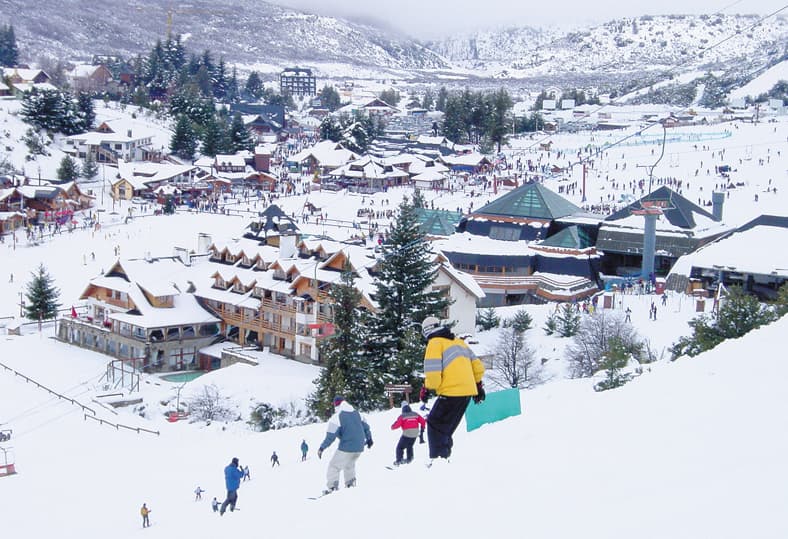
Option 1: Cerro Catedral, Bariloche (2-hour flight). Cerro Catedral is the easiest Argentine resort to combine with Buenos Aires. Multiple daily flights connect Buenos Aires (AEP, the downtown airport) to Bariloche (BRC), and the transfer from Bariloche airport to the slopes is 20 minutes. Catedral is South America's largest ski area — 1,200 hectares of varied terrain — and the town of Bariloche is worth experiencing in its own right. The chocolate shops along Calle Mitre, the craft breweries, and the lakeside Patagonian scenery make rest days feel productive rather than wasted. Three to four ski days here is ideal.
Option 2: Las Lenas via Mendoza (1-hour flight + 5-hour drive). Las Lenas is logistically harder but rewarding for expert skiers chasing steep terrain and powder. Fly to Mendoza (MDZ), then drive five hours south into the Andes. The remote, purpose-built resort has no town to speak of — just hotels and slopes — but when the Marte chairlift is running and fresh snow has filled the chutes, the skiing is world-class. This option works best with a full week dedicated to the resort.
Option 3: Chapelco, San Martin de los Andes. Less talked about but worth considering. Chapelco has its own regional airport with flights from Buenos Aires, and the base town of San Martin de los Andes is arguably the most charming ski town in Argentina — quieter and more intimate than Bariloche, with excellent restaurants and a Patagonian lake setting.
Days 8-9: Mendoza Wine Country (If Routing Through Las Lenas)
If you chose Las Lenas and are routing through Mendoza, add a day or two for wine. The Uco Valley, about an hour south of Mendoza city, is the heart of Argentina's high-altitude Malbec production. Full-day wine tours visit three to four bodegas with tastings and a vineyard lunch for roughly $80-120 per person including transport. The wines are stunning, the prices are absurd (reserve bottles that would retail for $60-80 in the US sell at the cellar door for $10-15), and the setting — vineyards backed by snow-capped Andes — is genuinely spectacular.
The Two-Country Trip
The ambitious version: Santiago, skiing in Chile, Buenos Aires, skiing in Argentina. Santiago and Buenos Aires are connected by a 2.5-hour direct flight with multiple daily options, making the link between countries painless.
A sample 12-14 day itinerary: two days in Santiago, four days skiing Valle Nevado or the Tres Valles, fly to Buenos Aires, three days exploring the city, fly to Bariloche for three to four days at Cerro Catedral, return via Buenos Aires. This covers the best of both countries — Chilean high-altitude skiing, Argentine town-based skiing, and two of South America's great capital cities — without feeling rushed at any single stop.
The two-country trip works best if you have at least 12 days. Attempting it in 10 is possible but leaves no buffer for weather days, travel delays, or the simple desire to stay somewhere longer than planned. Build in at least one flex day with no fixed commitment.
Practical Logistics
Flights from the US: Direct flights serve Santiago (SCL) from Miami (8.5 hours), New York JFK (10.5 hours), Dallas (10 hours), and Los Angeles (11.5 hours). Buenos Aires (EZE) has direct service from Miami (9 hours), New York (11 hours), Houston (10.5 hours), and Atlanta (10.5 hours). Peak ski season (July-August) is not peak demand for US-South America routes, so fares are often reasonable — $600-1,000 round trip from the East Coast.
Internal flights: Buenos Aires to Bariloche runs roughly $80-150 USD each way on Aerolineas Argentinas. Buenos Aires to Mendoza is similar. Santiago to Buenos Aires is typically $100-200 USD. Book early for better rates.
Visas: US citizens do not need a visa for either Chile or Argentina. Both countries allow stays of up to 90 days on a tourist entry. Chile eliminated its reciprocity fee for US citizens in 2014.
Currency: Chile uses the Chilean peso (CLP) and Argentina uses the Argentine peso (ARS). Credit and debit cards are accepted widely in both countries, though smaller shops and markets in Argentina may prefer cash. Argentina's parallel exchange rate situation has largely stabilized, but it is still worth checking current rates before you go — paying with a US credit card now generally gives you a rate close to the market rate. ATM withdrawals in Argentina can carry fees and daily limits.
Language: Spanish is the primary language in both countries. English is spoken at major hotels, ski resort front desks, and tourist-oriented restaurants, but drops off quickly outside those contexts. Learning basic Spanish phrases — greetings, ordering food, asking for directions — will improve your experience meaningfully. Google Translate works well for menus and signs.
Sample Budget
Here is what a 9-day Santiago + skiing trip and a 9-day Buenos Aires + skiing trip cost, roughly, for one person in USD.
Santiago + Skiing (9 Days)
| Expense | Estimated Cost |
|---|---|
| Round-trip flight from US | $700-1,100 |
| Santiago hotel (4 nights) | $300-600 |
| Valle Nevado accommodation (4 nights) | $500-900 |
| Lift passes (4 days) | $240-320 |
| Equipment rental (4 days) | $140-200 |
| Food and drink | $350-550 |
| Transfers and transport | $80-150 |
| Total | $2,310-3,820 |
Buenos Aires + Skiing (9 Days)
| Expense | Estimated Cost |
|---|---|
| Round-trip flight from US | $700-1,100 |
| Buenos Aires hotel (3 nights) | $150-350 |
| Domestic flight to Bariloche (round trip) | $160-300 |
| Bariloche accommodation (5 nights) | $250-600 |
| Lift passes (4 days) | $160-240 |
| Equipment rental (4 days) | $60-120 |
| Food and drink | $200-400 |
| Transfers and transport | $50-100 |
| Total | $1,730-3,210 |
Argentina is the clear budget winner, driven primarily by cheaper accommodation, food, and on-mountain costs. Chile is not expensive by European or North American standards, but Argentina's exchange rate makes it genuinely affordable.
Further Reading
- Chile vs Argentina Skiing: Which Country Should You Choose? — Full side-by-side comparison of terrain, snow, cost, and culture.
- Bariloche vs Las Lenas: Which Argentine Resort Is Right for You? — Detailed head-to-head if you are deciding between Argentina's two flagship resorts.
- Portillo vs Valle Nevado — Choosing between Chile's top two ski experiences.
- Skiing in Chile: The Complete Guide — Everything you need to plan a Chilean ski trip.
- Where to Ski in Patagonia — Exploring the southernmost ski resorts on Earth.
Browse all South American resorts in our resort directory, or use the comparison tool to evaluate specific resorts side by side.
 Resort
Valle Nevado
Chile
 Resort
Portillo
Chile
 Resort
Cerro Catedral
Argentina
 Resort
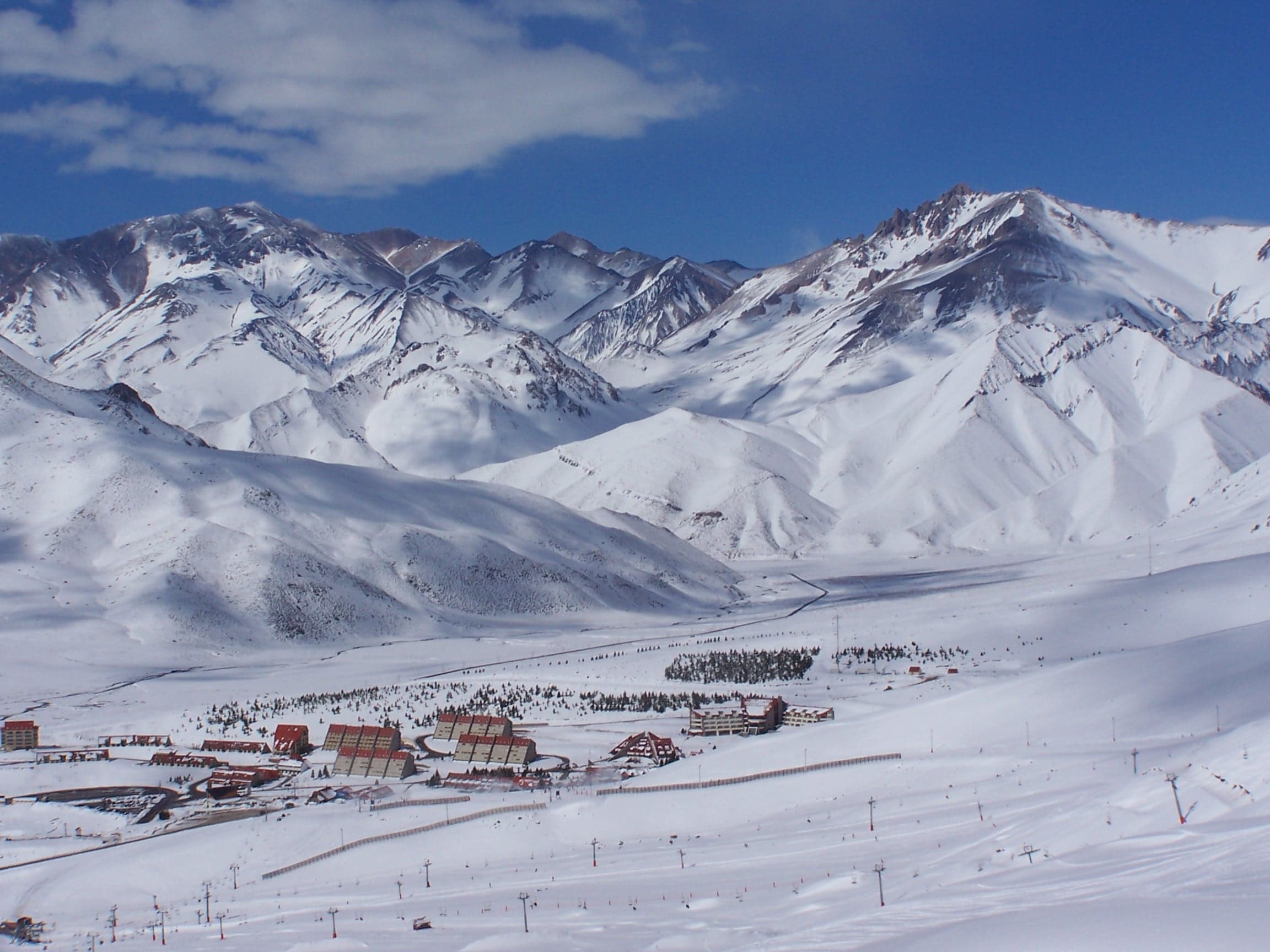
Las Leñas
Argentina
ArticleChile vs Argentina Skiing 2026: 9 Resorts Compared
Chile vs Argentina skiing: 9 resorts compared on terrain, snow, cost and access, with budget breakdowns to help you pick the right Andes ski trip for 2026.
 Article
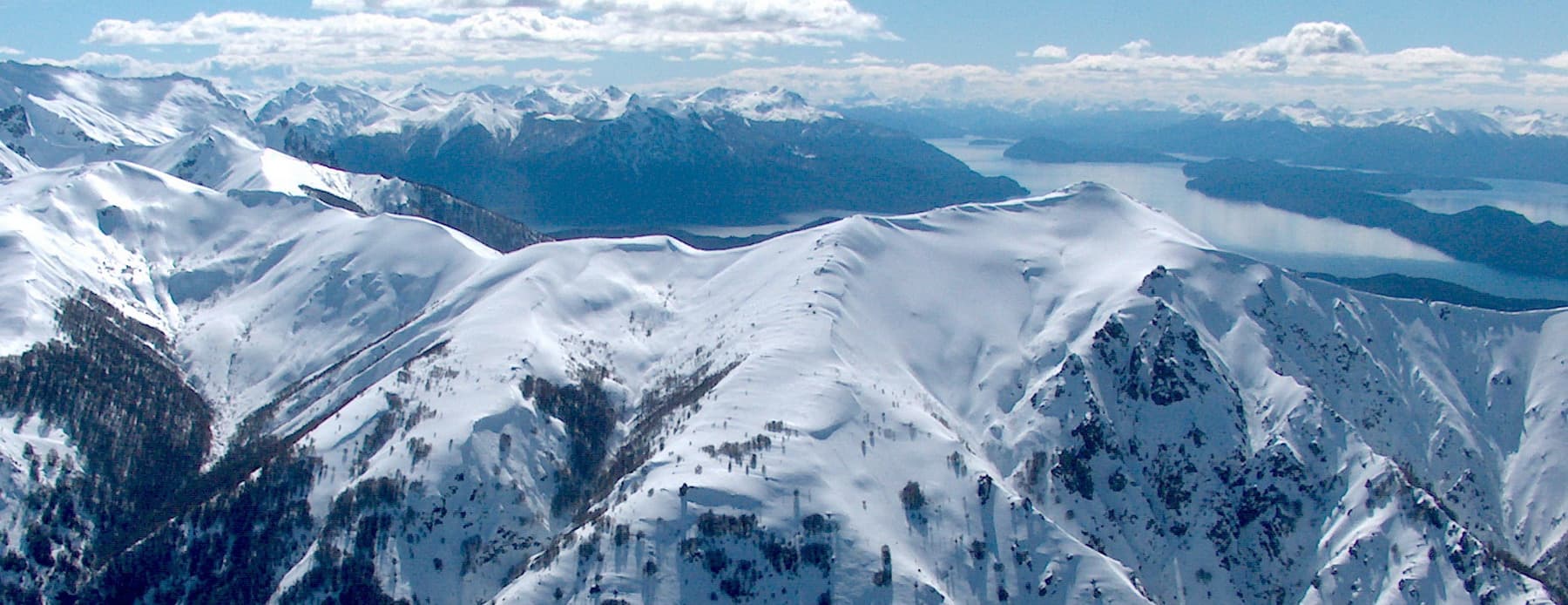
Bariloche vs Las Leñas 2026: Which Is Right for You?
Bariloche or Las Leñas? Compare Argentina's two flagship ski resorts on terrain, snow, access, cost, and town life to find out which is right for you.
